SBI Research Flags Strategic Uncertainty After US Court Invalidates Tariff Structure
The SBI Research has said that a United States court move to invalidate the tariff structure could reshape the policy landscape and alter the trajectory of uncertainty, even as countries may need to adopt “counter-intuitive” negotiation strategies during the interim period when ultimate authority over tariffs rests with a finely balanced US Congress.
The report noted that the interaction between inter-sovereign treaties and actions by juristic persons on tariff matters could create complexity, if not disruption, in determining an effective tariff framework.
“Unscrapping of the tariff structure by the Court(s) can upend uncertainty going forward while jurisdictions need to put in place counter intuitive negotiation to position themselves strategically in the intermittent period where ultimate power lies with a delicately balanced US Congress,” the report noted.
The US Supreme Court issued a landmark decision invalidating the POTUS or Administration’s use of imposing tariffs under the International Emergency Economic Powers Act (IEEPA), 1977.
The act had never before been used by a President to impose tariffs and does not find much footing in peacetime.
The conservative-majority bench effectively restored Congress’s primacy in trade policy, underlining the separation of powers between the legislature, executive, and judiciary in decision-making.
The MissOil Strike
03 Apr 2026 - Vol 04 | Issue 65
The War on Energy Security
Why has the Administration invoked Section 122 to impose a temporary 10% global tariff?
The executive has quickly invoked Section 122 of the 1974 Trade Act to impose a new 10 percent global tariff on all imports to the US for 150 days, marking the first time Section 122 authority has ever been used.
This temporary measure will start from 24 February 2026 and end in July should Congress not ratify the imposition.
Under the Trade Act, the President can impose temporary import surcharges of up to 15 percent or quotas to fix US balance of payment issues, lasting up to 150 days unless Congress extends them through legislation.
The new 10 percent tariff includes exemptions, such as goods from Canada and Mexico that comply with the USMCA, as well as specific national security tariffs already in place.
The report said the Administration is expected to complete investigations and levy tariffs using Section 301 and Section 232 during this period.
It added that the court’s decision might not prevent the President from imposing most, if not all, of the same sorts of tariffs under other statutory authorities.
How could the US Supreme Court tariff ruling impact existing global trade deals?
A second issue flagged by SBI Research is the decision’s potential impact on current trade deals. Because IEEPA tariffs have helped facilitate trade agreements worth trillions of dollars with foreign nations ranging from China to the United Kingdom to Japan, the ruling could generate uncertainty regarding various trade agreements.
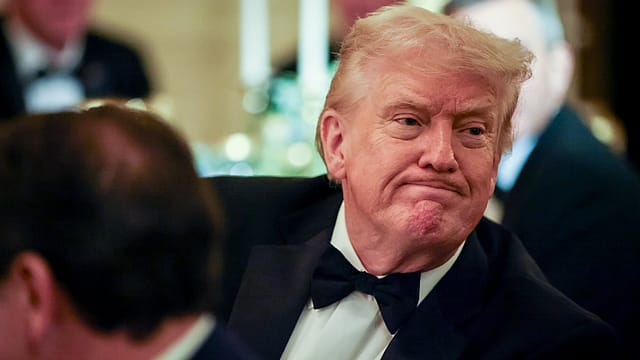
The Supreme Court decision striking down sweeping tariffs imposed by President Donald Trump has also added a wrinkle to already complicated US-China relations, with both countries navigating shifting ground to avoid an all-out trade war that would disrupt the global economy while still jostling for a position of strength in negotiations.
Both sides also want to maintain a fragile trade truce and stabilise ties ahead of Trump’s highly anticipated trip to Beijing.
Furious about the defeat, Trump said first he was imposing a temporary 10 percent global tariff before raising it to 15 percent as well as pursuing alternative paths for import duties.
The court ruled that the President exceeded his authority when he imposed duties using a law reserved for national emergencies.
What did Neal Katyal say about the US Supreme Court tariff verdict?
“The idea that we have a system that self-corrects, that allows us to say ‘You might be the most powerful man in the world but you still can’t break the Constitution.’ That to me is what today is about,” said Neal Katyal, the Indian-origin lawyer at the centre of the case who argued about the illegality of the levies on behalf of small businesses.
“I was able to present my case, have them ask really hard questions at me, it was a really intense oral argument and at the end of it, they voted and we won,” said Katyal. “Victory,” Katyal wrote on X after the verdict.
In a post on X in November, Katyal posted a photograph of a traditional ‘Kada’ placed on a ‘Brief for Private Respondents’ related to the Supreme Court tariff case against Trump.
Katyal is a partner in the Washington DC office of Milbank LLP and a member of the firm’s Litigation & Arbitration Group, having argued 54 cases before the US Supreme Court, with a focus on appellate and complex litigation.
Reacting to the ruling, Katyal said the Supreme Court of the United States had delivered a clear message on constitutional limits. “Today, the US Supreme Court stood up for the rule of law and Americans everywhere,” Katyal wrote on X.
“Its message was simple: Presidents are powerful, but our Constitution is more powerful still. In America, only Congress can impose taxes on the American people,” he added.
He added that the court had granted everything sought in the legal challenge. “The US Supreme Court gave us everything we asked for in our legal case. Everything.”
Katyal also thanked the Liberty Justice Center and its chair Sara Albrecht for leading the case, saying she had “led the fight when others wouldn’t” and defended the constitutional order.
He expressed gratitude to five small business owners who joined the case, noting their stand had brought “crucial relief to tens of thousands of businesses and millions of consumers across the country”.
He further thanked his legal colleagues at Milbank LLP, including Colleen Roh Sinzdak and Sami Ilagan, who he said worked “day and night for many months to craft the winning argument”.
In his post, Katyal stressed that the case was about constitutional principles rather than politics.
“This case has always been about the presidency, not any one president. It has always been about separation of powers, and not the politics of the moment,” he wrote, adding that he was pleased to see the Supreme Court, which he described as the bedrock of government for 250 years, protect fundamental values.
(With inputs from ANI)