Rotoris’ Audacious Bet: Can an Indian Watch Brand Become a Luxury Status Symbol?
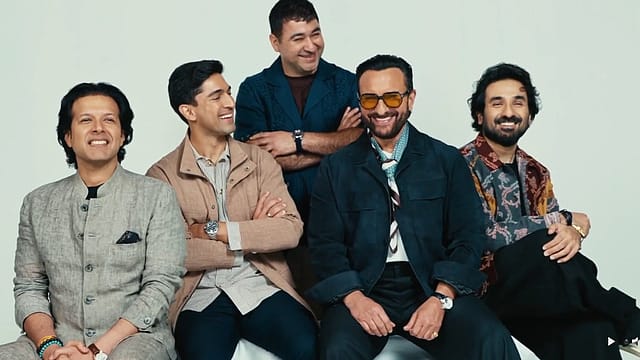
Rotoris wants its Indian name to become a reason to buy an expensive watch.
That ambition reaches beyond designing a dial or selecting a movement. A luxury watch can mark a promotion, a business milestone or a personal achievement. The name attached to that moment carries part of the purchase’s meaning. A young brand has to build that association.
Founded by Prerna Gupta and Aakash Anand, Rotoris recently raised ₹70 crore in a Series A round led by Blume Ventures. The capital raised would reportedly support R&D, production expansion and a wider physical presence in India and overseas.
The investment gives Rotoris resources for a larger proposition: an Indian watch label that buyers actively seek out. The aim is to become a watch someone chooses even when a familiar foreign label is within budget.

Look Who's Talking Regime Change
23 Oct 2026 - Vol 05 | Issue 43
Its opportunity lies in establishing a distinct identity within a market already offering familiar foreign names. For the customer, the choice must feel rewarding on the wrist and remain reassuring through years of ownership.
INDIA’S APPETITE IS ALREADY VISIBLE
The imported-watch market provides a useful starting point.
Federation of the Swiss Watch Industry figures show exports to India reached CHF266.4 million in January–September 2026, up 28.5% from a year earlier. India ranked fourteenth among destination markets. Global exports rose 2.7% over the same period.
These are shipment values at export prices, rather than retail purchases. They nevertheless establish that Swiss watchmakers are sending substantially more product into India.
Rotoris is pursuing a share of the aspiration around that category. The broader question is how much brand value an Indian company can create as buyers expand their interest in premium watches.
Different customers will answer differently. Some want a widely recognised name; others enjoy discovering an independent maker or a design with personal meaning. A young Indian label can build through that second group without needing universal recognition immediately.
THE INDIAN DIAL IS NOT EMPTY
Rotoris joins an existing Indian watchmaking landscape.
Titan’s Nebula range combines gold, gemstones and designs drawing on Indian art and architecture. Its published product explanation describes Titan-made movements in quartz watches and Swiss-made movements in mechanical models. It demonstrates one established approach to combining an Indian identity with premium materials and international components.
Bangalore Watch Company offers another. Its collections draw on subjects including Indian aviation, space and cricket, supported by Swiss automatic movements and an emphasis on personal ownership service.
These businesses provide context for what Rotoris must contribute. Indian origin already has several expressions in watchmaking.
Rotoris’s proposed identity centres on ambition and belonging. It associates numbered watches with entrepreneurs, performers and athletes. Collections such as Manifesta and Astonia give that positioning different visual forms, from stone dials to chronographs.
The commercial task is to make those choices coherent enough that customers begin recognising the brand’s character across successive collections.
WHAT MAKES THE WATCH INDIAN?
Rotoris describes watches assembled and tested at its Gurugram atelier, using movements sourced from Switzerland and Japan.
That is a starting point for understanding its production model. An Indian-owned brand can develop its identity through design, specifications, assembly, quality control and customer relationships while sourcing specialist components internationally.
There are relevant global examples.
Baltic’s HMS watches are assembled in France and use Japanese Miyota automatic movements. The company identifies the movement manufacturer in its product specifications.
British brand Christopher Ward began selling directly online in 2005. Its own history describes building relationships with Swiss watchmakers and subsequently developing more specialised technical capabilities.
Neither offers an automatic template for Rotoris. They illustrate how a brand can begin with a clear product proposition and deepen its capabilities over time.
For Rotoris, transparent specifications and consistent execution can help buyers understand what they are paying for. Its Indian identity becomes more persuasive when attached to a recognisable design and dependable ownership.
AN INVITATION IS THE BEGINNING
Rotoris’s Registry makes access part of the purchase.
Prospective customers request entry, complete a profile and receive approval to explore and own a watch. The process allows Rotoris to introduce itself through a more personal interaction.
The company claims its initial collection of 2,100 numbered watches sold out after its February launch. Nearly 100,000 people have reportedly registered, with about 40% of demand originating overseas.
Those figures describe different stages of interest. Registry participation is not a completed purchase, and overseas demand cannot yet be treated as export revenue. They offer encouraging early signals while leaving the eventual size of the customer base open.
The useful commercial question is what follows access. An owner who values the design, enjoys the experience and recommends the watch can help turn initial attention into a stronger reputation.
Rotoris House extends that effort into physical space. Its Delhi location operates by appointment, while the funding announcement outlines expansion to Mumbai and New York. Such spaces can give customers time to handle a watch and meet the people behind it. Their lasting value will come from strengthening the relationship through the purchase and beyond.
CAPITAL CAN SUPPORT THE LONGER JOB
The ₹70 crore gives Rotoris scope to improve production, develop collections and build the infrastructure that supports owners.
Its published guarantee policy covers movement manufacturing defects for up to ten years, subject to care and servicing conditions. Delivering that commitment requires technical support and continuity alongside the initial sale.
Building those capabilities takes time. The funding announcement does not disclose revenue or profitability, leaving a limited basis for judging the company’s financial progress today.
Growth also allows choices. Rotoris can reach new markets and introduce collections while maintaining finite runs of particular designs. Greater reach and controlled availability can coexist if buyers understand what makes each collection distinctive.
The ambition is larger than persuading customers to try an Indian watch once. It is to build a name they seek again, recommend and attach to important occasions.
For Rotoris, becoming aspirational will mean giving that Indian name a meaning of its own.