Oura, Ultrahuman and GLP-1s: Is More Health Data Worth a Bigger Bill?
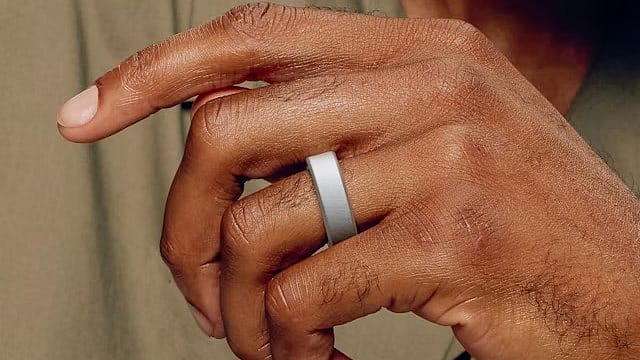
₹99,999 buys six months of Ultrahuman's GLP-1 programme. The medicine is a separate purchase.
The Bengaluru offer combines diagnostics, physician oversight, nutrition advice, performance coaching, training and continuous glucose monitoring. It is a substantial care package, rather than the price of a smart ring.
For someone considering treatment, the difficult purchase decision begins here. Which services improve the chances of a good outcome? How much monitoring is useful? What would the same money buy in a simpler programme?
An announcement from Oura gives those questions a timely global reference.
Recently, the smart-ring company outlined SMART-BMI, an Oura-funded study at UC San Diego Health involving people undergoing weight-loss surgery or starting GLP-1 therapy. Researchers will examine whether wearable information can improve obesity care.
There are no findings to celebrate yet. The interesting development is the attempt to establish what the data contributes.

The Era of Forever Wars
30 Oct 2026 - Vol 05 | Issue 44
Coping with an explosive Middle East
Oura's research and Ultrahuman's commercial programme are different propositions. Neither establishes the other's value. Together, however, they expose a business opportunity around weight-management medicines: charging for the information and professional support surrounding treatment.
For customers, that opportunity deserves an itemised explanation.
Who gets the data?
SMART-BMI begins with a feasibility phase. Its planned randomised phase proceeds only if that initial work meets specified conditions. Participants are followed for 52 weeks.
The particularly useful detail is the coaching arrangement. Both randomised groups receive a study-funded coach with equivalent contact. One care team gets access to Oura data; the other delivers a standard behavioural programme without wearable information.
That design addresses an easily missed complication. Patients receiving more attention might do better because someone checks in, listens and helps them follow a plan. A device can accompany that improvement without causing it.
Giving both groups coaching makes the additional contribution of the information more testable.
The commercial equivalent is a question every customer should be able to ask: what will the professional do differently because I wear this?
A stream of sleep and activity readings could be useful if it prompts an appropriate conversation or helps tailor support. Its value would depend on what changes afterwards. An impressive dashboard alone cannot establish that benefit.
The work also has to fit into someone's day. Reviewing readings, contacting patients and documenting decisions require time. If that workload grows, the service needs either additional staff or a credible way to handle it efficiently.
An effective sensor can still be part of an expensive service.
Ultrahuman's bundle needs its own test
Ultrahuman's advertised six-month programme includes repeated diagnostics and access to several professionals. Its page also lists four M1 continuous glucose monitors. The company says it does not itself sell the medication.
Those components make attribution difficult.
Suppose participants improve. Their progress could reflect the medicine, dietary support, training, clinical oversight, greater engagement or some combination. A successful package would be valuable to its customers. It would leave a separate question about how much the tracking contributed.
The practical comparison is a simpler, well-supported programme with fewer measurements. Would customers obtain similar results? Would the additional tests change enough decisions to justify their cost?
This is where the Indian relevance becomes concrete. The Bengaluru offer already asks consumers to evaluate a sizeable service bill alongside medication spending. The buying decision involves access to professionals, the usefulness of follow-up and the total cost of staying with treatment.
Comparing ring specifications will answer very little of that.
The companies also face different commercial tests. Oura sells hardware alongside membership access to detailed insights. Ultrahuman's programme bundles services delivered over months. A membership has to remain useful enough to renew; a care programme must deliver an experience that justifies its larger commitment.
Neither business can establish clinical value through customer retention alone. People can renew because they enjoy tracking, feel reassured or appreciate the attention. Those are legitimate consumer preferences, but their value should be described accurately.
What the research can establish
Ultrahuman has research relevant to the underlying science.
A revised preprint listed on October 27 analyses 105,196 paired nights from 2,648 adults using its ring and continuous glucose monitoring. It finds an association between sleeping heart rate and overnight glucose. The research is observational and has not been peer-reviewed; Ultrahuman funded it, and several authors have company ties.
Such work can identify relationships worth investigating. It does not demonstrate that acting on ring readings improves outcomes for people taking GLP-1 medicines. The glucose measurements also came from a separate monitor.
A useful signal needs a tested response. Otherwise, the customer receives more information without knowing whether the resulting intervention helps.
There is an older reason to insist on that distinction.
In the IDEA randomised trial, published in JAMA in 2016, participants in a behavioural weight-loss programme who received a wearable intervention lost an average of 3.5kg over 24 months, compared with 5.9kg in the standard intervention group.
That study involved an earlier device and a different programme. It cannot settle the value of today's smart rings in GLP-1 care. It does show why adding technology should be tested rather than assumed to improve results.
Oura's funding of SMART-BMI deserves disclosure. The protocol also specifies that the investigator retains authority over analysis, interpretation and publication. Those arrangements matter because the eventual findings could strengthen or weaken a commercial proposition.
The evidence that should earn the premium
For a consumer, the most useful result would explain how often wearable information changed care, whether those changes helped and what they cost.
A programme should also account for people who stop wearing the device or leave treatment. Results drawn mainly from enthusiastic, consistent users can make an offering look easier to sustain than it is for everyone who signs up.
For a provider, the calculation includes staff time. A system that produces useful interventions with manageable effort has a stronger case than one requiring extensive review for little improvement.
For an investor, recurring revenue becomes more persuasive when it rests on a service patients and clinicians continue to find useful. A higher-priced bundle can expand revenue while making delivery more demanding. The margin depends partly on how much professional attention each customer requires.
These are connected tests. Better information must survive the practical demands of using it.
The next valuable disclosure from this market would therefore be a clear account of decisions, outcomes and spending. It should help a prospective customer understand what the additional payment makes possible.
Until then, Oura has a research question and Ultrahuman has a commercial offer. Consumers considering either deserve evidence suited to the promise being made.
The health bill already contains enough numbers. Each new measurement needs to earn its place.