Oil Has Crossed $100. So Why Isn't It Even Higher? China's Hidden Role Explained
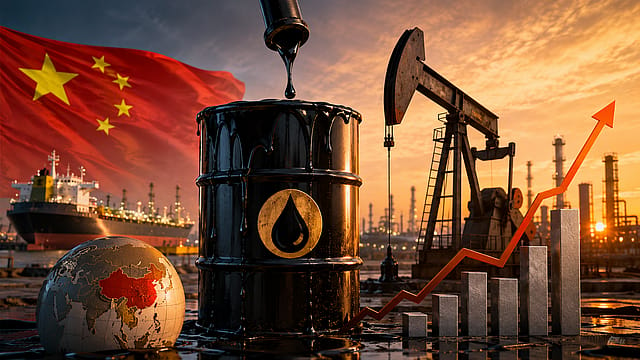
Oil prices have surged past $100 a barrel, reviving fears of inflation, higher fuel prices and slower global growth. Yet analysts believe the market could have been facing an even bigger shock.
The reason? China isn't buying.
Instead of scrambling to secure crude supplies during the latest geopolitical crisis, Beijing has been relying on its massive strategic oil reserves—a move that has eased pressure on global markets at a time when every barrel counts.
Here's why that matters.
Why are oil prices rising?
Brent crude has climbed above $100 a barrel after fresh geopolitical tensions in West Asia raised fears of supply disruptions.
Rise of the Pivotal Power
18 Sep 2026 - Vol 05 | Issue 38
The BRICS declaration is a strategic victory for Modi
Whenever conflict threatens oil-producing regions, traders worry that fewer barrels could reach the market, pushing prices higher.
So why haven't prices risen even more?
Because the world's biggest oil importer hasn't behaved the way many expected. Instead of rushing into the market to secure additional crude supplies, China has largely relied on its vast strategic petroleum reserves. According to June Goh, Senior Oil Market Analyst at Sparta Commodities, this has prevented demand from surging just as global supplies have come under pressure.
How much oil has China stockpiled?
China entered the latest crisis with an estimated 1.17 billion barrels of crude oil in strategic reserves, according to Goh. And that's only crude. The exact size of China's reserves of refined petroleum products remains unknown, suggesting the country's energy buffer could be even larger.
Why doesn't China need to buy more oil right now?
China has spent years preparing for moments like this. Besides building massive reserves, it has reduced its dependence on crude oil by rapidly expanding electric vehicle adoption, increasing the use of coal-to-olefins technology and changing the raw materials used by parts of its petrochemical industry. Together, these measures have lowered the country's immediate need for imported oil.
Will China stay out of the market forever?
Probably not. Goh believes China will eventually have to replenish its reserves. In fact, Beijing briefly returned to the market in late June when prices softened, only to pause purchases again after geopolitical tensions intensified.
At what oil price is China likely to start buying again?
Analysts believe around $70 per barrel could be the sweet spot. According to Goh, China spent several years aggressively stockpiling crude when prices traded between $60 and $70, suggesting it prefers to rebuild reserves when oil is relatively cheap rather than during periods of market stress.
Why should the rest of the world care?
Because China's buying decisions can move global markets. If Beijing suddenly returns to the spot market while oil prices remain elevated, demand could increase sharply, adding further upward pressure on crude prices. Conversely, if China continues drawing on its reserves instead of buying, it could help cushion global markets against supply shocks. For now, one of the world's biggest oil consumers is sitting on the sidelines. And that may be one of the biggest reasons oil hasn't climbed even higher.
(With inputs from ANI)