Oil Could Spike to USD 150 If Strait of Hormuz Remains Shut for Weeks: Nuvama
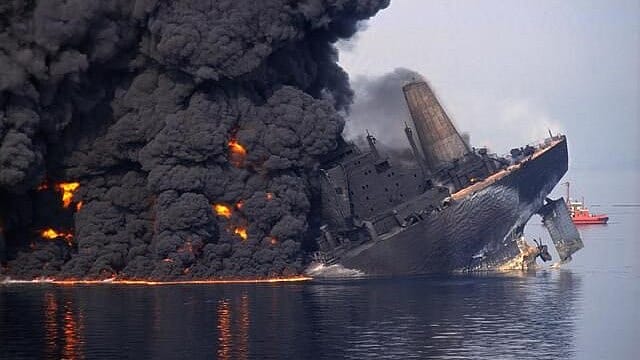
The Strait of Hormuz, one of the world's most critical energy chokepoints, is emerging as the focal point of global energy anxiety. A prolonged disruption could send shockwaves through oil markets and push prices to extreme levels.
How Could the Strait of Hormuz Closure Drive Oil Prices to USD 150?
Global crude oil prices could surge dramatically if disruptions in the Strait of Hormuz continue for several weeks. According to a report by Nuvama, the market is already adjusting expectations as maritime traffic in the region slows sharply.
The report states, "Global crude oil prices could surge to as high as USD 150 per barrel if the Strait of Hormuz remains closed for the next four to eight weeks."
The strait handles roughly 20 million barrels per day of oil flows, making it one of the most strategically important routes for global energy trade. Any prolonged disruption could sharply tighten supply and escalate prices across international markets.

Losing Memory
16 Oct 2026 - Vol 05 | Issue 42
The making of a medical and social emergency
The report added that "the continued closure of the Strait of Hormuz (SoH), which handles around 20 million barrels per day (mbpd) of oil flows, could significantly tighten global supply and push crude prices into the range of USD 110-150 per barrel within four to eight weeks."
Why Is Maritime Traffic in the Region Slowing Down?
Shipping activity through the vital waterway has already slowed dramatically as geopolitical tensions escalate. The report noted that maritime movements in the region have nearly halted, tightening the global crude balance.
Initially, markets had anticipated that the disruption might last only around two weeks. However, expectations are now shifting toward a longer outage, raising fears of sustained supply shocks.
The report said the market had initially priced in a short disruption but "expectations are now shifting toward a longer outage."
Could Strategic Oil Reserves Stabilise the Market?
Countries may attempt to soften the impact by releasing oil from their strategic reserves. Such measures could provide immediate relief but might also create pressure later when governments replenish those stockpiles.
The report observed that "releasing around 300-400 million barrels could ease supply pressures in the near term."
However, any sustained disruption could still keep the market tight despite these emergency measures.
What Happens to Global Supply If West Asian Exports Are Disrupted?
Export limitations from West Asia could significantly reduce global supply. According to the report, prolonged disruptions could lead to the shutdown of large volumes of production.
The report noted that "export limitations from West Asia could force shutdowns of around 6-7 mbpd, equivalent to more than 200 million barrels in March."
Such a supply loss would further strain global oil markets and intensify price volatility.
Why Are Asian Economies the Most Vulnerable?
Asian economies could bear the brunt of the crisis because of their heavy dependence on oil shipments passing through the Strait of Hormuz.
The report highlighted that "around 13 mbpd of oil shipments to countries such as China, India, Japan and South Korea pass through the Strait of Hormuz."
Countries with limited strategic reserves may be forced to cut refinery runs if supply disruptions persist.
What Could Be the Impact on Global Gas Markets?
The report also pointed to potential disruptions in the global natural gas market, particularly linked to Qatar's LNG exports.
However, the situation may stabilise relatively quickly once the strait reopens. The report noted that "Qatar's LNG production could restart within two weeks after the reopening of the Strait of Hormuz, as facilities remain undamaged."
How Exposed Is India to the Hormuz Disruption?
India remains particularly vulnerable due to its dependence on energy imports passing through the waterway. While crude supplies could remain manageable in the short term, other energy imports may face pressure.
The report pointed out that higher LNG prices could reduce imports if the disruption continues.
Among petroleum products, LPG could face the greatest risk in a prolonged crisis. The report concluded that "LPG is expected to be the most vulnerable in case of prolonged disruptions in the region."
(With inputs from ANI)