Meta Trained Sandhya Devanathan for Asia’s Internet Wars. OpenAI Hired Her for the AI Battle
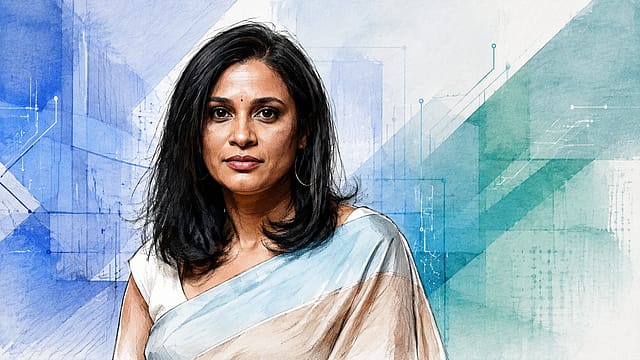
Sandhya Devanathan called it “bittersweet”.
After more than a decade at Meta, its vice president for India and Southeast Asia announced that she was leaving the company. Her LinkedIn farewell celebrated the teams, partners and friendships accumulated through a career that moved across countries, industries and some of Meta’s most important businesses.
Media reported the departure. The more revealing part of the story emerged from her destination.
Devanathan is joining OpenAI. She will begin in October as the company’s senior-most leader for Southeast Asia and Australia, based in Singapore and reporting to Kiran Mani, OpenAI’s managing director for Asia-Pacific. The position is newly created. Its width is extraordinary: consumer growth, enterprise adoption, strategic partnerships, operations and engagement with governments and regulators.

Zeroing In on ECI
09 Oct 2026 - Vol 05 | Issue 41
Constitutional legitimacy versus political opportunism
This is no ordinary regional sales job. It is almost an operating manual for the next phase of the artificial intelligence race.
OpenAI has built models, products and a global cultural phenomenon. It must now turn explosive curiosity into commercial habit, persuade companies to reorganise work around AI, strike alliances with local businesses and negotiate with governments increasingly concerned about jobs, copyright, privacy, safety and technological sovereignty.
Devanathan has spent much of her career working precisely where global technology, local markets, commerce and regulation collide. OpenAI has hired more than an executive. It has hired Meta’s Asia playbook.
From Banking to the Business of Attention
Devanathan’s career did not begin in Silicon Valley. She spent nearly a decade at Citi, working across online banking, consumer lending and other businesses in India, the Philippines and the United States. She later moved to Standard Chartered, where her assignments culminated in running a large retail banking and payments business in Singapore.
That banking background matters. Before platforms began calling everything an ecosystem, banks were already learning how to acquire millions of customers, earn their trust, navigate regulation and convert daily behaviour into long-term commercial relationships.
Devanathan joined Facebook, now Meta, in 2016. According to Meta’s account of her career, she helped build its businesses and teams in Singapore and Vietnam, along with its e-commerce initiatives across Southeast Asia. In 2020, she took charge of gaming across Asia-Pacific, one of Meta’s largest global verticals.
She returned to India in 2023 to run a market where Meta’s ambitions arrived with enormous scale and equally enormous complications. India is central to WhatsApp, Facebook, Instagram, Reels, business messaging and Meta AI. It is also a country where digital platforms must repeatedly negotiate political pressure, misinformation, content moderation, user safety, privacy rules and regulatory scrutiny.
In 2025, Devanathan’s responsibilities expanded to include Southeast Asia. Arun Srinivas, appointed to run Meta India, continued reporting to her. Meta said at the time that India was leading adoption across AI, WhatsApp and Reels, while Srinivas would integrate its business, innovation and revenue priorities.
That was Devanathan’s classroom for the job ahead: sell the technology, deepen engagement, cultivate advertisers and creators, build partnerships, manage governments and keep the growth machine moving.
A Job Description That Reveals the Strategy
OpenAI could have appointed a sales chief for Southeast Asia. It could have hired an enterprise leader for Australia or a public-policy executive to deal with regulators.
Instead, it placed all those responsibilities inside one office.
Bloomberg reported that Devanathan will oversee consumer growth, enterprise adoption, partnerships, operations and regulatory engagement across the region. That combination exposes OpenAI’s challenge. ChatGPT can spread without a sales force. A link travels, a student experiments, a professional uploads a document and a small business discovers that a chatbot can do in minutes what once consumed an afternoon.
Building a durable regional business requires heavier machinery. Consumers must be persuaded to pay. Companies must move beyond scattered trials and embed AI into workflows. Local partners must connect the technology to commerce, education and services. Governments must be convinced that adoption will not leave them powerless before an American AI company.
Devanathan will have to accelerate the machine while simultaneously explaining it.
Six Hundred Million People, No Single Market
Southeast Asia offers OpenAI a beguiling combination of youth, mobile-first behaviour, rising digital consumption and more than 600 million people.
It also punishes anyone who mistakes population for a market.
Singapore offers wealth, infrastructure, institutional stability and access to regional headquarters. Indonesia brings enormous scale across thousands of islands. The Philippines has a large English-speaking workforce and an outsourcing economy exposed directly to AI-led disruption. Vietnam is a fast-growing manufacturing and technology market with its own regulatory architecture. Thailand and Malaysia add different languages, political systems, business cultures and levels of purchasing power.
Australia, meanwhile, adds a mature enterprise market, a sophisticated regulatory debate and strong research and developer ecosystems.
A product can cross these borders instantly. Trust, regulation and revenue cannot.
Devanathan’s experience in Singapore, Vietnam, India and the wider Southeast Asian region gives OpenAI an operator who has already learnt how dramatically the same platform can behave across neighbouring countries.
The user numbers explain the urgency. Indonesia and the Philippines are among OpenAI’s ten largest markets globally by ChatGPT users, the company has said. Australia has also emerged as a significant market, while Singapore has become OpenAI’s regional base.
In May, OpenAI deepened that Singapore commitment with a multi-year programme worth more than S$300 million. OpenAI said the initiative would help organisations deploy frontier AI, develop local talent and extend access to smaller businesses and entrepreneurs.
Devanathan is arriving after the infrastructure has begun to form. Her task is to turn that presence into momentum.
The AI Lab Builds a Management Layer
Her appointment is also part of a pattern.
In March, OpenAI recruited former JioStar executive Kiran Mani to lead Asia-Pacific. In June, it hired former Uber India and South Asia president Prabhjeet Singh as its first managing director for India. Singh will take charge of consumer growth, enterprise adoption and partnerships when he joins in September, Reuters reported.
Devanathan follows in October.
The sequence is instructive. Mani comes from digital media and mass distribution. Singh comes from a platform business that had to adapt a global product to India’s price sensitivity, regulation and physical complexity. Devanathan brings consumer banking, payments, advertising, e-commerce, gaming and platform leadership.
OpenAI is assembling a regional management layer built around operators who know how to scale global technology through stubbornly local markets.
That marks a significant stage in the company’s evolution. Its earliest power came from research. ChatGPT then gave it a consumer gateway. The next contest concerns distribution, localisation and monetisation.
The laboratory produced the weapon. OpenAI is now recruiting the people who can carry it across borders.
From Curiosity to Contracts
OpenAI’s Asian opportunity contains a commercial contradiction.
The region can deliver vast numbers of users, but usage alone does not guarantee revenue. Many consumers live in price-sensitive markets. Free alternatives abound. Google can insert Gemini into products people already use. Meta can push AI through WhatsApp, Instagram and Facebook. Microsoft has corporate distribution. Anthropic is fighting for enterprise customers.
OpenAI therefore needs several growth engines running together.
It must retain consumer affection for ChatGPT. It must persuade businesses to buy enterprise products. It must help companies move from impressive demonstrations to measurable productivity. It must form local partnerships that place its technology inside existing commercial behaviour.
The company has already pushed deeper into enterprise deployment. Reuters reported in February that OpenAI had enlisted consulting giants including McKinsey, BCG, Accenture and Capgemini to help companies move AI from pilot projects into core business processes. In April, it expanded that effort through partnerships with firms including Cognizant, Infosys, PwC and Tata Consultancy Services.
Devanathan’s appointment brings the same logic to a region. Models may be global. Adoption happens company by company, government by government and workflow by workflow.
The Regulator is Now Part of the Growth Plan
The most important phrase in Devanathan’s mandate may be “regulatory engagement”.
AI companies once spoke about regulation as though it were an obstacle sitting outside the business. It now belongs inside the growth strategy.
Governments want investment and productivity, but they also want answers. Where does data travel? Whose copyrighted work trained the model? Which jobs will disappear? Can an AI system discriminate, deceive or make consequential decisions without accountability? Will local companies become customers of foreign intelligence that they can neither inspect nor control?
Southeast Asia adds another layer. Governments vary widely in their approaches to speech, data, competition and state authority. OpenAI cannot enter these conversations carrying only technical benchmarks and the promise of progress.
Devanathan has lived through the internet platform version of this conflict. Meta’s growth repeatedly pushed it into arguments over content, elections, safety, privacy, competition and accountability. OpenAI faces a different technology, but a recognisable political equation: the more indispensable a platform becomes, the more aggressively governments question its power.
Her job is to make OpenAI useful enough to spread and trustworthy enough to remain.
Meta Built the Playbook. OpenAI Hired the Player
There is a competitive sting in the appointment.
Meta is no spectator in artificial intelligence. It has Llama, Meta AI and distribution through platforms that already occupy the daily lives of billions. In India, Devanathan previously described Meta AI as the company’s largest market by usage. Across Southeast Asia, WhatsApp, Facebook and Instagram give Meta something every AI laboratory covets: habitual access to consumers.
OpenAI has recruited an executive who understands that machinery from within.
She knows how a global platform converts attention into business, how partnerships widen distribution and how local teams absorb the shocks generated when technology meets politics. She also knows the markets in which OpenAI must now fight Meta, Google, Anthropic and a growing field of local competitors.
Her move captures the changing centre of the AI war.
The first phase belonged to researchers racing to build smarter models. The next belongs partly to operators who can price them, distribute them, localise them, sell them and defend them before governments.
Devanathan spent a decade helping Meta navigate Asia’s internet economy. Now, OpenAI has hired her to help build what comes after it.
With inputs from agencies