Lenskart’s Next Growth Bet: Can Glasses Become a Wardrobe?
One pair for the workday. Another for a weekend in the sun. A third because the frame changes how the face looks.
For an eyewear company, each reason opens another purchase occasion.
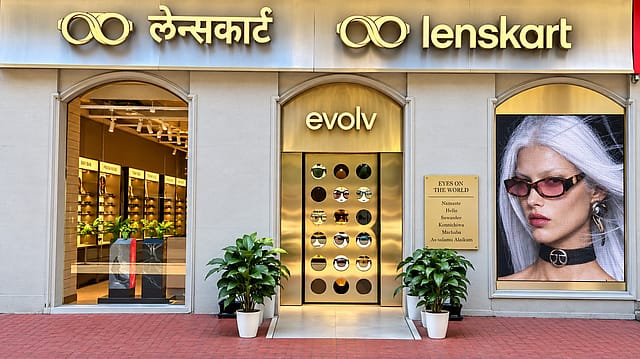
Lenskart’s new evolv concept store in Worli, Mumbai, brings that possibility into focus. Announced on October 23, it combines a chrome-finished retail environment with AI-assisted eye testing, remote optometrist consultations and a digital shopping assistant. The company plans a select collection of these concept stores.
The proposition brings eye care together with discovery, design and personal style. For Lenskart, that creates room to serve a customer through several stages: the first pair, a higher-value pair and an additional pair for another occasion.
“We believe the future of eyewear will be shaped not just by the products we create, but by how people discover, experience and connect with them,” Peyush Bansal, chairman and CEO, underlined in a media release.
Losing Memory
16 Oct 2026 - Vol 05 | Issue 42
The making of a medical and social emergency
There is a substantial business idea beneath that retail ambition. A company can grow by bringing more people into eyewear, improving what they buy and giving existing customers more reasons to return.
WHAT THE NUMBERS ALREADY SHOW
In its August 12 shareholder letter, Lenskart reported India revenue of ₹1,531 crore for Q1 FY27, the April–June 2026 quarter, up 30.7% year-on-year.
India’s average selling price rose 6.4% to ₹1,856. Units per transacting customer account increased to 1.87 from 1.80. Its India EBITDA margin before Ind AS 116 lease accounting reached 15.4%, against 13.3%. Comparisons follow the company’s proforma basis, which adjusts earlier periods for acquisitions.
Those figures show growth through a combination of sales volume, purchase value and improving operating economics.

The company also reported a 100% increase over three years in new customers buying three or more pairs annually. In discussing premium products, it acknowledged that it had “underestimated how fast our own customers would trade up”.
The account-level measure can include family purchases. The broader commercial direction is nevertheless useful: eyewear can support several purchases within a customer relationship, with different products serving different needs.
Evolv gives Lenskart a new environment in which to develop that relationship.
THE FIRST PAIR STILL MATTERS
The fashion opportunity sits alongside the work of making eyewear accessible.
On its August 12 earnings call, Bansal described a platform spanning ₹500 glasses through Hustlr Club and high-end progressive lenses at ₹30,000-plus price points.
These purchases involve different budgets and expectations. An affordable first pair can bring someone into organised eyewear retail. A more specialised lens or a different frame can serve that customer’s changing requirements later.
The operating opportunity comes from the capabilities supporting both: product development, sourcing, manufacturing, distribution and retail service.
A wider customer base can support purchasing and production scale. A broader assortment can give the business more ways to serve people who already know it. For a listed retailer, this is an important connection between access and value. Expansion can bring new customers into the network; product choice can deepen the relationship after they arrive.
The commercial ambition is to keep both opportunities available.
WHY THE STORE CAN CHANGE THE PURCHASE
Eyewear is particularly suited to discovery through trying things on.
A frame has to fit, feel comfortable and work with the face. Its appearance also changes with shape, colour and proportion. Seeing several alternatives can help a customer identify preferences that a functional shopping list would never capture.
A store designed for exploration can make that process more inviting. Someone arriving with a clear requirement may find a different design, discover sunglasses or consider a second look for another occasion.
The eye-testing and consultation functions remain integral to the proposition. They connect the fashion experience to the practical service around which an eyewear relationship is built.
Evolv’s proposed limited rollout also gives the format a particular role. A select destination can introduce collections, express the brand’s design ambitions and provide a setting for new shopping experiences, while the broader network continues serving everyday demand.
That is one plausible commercial purpose of the concept: make the range easier to discover and the relationship richer.
TITAN IS BUILDING A PREMIUM PROPOSITION TOO
Lenskart’s opportunity sits within a wider shift in organised eyewear.
Titan’s official Q1 FY27 announcement reported EyeCare revenue of ₹289 crore, up 21%, and identified an ongoing shift towards premium offerings. A subsequent preliminary update showed approximately 28% EyeCare growth in the September quarter. Performance was supported by its multi-brand approach, store upgrades and merchandise improvements; the division ended September with 847 stores.
Titan supplies another Indian route into the same commercial opportunity: combine eye care with product choice and a retail environment that encourages customers to explore.
The competition increasingly involves helping shoppers understand differences between products, find a style they like and feel confident about the complete purchase.
For both retailers, a higher-value sale can involve the frame, the lens and the service surrounding them. Fashion is one part of that offer. Product suitability and customer confidence give it substance.
SEOUL SHOWS HOW EYEWEAR BECOMES A DESTINATION
Gentle Monster offers a striking international example of the destination store.
Haus Nowhere Seoul opened in September 2025. Seoul’s official tourism guide describes the Gentle Monster store within the complex as a space for pop-ups with an exhibition-like experience.
The relevance lies in the reason to visit. Eyewear can sit within a broader experience of design and discovery, drawing interest before a customer has settled on a specific purchase.
For Lenskart, the useful idea is that a store can help create interest in the category as well as fulfil demand already present.
That gives physical retail another commercial role. It becomes a place where people encounter products, develop preferences and associate the brand with a style they want to explore.
The store experience and the product collection have to work together. A memorable setting gives discovery a stage; the eyewear gives the customer something to take away.
WARBY PARKER SHOWS THE CUSTOMER ECONOMICS
Warby Parker provides a different global perspective.
In its August 6 results for the quarter ended June 30, 2026, the US eyewear company reported average revenue per customer of $336, up 6.6%, alongside active-customer growth of 4.1%. Its revenue-per-customer measure covers the preceding 12 months.
That illustrates two avenues for growth: reach more buyers and earn more through each customer relationship.
The measure differs from Lenskart’s average selling price per unit. Its value here is the business perspective it provides. Eyewear retail can be understood through the relationship over time, encompassing products and services, alongside the economics of an individual pair.
A customer may begin with prescription glasses and return for sunglasses, another frame or changing vision requirements. A retailer with a relevant assortment has several opportunities to remain useful.
The commercial opportunity grows with the number of needs it can serve well.
THE WARDROBE OPPORTUNITY
Evolv gives a visible retail expression to that larger strategy.
The first pair addresses access. A higher-value pair can bring different lenses, materials or design. An additional pair can serve another occasion or preference.
These are connected opportunities for a business with a broad range and an established customer relationship.
Lenskart’s financial disclosures already show rising selling prices and more units per buying account. Its new concept adds a setting designed to encourage discovery. Titan’s premium push and the global examples place that move within a wider commercial direction.
For the customer, glasses can be both a practical necessity and a personal choice. For Lenskart, the wardrobe could become a way to keep growing long after the first eye test.