Is Nike Doing a Xiaomi? Why Its ₹3,795 Running Shoe Is Launching on Flipkart
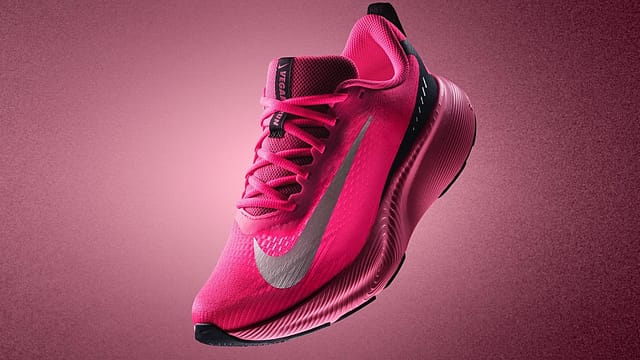
Nike’s latest invitation to Indian runners comes with a number that deserves almost as much attention as the swoosh: ₹3,795.
That is the price of Vegam Run, its first running shoe designed specifically for India. It goes on sale on November 1 through Flipkart and selected retail locations. Indian runners helped shape the product, with everyday wear forming part of its brief.
The combination makes the launch interesting. Nike has a locally informed shoe, a price below ₹4,000 and a large online marketplace through which to sell it. For shoppers who admire the brand but keep a close eye on their budget, those choices could make the purchase easier to consider.

Look Who's Talking Regime Change
23 Oct 2026 - Vol 05 | Issue 43
Flipkart’s presence also brings back memories of another category.
More than a decade ago, Xiaomi used the marketplace to introduce Indian buyers to a phone whose price made them reconsider what their money should buy. Online distribution helped a newcomer reach consumers without first building an extensive shopfront presence.
Nike arrives with considerably more recognition. Its challenge is to turn that familiarity into a purchase for more Indian runners. Vegam Run suggests that the company is giving the product, price and route to the customer a closer look.
Why India? Why Now? Why Online?
The timing becomes easier to understand when Nike’s latest financial results enter the picture.
In Q1FY27, the quarter ended August 31, 2026, Nike reported revenue of $11.2 billion, down 4% from a year earlier. Direct sales fell 8%. The company identified Greater China, Nike Sportswear and Jordan Brand as businesses requiring further work.
Those figures give the India launch commercial urgency. A company dealing with weakness elsewhere has good reason to examine markets where it believes participation and demand can grow.
India is receiving attention within Nike’s wider operating changes too. On October 1, the company announced plans for a Bengaluru campus supporting capabilities across Nike, Jordan Brand and Converse. Its stated priorities included making decisions closer to consumers and responding faster to local needs.
Vegam Run gives that thinking a product people can buy.
A corporate campus can strengthen technology and operations without telling a shopper much about the next pair of shoes. A product developed around Indian runners makes the company’s local intentions more tangible.
It gives Nike something more persuasive to say than simply announcing that India is important. Asking consumers how they use a product, then acting on their answers, puts some substance behind the declaration.
A shoe with more to do after the run
The most revealing part of Vegam Run’s brief concerns what happens after the workout.
Nike says conversations with Indian runners highlighted the need for a shoe suitable for running and continued everyday use. Its construction includes an engineered mesh upper, full-length foam cushioning and rubber around the outsole’s perimeter.
For someone buying one versatile pair, that is a practical proposition. The purchase has to justify its place across more than the morning’s exercise.
A committed runner may maintain separate shoes for different training sessions. A newcomer deciding how much to spend can have a simpler question: how often will I actually wear these?
Everyday usefulness can help answer it. A pair that remains comfortable through errands, travel or a long day has more opportunities to earn its price. Independent testing and wear will have to establish how well Vegam Run delivers.
The local adaptation is also more consequential than a decorative flourish. There is no need to attach a monument to the heel to make a shoe relevant to India. The useful changes can lie in the balance between price, durability and frequency of use.
Nike describes a product shaped by Indian habits. Its announcement does not establish where Vegam Run is manufactured. An India-specific design and Indian manufacturing are separate claims.
₹3,795 has plenty of company
The price makes Vegam Run worth examining. The surrounding shelves complicate any declaration of a price war.
Nike’s Indian website lists Run Defy at ₹3,995, Revolution 8 at ₹4,295 and Downshifter 14 at ₹4,895. Against those regular catalogue prices, Vegam Run is cheaper by ₹200, ₹500 and ₹1,100 respectively. Its advantage over Run Defy is about 5%.
That is a useful difference for a buyer counting the money. It offers limited support for a claim that Nike has radically lowered its entry price.
Discounting adds another complication. A Run Defy variant was listed at ₹2,397 when checked on October 29, although the product page marked it unavailable. An attractive number beside a sold-out shoe is hardly a dependable shopping plan.
Rivals also have lower-priced listings. Adidas showed its Adivat running shoe at ₹1,620 against an original price of ₹3,599. Decathlon listed its Ekiden One at ₹999 against an MRP of ₹1,199. These were website prices checked on October 29; size and delivery availability could not be confirmed across locations.
The shoes differ in construction and intended use. Their prices cannot establish equivalent performance, but they show how many alternatives surround Nike’s proposition.
Someone comparing Vegam Run with a premium Nike trainer may find ₹3,795 inviting. Someone replacing a ₹1,000 pair faces a substantial increase. Nike has to make that additional expenditure feel sensible.
Marketing and branding experts reckon that a familiar premium brand can make a higher price easier to justify, especially when the product promises usefulness across several occasions. The opportunity for Nike is to make the step up feel worthwhile. Price can encourage the first purchase, but comfort, fit and durability will influence whether the customer returns. "Rivals can defend their position through value and dependable availability, so an India-specific story must translate into a benefit the buyer can experience," says Ashita Aggarwal, professor of marketing at SP Jain Institute of Management & Research.
Flipkart brings back the Xiaomi question
Xiaomi’s early Indian journey offers a useful comparison.
Its Mi 3 went on sale through Flipkart on July 22, 2014, priced at ₹13,999. The launch used an exclusive partnership and preregistration to bring buyers towards a tightly focused online offer.
In a 2016 interview, Xiaomi’s then India head Manu Kumar Jain said online distribution remained its focus even as the company expanded offline. He also described efforts to keep the offline distribution chain short and costs under control.
That history helps explain why a marketplace can be central to a market strategy. It provides a place to discover the product, assess its value and complete the purchase. A compelling offer can travel beyond the reach of a brand’s own stores.
The analogy has limits. Xiaomi was introducing itself to India. Nike already sells here, including online. Vegam Run’s announcement also names selected physical retailers at launch, with wider partner distribution planned for spring 2027. It discloses no Flipkart exclusivity.
Nor has Nike said that savings from the channel explain the ₹3,795 price. That cost argument should not be borrowed from the phone business and attached to a shoe without evidence.
The useful similarity lies in coordinating the product and its route to buyers. An approachable price has more commercial value when customers can readily find the offer.
Footwear brings an additional difficulty. A phone’s specifications can do much of the explaining on a screen. A shoe still has to accommodate the foot inside it. Fit, sizing confidence and the experience of buying become part of the value proposition.
The marketplace can bring Nike into consideration. The shoe must complete the persuasion.
Puma already knows the online customer
Nike will encounter rivals with considerable experience of that environment.
Puma introduced its shopping app in India in June 2022, making the country the first market globally to receive it. The launch followed its Indian online shopping platform, introduced in 2016.
Its digital business has since become substantial. An August 2026 interview with Puma India managing director Ramprasad Sridharan reported that online channels accounted for roughly half its business, remaining between 49% and 51% for several years. Running represented almost 30% of sales in its retail stores.
The distinction between those measures matters: one concerns the overall business by channel, the other its store sales by category. Together, they show a competitor with both an established online audience and a meaningful running business.
Puma was also describing a push towards better products and reduced dependence on discounting. That suggests the competitive response to Vegam Run need not begin with another price cut.
Puma, Adidas, ASICS and other brands can make their own case through product benefits, offers, availability and the confidence customers already place in them. A shopper considering a ₹3,795 Nike may also encounter a discounted model from a rival.
Nike could be sharpening its online offer through this launch. It will be doing so in a channel where competitors already know how to compete.
What could change for rivals?
The potential pressure comes from Nike becoming a more frequent consideration for shoppers willing to stretch their footwear budget.
A locally informed product at an accessible Nike price could appeal to buyers who previously admired the brand without purchasing it. If that first experience is satisfying, competitors may have another contender for the next purchase.
These are possible consequences. There is no verified evidence yet of customers switching, market-share gains or a retaliatory move by rivals.
Lower-priced brands can defend the money saved. Other global brands can explain their own running credentials and strengthen entry-level offers. Stores can help buyers find the right fit. The response will depend on whether Vegam Run attracts sustained demand.
Nike faces a task within its own range too. The choice between Vegam Run, Run Defy and Revolution should be easy to understand. A buyer ought to be able to identify what suits their needs without treating the catalogue as an examination paper.
The price opens the conversation
Nike says Vegam Run moved from design brief to confirmed product in 55 days, with roughly five months between concept and launch. It presents the project as evidence of a faster response to local needs.
Customers will have their own timetable for judging it. A few weeks of regular wear can reveal more about a shoe’s usefulness than an announcement can promise.
That is where this India bet becomes interesting. Nike is bringing together local feedback, an entry-level price and marketplace distribution. Each can help encourage a first purchase. The experience afterwards will determine how much the combination is worth.
Xiaomi’s history shows why the route to the customer deserves attention. Puma’s business shows how well established the online competition already is.
At ₹3,795, Vegam Run has given more Indian shoppers a reason to consider the swoosh. It now has to give their feet a reason to agree.