India–US Tariff Cut to Restore Price Parity for Indian Rice Exports: IREF
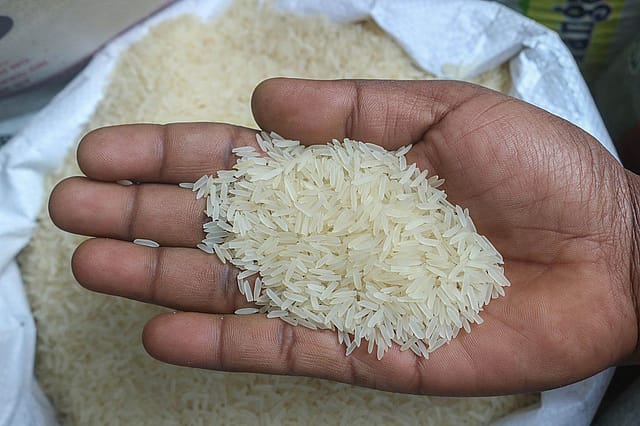
The Indian Rice Exporters Federation (IREF) has hailed the reported cut of import tariffs to 18 per cent in the US and said that this steps lead to a major cost advantage for India’s rice exporting industry besides price parity with top competing nations.
Welcoming the India–US trade deal, IREF said slashing to bound tariffs would put Indian rice exports on par with countries like Thailand and Pakistan, whose rice shipments to the US are currently subject to duties of around 19 per cent.
The Federation noted that the reduction in tariffs would ease the burden on Indian exporters and improve landed-price competitiveness in the US market.

Zeroing In on ECI
09 Oct 2026 - Vol 05 | Issue 41
Constitutional legitimacy versus political opportunism
IREF National President Dr. Prem Garg said the tariff reset would place Indian rice on a level playing field in one of its most important export destinations.
He said the development comes at a time when India is entering the export season with record rice production estimated at approximately 149 million metric tonnes, supported by strong availability and resilient domestic fundamentals.
Demand Resilience Despite Steep US Tariffs
Garg added that Indian agri-products continue to hold an indispensable position in global supply chains, with recent shipment trends indicating sustained demand even during periods of sharply higher duties.
The Federation pointed out that rice exports to the United States had increased even after tariffs were raised steeply from 10 per cent to as high as 50 per cent, underscoring the essential nature of Indian rice for US buyers and consumers.
Industry representatives said the restored tariff parity is expected to translate quickly into higher export volumes and improved price positioning across both basmati and non-basmati rice categories.
The Federation said this would enable India to defend and expand its market share in the United States while competing more effectively with other exporting nations.
From April to November 2025, basmati rice exports to the US stood at 1,99,558 tonnes valued at Rs 1,749.17 crore, while non-basmati shipments totalled 40,960 tonnes worth Rs 284.12 crore.
Export Volumes Hold Steady Despite Price Pressure
Export data showed that while prices declined during the period, shipment volumes remained steady as buyers continued to source Indian rice despite elevated tariffs.
Monthly export volumes in 2025 were higher than in the corresponding months of 2024, even as export values came under pressure due to pricing.
Exporter RiceVilla Group CEO Suraj Agarwal said the move to lower tariffs from earlier levels would neutralise the duty disadvantage faced by Indian exporters and allow Indian rice to compete effectively in one of its highest-value markets.
IREF also welcomed the removal of the additional punitive levy that had been linked to India’s purchase of Russian oil.
Following the announcement by US President Donald Trump and Prime Minister Narendra Modi on February 2, the reciprocal tariff on India was reduced to 18 per cent, while the additional 25 per cent penalty associated with Russian oil purchases was withdrawn.
Tariff Relief to Strengthen Export Stability
The Federation said confirmation of this change would reduce India’s overall tariff burden and help establish a more stable trading environment for exporters.
Addressing concerns about the possibility of further tariffs linked to India’s trade with Iran, IREF said it does not anticipate any disruption to export flows and expects continuity in trade based on current visibility.
The Federation said evolving trade frameworks often reflect broader strategic alignments and do not necessarily signal immediate trade interruptions.
Dev Garg, Vice President of IREF, said the Federation would continue engaging with exporters, policymakers and international stakeholders to ensure preparedness for any procedural changes.
He said a stable, rules-based trade system is essential for maintaining supply chains and meeting global food demand.
IREF noted a wave of positive sentiment across the rice export industry, with the tariff reset expected to support stronger offtake in key markets and reinforce India’s structurally strong competitiveness in the global rice trade.
(With inputs from ANI)