India's EV Battle Heats Up: Mahindra Closes Gap With Tata, Hyundai Slips
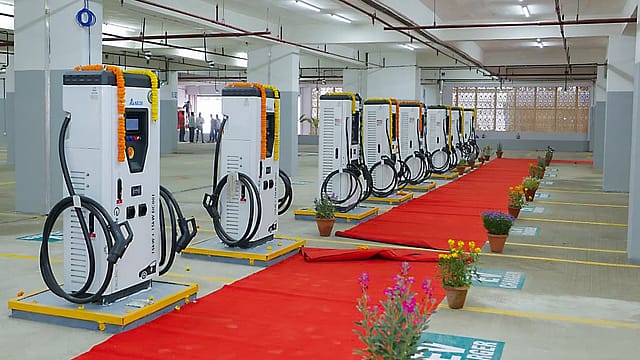
India's electric vehicle race is no longer a one-horse contest.
While Tata Motors continues to lead the country's electric passenger vehicle market, Mahindra is rapidly closing the gap, signalling a new phase of competition as fresh entrants reshape the industry's pecking order.
According to Vahan registration data for the first quarter of FY27 (April-June 2026), Mahindra almost doubled its EV registrations to 20,112 units, up from 10,144 in the same period last year, registering growth of nearly 98 per cent.
Tata Motors retained its leadership position with 32,283 EV registrations, more than double last year's 15,794 units, maintaining its dominance even as challengers gathered pace.
The numbers suggest that while Tata remains comfortably ahead in volumes, Mahindra is matching its growth trajectory and steadily reducing the competitive distance.

Losing Memory
16 Oct 2026 - Vol 05 | Issue 42
The making of a medical and social emergency
The data also reveals another important shift.
Tata's overall passenger vehicle growth is increasingly being supported by its conventional portfolio rather than electric vehicles alone.
The company added nearly 49,300 passenger vehicle registrations during the quarter, but EVs contributed only around 16,500 of those incremental volumes. That means the bulk of Tata's growth came from its petrol, diesel and CNG models, underscoring the continued strength of its internal combustion engine (ICE) business even as it dominates the EV segment.
Beyond the top two, India's electric vehicle market is becoming significantly more crowded.
MG Motor India remained the third-largest EV player with 16,502 registrations, although its growth of around 22 per cent lagged well behind Tata and Mahindra.
Maruti Suzuki, which had virtually no presence in the passenger EV market a year ago, made an immediate impact after launching its first electric model. The country's largest carmaker registered 4,894 EVs during the quarter, with monthly registrations steadily rising from 1,335 units in April to 1,896 units in June, suggesting production and deliveries are gathering momentum.
New entrant VinFast also entered the market with 3,973 registrations, while Chinese electric vehicle maker BYD recorded 2,173 units, further intensifying competition.
The biggest surprise, however, came from Hyundai.
The Korean automaker was the only major passenger vehicle manufacturer to report a decline in electric vehicle registrations during the quarter. Its EV registrations fell 35 per cent year-on-year to 1,386 units, down from 2,142 units a year earlier, with monthly registrations declining consistently through the quarter.
The broader passenger vehicle market also remained robust.
Maruti Suzuki continued to dominate with 4.99 lakh registrations, followed by Tata Motors (1.74 lakh), Mahindra (1.65 lakh), Hyundai (1.41 lakh), Toyota (84,474) and Kia (75,122).
The latest Vahan data suggests India's EV market is entering a far more competitive phase. Tata may still be the undisputed leader, but Mahindra is emerging as its strongest challenger, Maruti has finally entered the race, and new global players are adding fresh pressure—making the battle for India's electric future more crowded than ever.
(With inputs from ANI)