India's Auto Industry is Gearing Up for a 200-Million Vehicle Future: Report
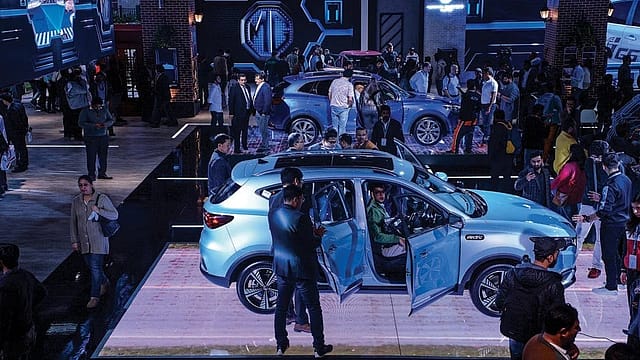
India's automobile industry is preparing for its biggest growth phase yet.
According to a report by Rubix Data Sciences, the country is expected to increase annual vehicle production across all segments from 34.71 million units in FY26 to 50 million by 2030, before touching an ambitious 200 million units by 2047 under the Automotive Mission Plan 2047.
Already the world's third-largest automobile market, India is witnessing a structural shift in consumer preferences and manufacturing capacity that is reshaping the industry.
The biggest winner has been the utility vehicle segment. SUVs and crossovers accounted for 65 per cent of all passenger vehicle sales in FY25, up sharply from 39 per cent in FY21, reflecting a dramatic change in what Indian consumers are buying. During the same period, passenger vehicle sales expanded from 2.71 million units to 4.64 million units, registering an 11 per cent compound annual growth rate.
Rise of the Pivotal Power
18 Sep 2026 - Vol 05 | Issue 38
The BRICS declaration is a strategic victory for Modi
The momentum has continued into FY26, with passenger vehicle sales rising around 8 per cent year-on-year, while commercial vehicle sales grew 12.5 per cent. The report attributes the growth to lower financing costs following RBI rate cuts and a reduced tax burden under GST 2.0.
Commercial vehicles are also undergoing a transformation. Medium and Heavy Commercial Vehicles (MHCVs) now account for 39 per cent of total commercial vehicle sales, up from 28 per cent, driven by demand from infrastructure projects, mining activity and long-haul freight transportation.
India's ambitions are increasingly global as well.
Passenger vehicle exports touched a record 0.77 million units in FY25, powered by strong demand for compact cars and utility vehicles. Maruti Suzuki alone exported a record 4.47 lakh vehicles in FY26, a 34 per cent increase over the previous year. Saudi Arabia emerged as the largest destination for Indian truck exports, while the UAE led imports of Indian-made buses.
Despite the optimistic outlook, the report cautions that the industry's next phase of expansion will not be without challenges. Supply chain disruptions linked to West Asia, volatile raw material prices and rising compliance costs under stricter emission norms continue to pose risks for manufacturers.
"India's passenger and commercial vehicle industry is entering a phase of scale we haven't seen before," said Tushar Bhaskar, President of Rubix Data Sciences. He cautioned that rapid expansion could expose vulnerabilities across supply chains, particularly among component manufacturers, dealers and logistics partners.
According to the report, the next wave of growth will be supported by government initiatives such as the Production Linked Incentive (PLI) scheme, increasing adoption of advanced driver assistance systems (ADAS), and the accelerating shift towards electric vehicles.
For India's automobile industry, the road ahead is no longer just about selling more vehicles. It is about scaling manufacturing, exports and technology on a level the country has never attempted before.
(With inputs from ANI)