Indian Markets Closed Today, Asian Stocks Trade Weak Amid Oil Price Surge
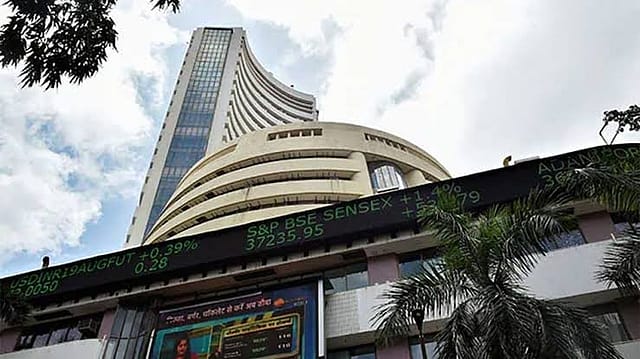
India’s domestic stock markets remained closed on Thursday on account of the Bakrid holiday, according to the National Stock Exchange (NSE). Trading across both the equity and derivatives segments on the NSE and the Bombay Stock Exchange (BSE) was suspended for the day and is scheduled to resume on Friday.
The holiday also affected trading-related services beyond equities. The commodity markets remained shut during the first half of the trading session and are expected to reopen at 5 PM. In addition, the instant fund withdrawal facility from trading accounts was unavailable during the market holiday.
The closure comes at a time when global financial markets are navigating uncertainty linked to geopolitical tensions, fluctuating energy prices and concerns over inflationary pressures.
Why Were Asian Markets Trading Weak?
While Indian markets remained shut, several major Asian indices witnessed losses during early Thursday trade, reflecting cautious investor sentiment across the region.
Japan’s Nikkei 225 index traded marginally lower by 0.03 per cent at the 65,005 level. Singapore’s Straits Times index slipped 0.23 per cent to 5,016, while Hong Kong’s Hang Seng index recorded sharper losses, falling 1.47 per cent to 24,981.
South Korea’s KOSPI index also traded lower, declining 0.47 per cent in the early trading session.
Taiwan’s weighted index emerged as the only major Asian market trading in positive territory, gaining more than 1 per cent to reach 44,707.

Open Minds 2026
26 Jun 2026 - Vol 05 | Issue 26
The power of ideas and arguments in 50 portraits
The broad weakness across Asian equities highlighted growing investor caution amid volatile energy markets and uncertainty surrounding global geopolitical developments.
How Are Rising Crude Oil Prices Affecting Global Markets?
A key concern for investors globally continues to be the sharp movement in crude oil prices. Brent crude oil rose 1.76 per cent on Thursday and traded around USD 96 per barrel at the time of filing this report.
Higher crude oil prices tend to increase inflationary pressures across economies because they raise transportation, manufacturing and logistics costs. Elevated fuel prices can also affect consumer spending and corporate profitability, making investors more cautious toward equities and risk assets.
The latest rise in oil prices has added to fears that inflation could remain sticky across major economies, potentially influencing central bank policies and interest rate expectations.
What Happened on Wall Street Overnight?
Despite global concerns, US markets managed to end Wednesday’s session in positive territory, although gains remained modest.
The S&P 500 index edged up 0.02 per cent to close at 7,520, while the Nasdaq gained 0.07 per cent to finish at 26,674. The Dow Jones Industrial Average performed relatively better, rising 0.36 per cent to settle at 50,644.
The marginal gains on Wall Street indicated that investors remain watchful rather than aggressively optimistic, balancing strong corporate and economic signals against risks linked to energy prices and geopolitical uncertainty.
What Should Investors Watch Next?
Market participants across the world are expected to closely monitor developments in crude oil prices, geopolitical tensions and broader macroeconomic signals for further direction in equities and commodities.
For Indian investors, attention will shift to Friday’s market reopening, where domestic equities could react to global cues, commodity price movements and investor sentiment from international markets.
(With inputs from ANI)