Indian Chemical Companies Set for Long-Term Growth via FTAs, says report
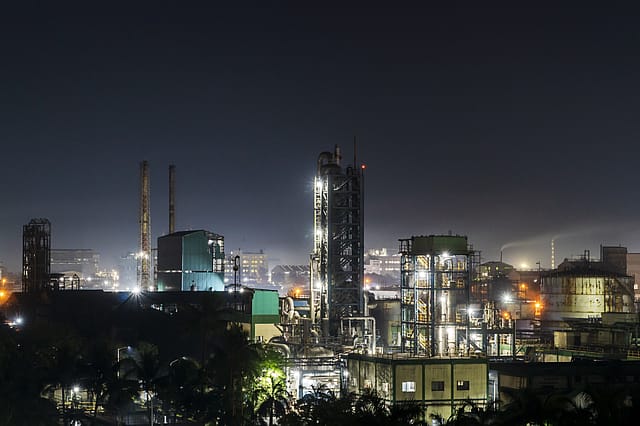
India’s domestic chemical sector is poised for improved global competitiveness, driven by the India-US and India-EU Free Trade Agreements, according to a recent report by Centrum.
The report notes that tariff reductions under these agreements have expanded market access for Indian companies and created a more balanced playing field with other developing nations, while also offering advantages over Chinese exporters.
These developments are expected to strengthen India’s role in global chemical supply chains and support long-term sectoral growth.
By easing trade barriers, the FTAs are helping domestic manufacturers improve export competitiveness and diversify their overseas presence, particularly in key Western markets.
What is the China factor involved?
While the trade agreements have improved the broader environment, the report cautions that performance will continue to vary across companies.
It said, “While outlook will have a company-specific element to it, clarity on India-USA and India-EU FTA provides India a level playing field with other developing nations and also benefits from duty differential with China".
According to the analysis, business mix, product portfolios, and execution capabilities will determine how much individual firms benefit.

Travel Issue 2026
15 May 2026 - Vol 04 | Issue 71
The Cultural Traveller
Companies with diversified offerings and strong operational frameworks are better positioned to capitalise on emerging opportunities.
The report also pointed to China’s proposed Anti-Involution Policy as a potential game-changer.
Persistent overcapacity in China has long depressed global chemical prices and strained demand.
If Beijing succeeds in curbing excess production, supply-demand balance could improve over the next two to three years, benefiting Indian producers alongside global peers.
What else does the report highlight keeping in view the third quarter of FY26?
The report observed that the third quarter of FY26 reflected uneven performance across the sector.
While some companies delivered strong profit growth in specific segments, others remained under pressure due to ongoing global supply-demand mismatches.
Despite these challenges, several supportive factors helped stabilise the industry.
These included the ramp-up of new capacities backed by firm orders, stable raw material prices, and lower freight costs. Such trends partially offset external pressures and enabled select players to protect margins.
Looking ahead, the report suggested that these structural strengths could help companies enhance efficiency, develop specialised products, and sustain competitiveness.
With improved trade access and gradual correction in global supply dynamics, the Indian chemical sector appears better placed to navigate near-term volatility and pursue long-term expansion.
(With inputs from ANI)