India-US Trade Deal: Markets, Exporters and US Businesses Welcome Tariff Relief
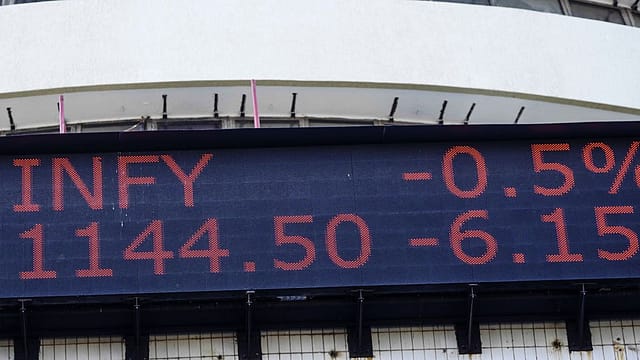
The India-US trade deal, which cuts reciprocal tariffs on Indian exports to 18% from 25%, has triggered a wave of optimism across Indian markets, with industry leaders and investors calling it a timely boost for exports, capital flows, and macro stability.
Market experts said the agreement arrives at a critical juncture, just as valuations have corrected and sentiment was weighed down by a fiscally tight Budget. The tariff cut, they argue, could act as a catalyst to revive foreign institutional investor (FII) interest and reignite risk appetite.
“The India-US trade deal is a massive positive, coming exactly when markets needed it,” said Divam Sharma, Co-Founder and Fund Manager at Green Portfolio PMS. “With valuations corrected and fundamentals intact, a large chunk of US FII capital could shift to India, seeing it as the premier strategic play among emerging markets.”
The Modi Years
02 Oct 2026 - Vol 05 | Issue 40
A Nation Rebuilt
Sharma added that pessimistic positioning could quickly reverse, triggering a sharp rally supported by short covering, alongside participation from domestic institutional investors (DIIs) and retail investors.
Exports, rupee and macro stability in focus
Beyond market sentiment, economists see tangible macro benefits.
Deepak Agrawal, CIO–Debt at Kotak Mutual Fund, said the tariff reduction is likely to improve India’s balance of payments, strengthen the rupee, and support a rise in foreign exchange reserves. “With valuation premiums narrowing over the past year, Indian equities have become more attractive for global investors,” he said, adding that a stable macro outlook could also help keep interest rates steady.
Sectorally, the deal is expected to benefit textiles and apparel, auto ancillaries, engineering goods, specialty chemicals, agro and seafood exports, and select electronics and consumer manufacturers with strong US exposure—closely aligning with the Budget’s emphasis on exports and global supply-chain integration.
The gems and jewellery sector also welcomed the move. Colin Shah, Managing Director of Kama Jewelry, said the US remains a crucial consumer market for Indian jewellery. “Sentiment had taken a hit due to tariff uncertainty. This reduction restores confidence among exporters and buyers in the American market,” he said.
From a broader tariff perspective, Garima Kapoor, Deputy Head of Research at Elara Capital, noted that the policy-implied effective tariff rate on India could fall to 14.1% if Russia-related levies are excluded. “The 18% rate brings India broadly in line with peers and is immensely positive for every Indian asset class,” she said.
The optimism is not limited to India.
The US Chamber of Commerce welcomed the progress on the trade deal, calling it a long-awaited step that would benefit businesses and workers on both sides. Suzanne P. Clark, President and CEO of the Chamber, congratulated the US and Indian governments for reducing tariffs and non-tariff barriers.
“We are optimistic that this is the first step toward a comprehensive trade agreement that will unlock even more private sector collaboration,” Clark said, adding that the Chamber and its US–India Business Council look forward to partnering with both governments to implement the announcement.
She described the US–India economic relationship as one of the most consequential in the world, with implications not just for growth but also for global stability.
(With inputs from ANI)