India-EU FTA Explained: Why Officials Call It the ‘Mother of All Deals’
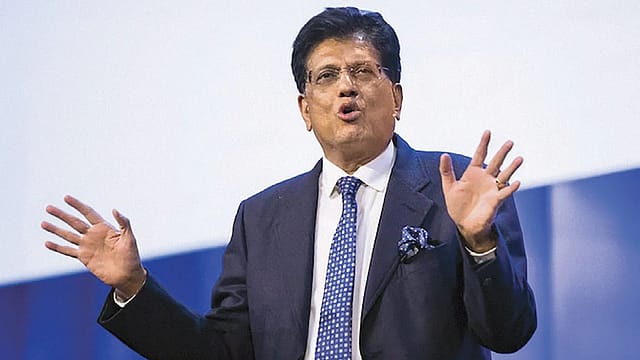
India and the European Union have concluded what officials describe as one of the most ambitious free trade agreements ever negotiated, a deal so expansive that it covers nearly two billion people, one-fourth of global GDP, and almost one-third of world trade. The agreement, stretching across more than 1,000 pages, was explained in detail by Commerce Ministry Additional Secretary Darpan Jain during the Federation of European Business in India Meet on “Decoding EU-India FTA”, organised with the Delegation of the European Union to India.
Explaining the scale of the pact, Jain said the agreement bridges “two of the world's largest economic blocs” and represents a trade architecture unlike anything India has signed before.
“Shedding light on why the EU-India FTA has earned the title of the ‘Mother of All Deals,’ Jain pointed to its sheer scope, a 1,000-plus page agreement bridging two of the world's largest economic blocs, encompassing two billion people, one-fourth of global GDP, and a third of all global trade, making it unlike any trade deal concluded before.”
The Economic Weight Behind the Deal
The numbers behind the agreement underline why both sides see it as transformative.
India’s economy currently stands at USD 3.91 trillion, while the EU economy is worth USD 19.42 trillion. Together, India’s population of 1.45 billion and the EU’s 450 million create a consumer market approaching two billion people.

Open Minds 2026
26 Jun 2026 - Vol 05 | Issue 26
The power of ideas and arguments in 50 portraits
The differences in income levels are also significant. India’s GDP per capita stands at USD 2,696, compared to the EU’s USD 43,145. Officials argue this economic contrast makes the two regions highly complementary rather than directly competitive.
According to Jain, “One third of global trade is covered by this agreement,” referring to the roughly USD 11 trillion worth of global trade that falls within the scope of the pact.
The agreement reportedly covers 99.5 per cent of trade value and 96.8 per cent of tariff lines, making it the broadest trade package India has ever negotiated.
Trade Between India and the EU Is Already Massive
The FTA builds on an already substantial trade relationship.
In 2024-25, India exported goods worth USD 75.76 billion to the EU and imported USD 60.66 billion, resulting in total goods trade of USD 136.42 billion. India recorded a trade surplus of USD 15.10 billion.
Services trade has also grown rapidly. In 2024, bilateral services trade stood at USD 82.91 billion, with India exporting USD 46.73 billion in services and importing USD 36.18 billion, generating a surplus of USD 10.55 billion.
Which Indian Sectors Stand to Gain Most?
Several Indian industries are expected to benefit significantly from reduced tariffs and improved market access in Europe.
India’s leading exports to the EU currently include petroleum products, telecom instruments, electrical machinery, iron and steel products, pharmaceuticals, garments, and precious stones.
The biggest gains may come from tariff elimination.
Marine products that currently face duties of up to 26 per cent in Europe are expected to move to near-zero tariffs. Duties on chemicals, plastics, rubber, gems and jewellery, metals, and transport equipment are also set to disappear on most product categories.
For labour-intensive sectors such as textiles, apparel, leather and footwear, the agreement could be especially significant. Products that currently face tariffs of 12 to 17 per cent in Europe are expected to move to zero duty access.
What Europe Gains from the Agreement
The agreement is equally important for European exporters looking to expand in India’s rapidly growing market.
India has agreed to sharply reduce tariffs on a wide range of European goods. Machinery and electrical equipment currently facing tariffs of up to 44 per cent will move to near-zero duties for most products.
Aircraft and spacecraft components, optical and medical instruments, plastics, chemicals and pharmaceuticals will also receive major tariff relief.
This gives European manufacturers greater access to one of the world’s fastest-growing large economies while helping India improve access to advanced technology and industrial equipment.
The Services and Digital Trade Push
The deal goes beyond goods and manufacturing and places major emphasis on services and digital trade.
The EU has reportedly offered its “best-ever terms” across 144 services subsectors, including areas important to India such as IT services, professional services, business services and education.
India, meanwhile, has opened 102 subsectors for European companies, including maritime transport, telecommunications, environmental services and financial services.
One of the agreement’s most consequential provisions relates to digitally delivered services, where India has emerged as a global leader.
Officials believe the EU’s commitments could significantly boost India’s Global Capability Centre ecosystem and strengthen the country’s dominance in digital service exports.
Easier Movement for Indian Professionals
Mobility of professionals has long been a difficult issue in India-EU trade negotiations, but the agreement appears to deliver substantial progress.
The EU has agreed to an “assured visa regime” for temporary movement across several professional categories, including business visitors, intra-corporate transferees, contractual service suppliers and independent professionals.
This could make it easier for Indian professionals to work across European markets on short-term assignments.
How the Deal Handles Climate and Regulatory Disputes
The agreement also attempts to address politically sensitive issues that have strained India-EU trade relations in recent years.
One major area is the EU’s Carbon Border Adjustment Mechanism (CBAM), which India has strongly opposed. Both sides have agreed to create a dedicated annex providing Most Favoured Nation treatment and a framework for technical dialogue.
An accompanying Memorandum of Understanding establishes an EU-India Partnership Platform on Climate Support.
The agreement also introduces a fast-track mechanism to deal with trade disruptions caused by future regulations, an attempt to prevent sudden policy changes from undermining market access.
Another notable provision is the inclusion of a “Non-Violation Complaints” mechanism, allowing either side to seek remedies if policies effectively weaken the agreement’s benefits, even without technically violating it.
A ‘Living Document’ Designed for the Future
Unlike traditional trade agreements that remain static for years, officials say the India-EU FTA has been structured as a “living document”.
The pact includes multiple review and consultation mechanisms intended to help both sides adapt to technological changes, evolving trade patterns and new regulatory challenges.
“The agreement relies on strong stewardship and trust to deliver gains for both sides,” Jain said.
Why This Deal Matters Strategically for India
For India, the agreement represents more than just a trade pact. It signals a broader strategic shift toward deeper integration with major global economies.
India has historically been cautious about signing wide-ranging free trade agreements, especially those involving deep market commitments. The EU deal therefore marks a significant change in approach.
Officials believe the agreement could expand India’s global economic footprint, strengthen supply chains, increase exports, improve access to technology, and position India and the EU as stronger economic partners in an increasingly uncertain global trade environment.
(With inputs from ANI)