Govt Raises Excise Duty on Fuel, Retail Prices Stay Unchanged: IOC
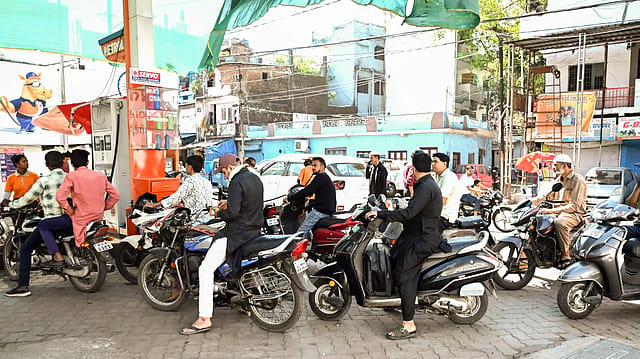
The Indian government revised central excise duties on petrol and diesel, but retail prices for consumers will remain unchanged, Indian Oil Corporation (IOC) said on Friday in a press release.
In three notifications issued on Thursday, the Ministry of Finance set the central excise duty on petrol at Rs 23 per litre and on diesel at Rs 33 per litre, effective from May 1, 2026.
The government has also reduced the additional excise duty on petrol to zero.
The changes were made under the Central Excise Act, 1944 and related Finance Acts, and are the second revision in fuel duties in the last month.
"The retail prices of Petrol, Diesel and domestic LPG (14.2 kg cylinders) have remained unchanged, fully insulating domestic consumers from the recent increase in international fuel prices," IOC said in a press release.
Why Are Petrol and Diesel Prices Unchanged Despite Excise Duty Revision?
The company added that around 90% of petrol and diesel consumption in the country is by the general public, and there will be no change in their prices.
Similarly, prices of domestic LPG for 33 crore households, ATF for domestic airlines on scheduled operations, and PDS kerosene will also remain the same.

Open Minds 2026
26 Jun 2026 - Vol 05 | Issue 26
The power of ideas and arguments in 50 portraits
Overall, about 80% of petroleum products have seen no price change, ensuring stability for most consumers, the company said in a press release.
Price revisions have been limited to select industrial segments, which account for a small share of total consumption and are adjusted monthly based on global rates.
Bulk and commercial LPG cylinders, which make up less than 1% of consumption, have seen a price hike.
Bulk diesel and ATF for international airlines have also been revised upwards. At the same time, around 4% of petroleum products have seen a price cut, reflecting global market movements.
In total, 80% of products have no change, 4% have seen a decrease, and 16% have seen an increase, mainly for industrial use.
IOC said the decision reflects a "calibrated and balanced approach" adopted by oil marketing companies under the guidance of the Ministry of Petroleum and Natural Gas.
The aim is to align with global trends while protecting domestic consumers and ensuring economic stability.
The move comes as Brent crude recently touched $126 per barrel on Thursday, due to geopolitical tensions in West Asia.
(With inputs from ANI)