EXPLAINED | Volvo Is Cutting Jobs. Why Are So Many Carmakers Struggling to Change Gears?
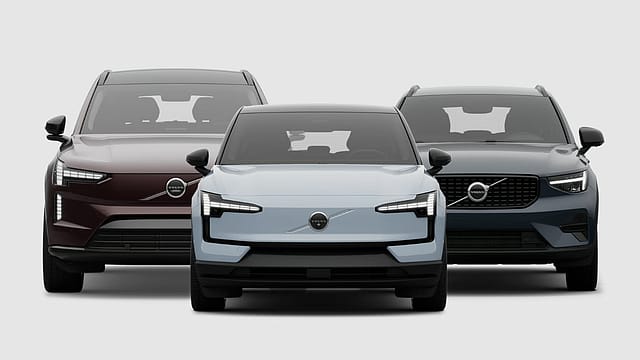
A customer orders a new electric Volvo. Somewhere else in the company, an employee faces the prospect of leaving.
Both belong to the same story.
Volvo Cars says it has more than 50,000 European orders for its EX60 electric SUV. But building those vehicles has taken longer than planned. On October 23, the company announced approximately 2,500 job reductions worldwide, including 2,000 in Sweden.
How can a carmaker have customers waiting and still need to cut costs?
Because an order must become a completed vehicle, a delivery and, ultimately, a profitable sale. Meanwhile, factories keep running, development bills accumulate and conditions change in the countries where the cars are sold.
Several familiar manufacturers are navigating that journey at once.

Look Who's Talking Regime Change
23 Oct 2026 - Vol 05 | Issue 43
FIRST, WHAT HAS HAPPENED TO VOLVO?
Volvo Cars, the passenger-car manufacturer, swung to a third-quarter operating loss of SEK5.6 billion from a profit of SEK6.4 billion a year earlier. Its operating loss excluding joint ventures, associates and certain other items was SEK3.7 billion.
The problems came from several directions: intense competition in China, tariffs and reduced incentives for electrified cars in the US, and the slower production ramp-up of the EX60.
“Ramp-up” means increasing production towards the intended output. A factory may have started making a car without yet producing it at the speed and cost originally planned.
The workforce reductions will involve ending consultant contracts, natural attrition and targeted exit packages. Natural attrition means allowing staff numbers to decline as people leave without replacing every departing employee.
WHY DON’T THOSE EX60 ORDERS SOLVE THE PROBLEM?
Because customers ordering cars and the company delivering them are different stages of the business.
Imagine a restaurant with hundreds of advance bookings but a kitchen struggling to prepare meals quickly. The demand is encouraging. The kitchen still has to turn it into meals served.
A car factory has a much longer list of things to coordinate. Components must arrive in sequence. Machinery and software must work together. Completed vehicles must meet quality requirements.
Volvo attributes the EX60 delay to new industrial technology, including integrating the battery into the vehicle’s body structure. Until production becomes more efficient, expenditure continues while deliveries take longer to catch up. A waiting list is valuable. It cannot pay every bill on its own.
WHY IS CHINA BECOMING SO DIFFICULT FOR INTERNATIONAL CAR BRANDS?
Because customers have formidable local alternatives.
A familiar badge must compete with what another manufacturer offers for the same money: design, cabin technology, driving features, electric range and the ownership experience.
Price competition then changes the calculation. A manufacturer may need to reduce its selling price to attract a buyer, even though its development and production costs remain substantial.
The pressure extends beyond Volvo. BMW Group reported that BMW-brand sales in China fell 21.2% in January–September 2026, while the brand grew in Europe and the US.
One company can therefore be gaining customers in one region and losing them in another. Its global accounts bring those different experiences together.
CAN’T A CARMAKER SIMPLY SELL THE SAME SUCCESSFUL MODEL EVERYWHERE?
Sharing a vehicle across markets can spread its development costs. But the customers buying it may want different things.
Vehicle size, price, charging access, software preferences and regulatory requirements vary between countries.
Consider an electric car designed around the assumption that its owner can charge overnight. That proposition becomes harder to sell to someone without dependable charging where they live or work.
Manufacturers must decide how much to adapt: the equipment, software, powertrain, suppliers or even the place of production.
Each adjustment can make the car more relevant locally. Each can also add complexity and expense. The challenge is to preserve the savings of a global business while offering something local customers want.
WHY NOT SIMPLY MAKE EVERYTHING ELECTRIC?
Because buyers are moving at different speeds.
A battery-electric vehicle runs on electricity stored in its battery. A hybrid combines an engine with an electric motor. A plug-in hybrid also allows its battery to be charged externally.
Customers weigh these options against their journeys, budgets and access to charging or refuelling.
Manufacturers must make investment decisions years before those customers reach the showroom. Serving several types of demand can require overlapping engineering programmes, equipment, suppliers and training.
That does not mean electric demand has disappeared. BMW Group’s worldwide battery-electric deliveries increased 7.2% in the third quarter of 2026. In Europe, they rose 37.5%.
Electric sales can grow while a manufacturer remains under financial pressure. The number sold, the profit on each vehicle and the cost of developing the range all matter.
HOW CAN A BORDER CHANGE WHETHER A CAR MAKES MONEY?
An import tariff can change the cost of getting a vehicle to its customer.
Imagine a manufacturer planning a car around an expected selling price. A new tariff raises the cost of bringing it into a particular country.
The company then has choices. It can increase the price, absorb some of the charge, find savings elsewhere or reconsider where the vehicle is built.
Each option takes something away or requires something new.
A higher price may discourage customers. Absorbing the cost reduces the money retained from each sale. Moving production requires investment and time.
Volkswagen identifies trade barriers and intensifying Chinese competition among the structural pressures behind its restructuring discussions. The factory’s location has become part of the product’s competitiveness.
WHY DOES THIS LEAD TO JOB CUTS?
Because manufacturing carries a large bill before the next car leaves the factory.
Buildings, machinery, engineering programmes and administrative operations do not become proportionately cheaper whenever output falls.
Take a hypothetical factory with ₹100 crore in annual fixed costs.
If it produces one lakh cars, those costs work out at ₹10,000 per car. If output falls to 50,000 cars, they become ₹20,000 per car.
That is only the fixed-cost portion, before adding the materials and other costs of making each vehicle. But it explains why falling production can hurt profitability so quickly.
Companies respond by sharing components, simplifying development, combining operations and trying to use factories more efficiently.
Nissan’s recovery programme explicitly connects manufacturing consolidation and revised development priorities with better plant utilisation and lower costs.
Workforce reductions form part of some programmes. Their consequences extend to suppliers and communities whose livelihoods depend on the factories.
WHY CAN’T COMPANIES JUST WAIT FOR DEMAND TO RECOVER?
Because waiting also costs money. Manufacturers must finance current operations while spending on vehicles that may not reach customers for years. If sales recover slowly—or in different markets from those expected—existing factories and future plans can become difficult to support together.
There is also a timing problem. Cancel too much investment and a company may lack the right products when demand improves. Spend too aggressively and it may struggle before those products generate sufficient revenue.
The task is to keep today’s business viable while preparing tomorrow’s range. That helps explain why a carmaker can announce cost reductions alongside new-model plans. Both are attempts to reshape the same business.
IS THE ENTIRE CAR INDUSTRY GOING BACKWARDS?
No. The picture is uneven.
Toyota Motor Europe reported record Toyota and Lexus sales of 936,042 vehicles in the first nine months of 2026, up 0.6% year-on-year. Its battery-electric sales more than doubled, while hybrids also contributed to its electrified range.
Those figures describe sales rather than the complete profitability picture. They nevertheless show why the industry cannot be understood through layoffs alone.
Different product ranges, production networks and regional exposure produce different outcomes.
There is also a useful distinction in the terminology: “electrified” does not necessarily mean “fully electric”. It can include hybrids and plug-in hybrids alongside battery-electric cars.
Knowing which category a company is describing makes comparisons much clearer.
WHERE DOES INDIA FIT INTO THIS GLOBAL STORY?
India shows why investment can expand in one place while manufacturers reduce costs elsewhere.
Maruti Suzuki began commercial production at a fourth plant at its Hansalpur facility in Gujarat in July 2026. The addition took the facility’s annual production capacity to one million vehicles.
Capacity describes what a facility is equipped to produce, rather than how many vehicles it has already made or sold.
For manufacturers, India represents several connected decisions: which customers to serve, which vehicles to offer, what to manufacture locally and how production fits into their wider networks.
For buyers, the choice remains practical. Purchase price, running costs, service support and charging or refuelling access influence the appeal of petrol, CNG, hybrid and electric cars.
A global manufacturer must translate its engineering into an ownership proposition that works for that customer.
DO GLOBAL JOB CUTS AUTOMATICALLY MEAN TROUBLE FOR INDIAN CUSTOMERS?
Not automatically. The effect depends on which operations are changing and how the company serves India. A reduction in corporate roles in one country is different from ending production of a model, changing local assembly or withdrawing from a market.
For an Indian customer, the relevant questions concern the vehicles sold here, delivery schedules, warranties, spare parts and the service network.
Those details need to be assessed separately from a global headcount announcement.
The same applies to investment. A manufacturer can cut costs in an established operation while committing money to another region or product.
WHAT WILL DETERMINE WHO COMES THROUGH STRONGER?
Getting several decisions right together.
A car must appeal to customers. Its factory must produce it reliably and economically. Its price must work in the destination market. Investment must arrive in time to meet demand.
Volvo’s waiting customers illustrate the opportunity. Its production difficulties and job reductions illustrate the work required to turn that opportunity into a stronger business.
The industry is changing what powers a car, what customers expect from it and where it makes sense to build it.
The next generation of motoring is taking shape. Carmakers must finance that journey while keeping today’s business running.