EXPLAINED | ONDC's DigiDukaan: Can It Free the Cash Stuck on Kirana Shelves?
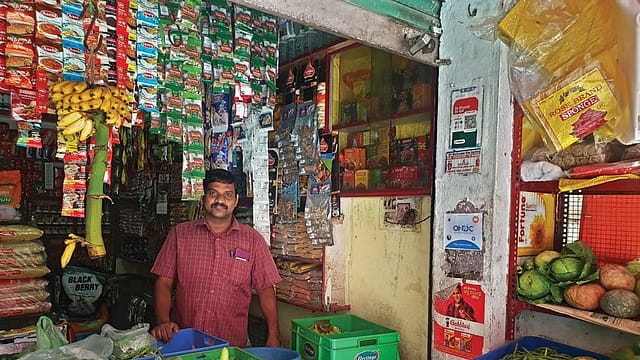
A kirana can have shelves full of goods and still be short of cash. Money paid for stock becomes available again only when that stock sells.
That is the problem behind Union Commerce and Industry Minister Piyush Goyal's call for consumer-goods companies to expand DigiDukaan, an existing ONDC initiative for ordering shop supplies digitally.
The proposal matters to the neighbourhood retailer buying the goods, the distributor delivering them and the customer hoping to find a familiar product on the shelf.
What is DigiDukaan?
DigiDukaan is an initiative that helps kirana retailers buy stock from participating distributors, wholesalers and brands through applications connected to ONDC, the Open Network for Digital Commerce.

Look Who's Talking Regime Change
23 Oct 2026 - Vol 05 | Issue 43
Procurement simply means buying the goods a business needs. Here, the shopkeeper is buying products to resell.
ONDC provides common digital infrastructure that lets different participating businesses and applications work together. DigiDukaan applies that model to business-to-business trade, often shortened to B2B.
How would a kirana owner actually place an order?
The network brings together applications used by buyers, applications connecting suppliers and logistics providers moving the goods. The retailer joins through a participating buyer application and checks the products, prices and offers from available suppliers. Once the retailer places an order, it reaches the relevant distributor or wholesaler through the network. The supplier and delivery partners then arrange fulfilment.
Availability depends on the suppliers and delivery services serving that retailer. A national brand appearing on the network does not establish that every product is available in every neighbourhood.
Why is this supposed to free up cash?
Because a shop that can reliably replenish stock more often may need to keep less of it.
Working capital is the money a business needs for its everyday operations. When a retailer pays for goods upfront, that money is tied up until customers buy them.
Faster restocking could shorten the wait. The retailer could then use the released cash to pay bills, buy other products or reduce borrowing.
The condition is reliable delivery. Ordering less stock becomes risky if replenishment is late and customers leave without buying. ONDC identifies faster replenishment and reduced inventory lock-up as central aims of DigiDukaan.
Does the distributor lose their place?
The model keeps existing distributors involved in supplying shops. ONDC describes continuity in distributor relationships and fulfilment systems.
The change is in how orders and information travel. Digital orders could reduce time spent collecting orders manually and give distributors clearer information about demand.
For brands, that information can show what retailers are ordering and help communicate offers or new launches. The ministry's June 12 account of the initiative identified these benefits for distributors and brands.
That gives each participant a reason to join. Sustained adoption still depends on the service being commercially worthwhile for them.
Will the goods automatically become cheaper?
The supplier still sets the price. The potential advantage is clearer visibility of available prices and trade schemes, meaning the discounts or promotional offers suppliers give retailers.
A shopkeeper must compare the complete purchase: product price, delivery charge, minimum order, payment deadline and treatment of damaged or unsold goods. A lower quoted price can be less attractive if the other terms are worse.
The useful comparison is what the retailer pays to receive and sell the goods, including the cost of financing the purchase.
What do the early numbers actually show?
The ministry says DigiDukaan had connected more than 21,000 retailers with over 450 brands across Hyderabad, Jaipur and Mumbai as of September 2026.
It also cites an initial ONDC study in which 40% of surveyed retailers reported holding less inventory for products bought through DigiDukaan.
That means some respondents said they kept less stock. It does not mean their stock holdings fell by 40%.
The release does not give the survey's sample size or the average reduction in inventory. Nor does that finding alone establish higher profits. To demonstrate the cash benefit, lower stock holdings would need to be assessed alongside delivery costs, payment terms and sales lost when products are unavailable.
Can digital ordering help a kirana get a loan?
The government is exploring financing linked to procurement and transaction records.
Such records could help a lender assess a business, but a loan still requires an actual lending product, eligibility checks and acceptable repayment terms.
ONDC's separate credit page lists business lending as being in the pipeline. A retailer placing a DigiDukaan order should therefore not assume that business credit automatically comes with it.
What could shoppers gain?
More dependable restocking could help a kirana keep the products customers want without accumulating too much slow-moving stock.
There is no automatic promise of lower shelf prices. A retailer may use any savings to improve its margin, cover other costs or offer a better price. The outcome depends on the shop's economics and competition.
For customers, the most visible test would be whether their usual shop has the right goods when they need them.
What happens next?
The ministry says the next phase will deepen brand and distributor participation in Mumbai, particularly North Mumbai, while strengthening existing markets.
That means building a useful local supply network: enough suppliers, products and dependable deliveries for a retailer to keep ordering.
The measures to watch are repeat purchases, complete and timely deliveries, and money released after all costs. Those will show whether DigiDukaan can turn easier ordering into a better business for the kirana owner.