Explained: How Venezuelan Oil Could Save India $3 Billion a Year
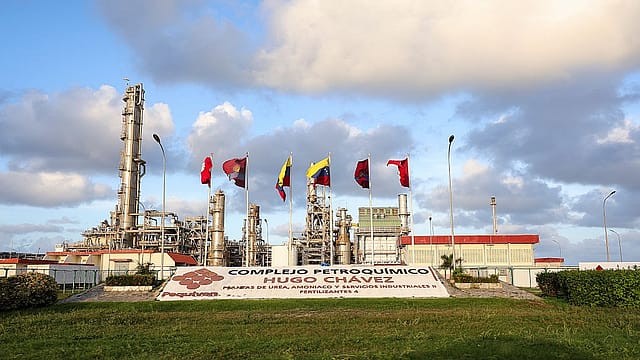
India may have found an unlikely lever to cut its fuel import bill: Swap a slice of Russian crude for Venezuelan heavy oil and save billions if the price is right.
What is SBI saying?
A new SBI Research report estimates that India’s annual crude oil import bill could fall by up to $3 billion if the country shifts part of its crude sourcing from Russia to Venezuela. The argument isn’t ideological or geopolitical. It’s arithmetic.
Why Venezuela and why now?
Venezuelan heavy crude is currently trading at around $51 per barrel, according to Oil Price data cited by SBI. If it is available at a $10–12 per barrel discount, the report says it can offset the higher costs of shipping, insurance and handling—making it economically viable for Indian buyers.
“At that discount, the choice becomes economically agnostic,” SBI noted, meaning Indian refiners would neither gain nor lose purely on logistics—but could still save on the overall import bill.
Isn’t Venezuela much farther away?
Yes, and that’s the catch. SBI points out that Venezuela is five times farther than the Middle East for India, and roughly twice the distance of Russia. That longer haul raises freight, time and insurance costs, pushing up the landed price. The savings only materialise if Venezuelan crude is priced low enough to neutralise those disadvantages.

The Abandoned Kejriwal
01 May 2026 - Vol 04 | Issue 69
Brain drain from AAP leaves Arvind Kejriwal politically isolated
Can Indian refineries handle Venezuelan crude?
Mostly, yes. But not without constraints. Venezuelan crude is heavy, which means it requires refineries with complex processing capabilities and blending with other grades may involve technological and operational costs. SBI emphasises that India’s strong refining base gives it flexibility—but the economics depend on how easily refineries can absorb different crude blends.
What did SBI’s model show?
Using a ‘brute force scenario’ that preserved historical trends in India’s import basket, SBI modelled a full shift from Russian crude to Venezuelan heavy crude. Under favourable discount conditions, the result: Annual savings of about $3 billion on India’s fuel import bill.
What could change the equation?
Geopolitics. SBI cautions that if hostilities in Ukraine ease, the deep discounts currently enjoyed on Russian crude could narrow—reducing Venezuela’s relative appeal. Still, the report stresses that a $10–12 per barrel discount would be enough to keep Venezuelan crude competitive, even if Russian oil becomes less discounted.
So, what’s the real takeaway?
India’s crude strategy is becoming more price-driven and flexible. Rather than betting on a single supplier, SBI sees a future where India’s import mix constantly shifts—blending Russian, Venezuelan, Middle Eastern and other crudes based on discounts, logistics and refinery economics. Venezuela, long seen as a geopolitical outlier, is now firmly back in the conversation: not for politics, but for price.
(With inputs from ANI)