Explained: How RBI Policy Expectations Kept Sensex and Nifty Range-Bound
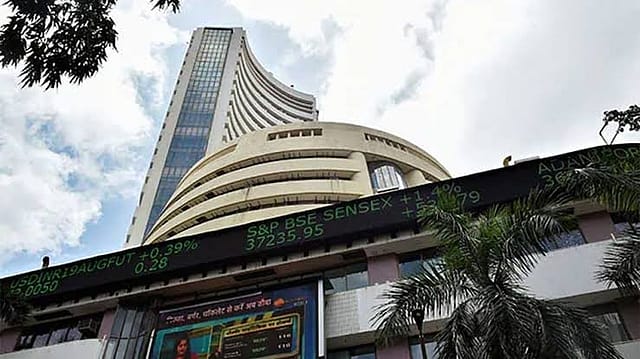
Indian equity benchmarks ended Thursday's session with marginal gains as investors refrained from taking aggressive positions ahead of the Reserve Bank of India's Monetary Policy Committee (MPC) decision scheduled for Friday.
The NSE Nifty 50 closed at 23,416.55, up 10.95 points or 0.05 per cent, while the BSE Sensex settled at 74,360.01, gaining 13.84 points or 0.02 per cent.
The subdued movement reflected a cautious mood among investors, who are waiting for clarity on the central bank's stance on interest rates, inflation and economic growth.
How did reports of tax benefits for FPIs influence sentiment?
Market sentiment received a boost after reports suggested that the government is considering tax incentives for foreign portfolio investors (FPIs) investing in government securities.
According to market experts, the proposed move could help attract greater foreign capital inflows into India and support the rupee. The development encouraged buying interest during the session despite broader uncertainty surrounding monetary policy and global markets.
What are market experts saying?
According to Siddhartha Khemka, Head of Research, Wealth Management at Motilal Oswal Financial Services, investor sentiment improved after reports of the proposed tax benefits for foreign investors.
He noted that easing global concerns and softer crude oil prices also contributed to the positive mood in the market.

Exclusive: To the Heavens and Back
19 Jun 2026 - Vol 04 | Issue 76
Shubhanshu Shukla relives the space odyssey that put India into orbit
Khemka said, "Indian equities are likely to remain range-bound in the near term amid a mix of domestic and global developments."
His comments suggest that while sentiment has improved, investors are unlikely to make large directional bets until there is greater clarity on both domestic policy and international developments.
Why is the RBI policy decision so important?
The RBI's Monetary Policy Committee announcement is currently the biggest domestic trigger for financial markets.
Investors will closely analyse the central bank's assessment of inflation, economic growth, liquidity conditions and currency stability. Any indication regarding future interest-rate movements could influence borrowing costs, corporate earnings expectations and investment flows.
According to Khemka, market participants will closely monitor the MPC outcome scheduled for 10 a.m. on Friday for signals on interest rates, inflation, economic growth and the rupee's outlook.
What role is foreign investor activity playing?
Despite supportive domestic developments, persistent selling by foreign institutional investors (FIIs) remains a concern for the market.
Foreign investor outflows can put pressure on equities and the rupee, making their investment behaviour an important factor for market direction. Continued FII selling has limited the upside for Indian equities in recent sessions even as domestic investors remain active buyers.
Which sectors performed well and which lagged?
Sectoral performance was largely positive, although gains were modest across most segments.
The media sector emerged as the strongest performer, with the Nifty Media index rising 2.19 per cent. Banking, pharmaceuticals, real estate, automobiles and FMCG stocks also ended in positive territory, indicating selective buying across sectors.
Technology and metal stocks, however, underperformed. Nifty IT declined 0.29 per cent, while Nifty Metal fell 0.73 per cent, making them the only major sectoral indices to finish in the red.
How did crude oil and global markets impact sentiment?
Lower crude oil prices provided some relief to investors worried about inflationary pressures and India's import bill. Brent crude oil fell 1.38 per cent to USD 96.48 per barrel, helping improve risk sentiment.
However, global cues remained mixed as most major Asian markets witnessed significant declines. Japan, Hong Kong, Singapore, Taiwan and South Korea all recorded losses, reflecting broader caution among investors across the region.
The weakness in Asian equities limited the positive impact of domestic factors on Indian markets.
What should investors watch next?
The immediate focus remains on the RBI's policy decision and commentary from the central bank regarding inflation and growth prospects.
Investors will also track whether the proposed tax benefits for foreign portfolio investors move forward, the trend in foreign institutional investor flows, global market sentiment and crude oil prices.
With multiple domestic and international factors influencing sentiment, markets are expected to remain range-bound in the near term as participants await stronger directional cues.
(With inputs from ANI)