E20 Petrol Cuts Mileage Slightly in Older Vehicles, No Engine Damage: Govt
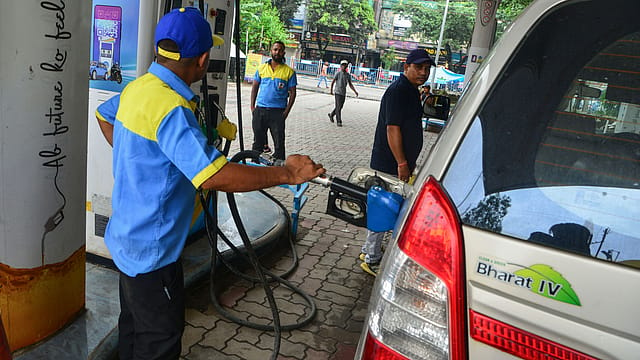
E20 petrol may result in a marginal 3-5 per cent reduction in fuel economy in certain older vehicles designed for E10 fuel, while extensive testing and real-world experience have not found any widespread engine damage or vehicle breakdown attributable to ethanol blending, the government has informed Parliament.
In written replies in the Rajya Sabha, Minister of State for Petroleum and Natural Gas Suresh Gopi said fuel efficiency depends on several factors, including driving habits, vehicle maintenance, tyre pressure, wheel alignment and air-conditioning load.
It added that E20 provides higher octane, better anti-knock performance, improved combustion characteristics and smoother acceleration.
According to the government, E15+ blended petrol has been in widespread use for over three-and-a-half years and E19-E20 fuel for over two-and-a-half years.
The Vanguard
21 Aug 2026 - Vol 05 | Issue 34
BJP Rearmed for 2029
Is E20 petrol safe for over 23 crore vehicles, including older models?
More than 20 crore two-wheelers and over 3 crore petrol cars, including older vehicles manufactured before E20 certification, have been operating on these blends without verified evidence of widespread engine failure linked to ethanol blending.
Manufacturer service data also showed that one leading four-wheeler manufacturer serviced 2.84 crore vehicles during FY 2025-26, including around 1.5 crore older, non-E20-certified vehicles, without reporting any vehicular damage attributable to E20 fuel.
A leading two-wheeler manufacturer reported no higher incidence of damage in vehicles operating on E20 compared with earlier fuel blends.
The government said manufacturers continue to honour warranty obligations for vehicles using specification-compliant E20 fuel.
It added that extensive laboratory studies and field trials found no significant variation in legacy vehicles on parameters including drivability, startability, metal compatibility and plastic compatibility.
The government also said there is no proposal to revert to E0 or E10 petrol, noting that maintaining parallel nationwide supply chains for E0, E10 and E20 across more than one lakh retail outlets would increase logistics complexity, inventory and handling costs.
(With inputs from ANI)