Drishti IAS 2.0: Growth Plans, Deal Talks and a Changed Market
For more than two decades, Drishti IAS built its reputation the traditional way, through packed classrooms, trusted teachers and strong word of mouth among Hindi-medium civil services aspirants. Over time, the institute also became closely associated with founder Vikas Divyakirti, whose lectures and online presence have made him a widely recognised figure among students. From a single Delhi centre in 1999, Drishti grew into one of the most recognisable names in the UPSC coaching ecosystem. But in the past five years, the environment around it has changed.
The pandemic pushed it toward digital. Safety concerns forced it out of Mukherjee Nagar. Competition from fast-growing edtech players intensified. Even acquisition discussions with PhysicsWallah briefly raised questions about its future structure. The effect is now visible in the numbers: in FY25, operating revenue fell to about ₹364 crore from ₹405 crore a year earlier, while profit dropped to ₹61 crore from ₹ 90 crore in FY24. For broder comparison, PhysicsWallah reported total revenue of ₹3,039.09 crore in FY25, up from ₹2,015.08 crore in FY24, while its net loss narrowed sharply to ₹243.26 crore from ₹1,131.27 crore a year earlier.

Rise of the Pivotal Power
18 Sep 2026 - Vol 05 | Issue 38
The BRICS declaration is a strategic victory for Modi
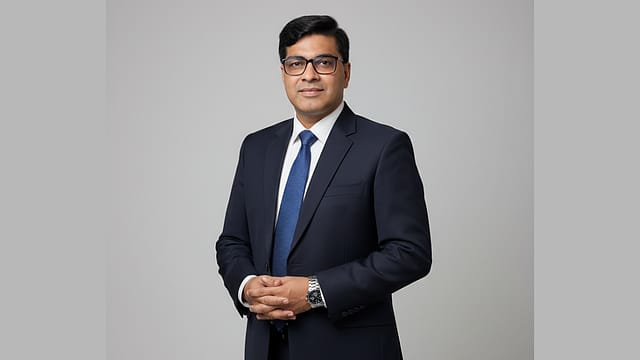
Yet the story of Drishti IAS today is less about decline and more about transition. In an exclusive conversation with Open Digital, CEO Vivek Tiwari described this phase as one of structural rebuilding rather than crisis. “If you look at the last few years together, we have had to change at multiple levels,” he said. “This is not just about one financial year.”
The strain began even before the pandemic
The institute’s current phase cannot be understood without looking at the sequence of shocks that preceded it. Tiwari traces the first disruption back to late 2019, when several senior faculty members left within a short period. In a sector where teachers often function as brand anchors, the departures created uncertainty among students and threatened enrolment momentum.
The institute responded by rebuilding its teaching lineup and launching fresh batches. “We told students openly that if they were unsure, they could take refunds,” Tiwari said. “At that time, maintaining trust mattered more than protecting one admission cycle.”
The recovery window proved brief. Within weeks, COVID-19 forced coaching centres across the country to shut down, bringing offline revenue to a standstill and pushing even established institutions into unfamiliar territory.
COVID forced a digital shift that is still shaping the business
For Drishti IAS, the pandemic was not just a temporary disruption but a structural turning point. The institute had to experiment quickly with recorded lectures, live online classes and physical delivery of printed study material to students scattered across the country. Many aspirants did not have devices suited for long online sessions, which made the transition uneven, but hybrid learning gradually became part of the institute’s operating model.
Today, online programmes account for roughly one-third of total revenue, and the management expects that share to grow further. The shift has also influenced pricing and course design, with the institute now offering a mix of premium hybrid programmes and lower-cost online modules.
The digital transition, however, coincided with another structural shift that proved even more disruptive.
Leaving Mukherjee Nagar and absorbing the cost
For decades, Mukherjee Nagar had functioned as both the institute’s largest centre and its symbolic base. But regulatory scrutiny and safety concerns in Delhi’s coaching clusters made dense basement facilities increasingly difficult to operate. Drishti eventually shifted a substantial part of its operations to a larger campus in Noida, a move intended to align with compliance requirements and long-term infrastructure needs.
The relocation carried financial consequences. According to the institute, the transition alone affected revenue by more than ₹30 crore and contributed significantly to the FY25 decline.
“We knew it would hurt in the short term,” Tiwari said. “But if infrastructure is not aligned with safety expectations, the long-term risk is much bigger.”
The move reflects a broader shift in the coaching industry, where traditional cluster-based models built around density are gradually giving way to campus-style facilities designed for scale, compliance and student comfort.
Regulatory pressure extended beyond infrastructure
Drishti’s recent interaction with regulators has not been limited to physical infrastructure. The institute was also fined over misleading advertising linked to a 2021 promotional claim, a development that signalled tighter scrutiny of marketing practices in the sector.
Tiwari acknowledged the penalty and said it led to a review of internal processes. “At that time there were no very clear written norms for coaching advertisements,” he said. “After that, we aligned everything strictly with regulatory expectations.”
The episode reflects a wider shift in the education market, where branding claims, success rates and promotional messaging are increasingly being examined more closely by authorities.
Expansion continues despite the financial dip
Even as it dealt with relocation costs and compliance adjustments, Drishti IAS continued to expand geographically. It now operates nine centres across Delhi, Noida, Prayagraj, Lucknow, Jaipur, Indore, Ranchi and Patna, with further strengthening planned in eastern markets during FY26.
The institute has also diversified beyond UPSC preparation into PCS exams, SSC recruitment, teaching eligibility tests and judiciary coaching. This broadening of the academic portfolio reduces dependence on a single exam cycle and allows the brand to engage students earlier in their preparation journey.
At the same time, the organisation has moved toward a layered pricing structure, offering high-value hybrid courses alongside more affordable online modules. Some short-format programmes now cost only a fraction of traditional civil services coaching fees, reflecting an attempt to widen access while maintaining its core offerings.
Technology becomes part of the academic model
Alongside expansion, Drishti is investing in technology-led feedback systems. The institute is testing artificial intelligence tools that can evaluate written answers, provide structured feedback and simulate interview panels for civil services candidates.
“In exams like UPSC, improvement depends heavily on feedback,” Tiwari said. “If technology allows us to scale that support, it becomes a real academic advantage.”
While these systems remain in development, they signal how competition among coaching institutes may increasingly extend beyond teaching to include evaluation quality and mentoring infrastructure.
The PhysicsWallah talks and what they signalled
Drishti’s transition has also unfolded against the backdrop of consolidation across India’s education sector. At one stage, discussions took place around a potential acquisition by edtech company PhysicsWallah, which has been expanding rapidly across both online and offline education segments.
The deal did not materialise, but it underscored how legacy coaching institutions are increasingly being viewed as strategic assets by digital platforms seeking brand depth and regional reach.
Founder Vikas Divyakirti confirmed that the institute remains open to future partnerships but is not actively looking for one. “If a good opportunity comes, we will evaluate it,” he said. “But we are not desperate. The decision has to align with our long-term vision.”
The comment reflects a cautious approach shared by many established coaching brands today. External capital can accelerate growth, but it can also bring pressure for faster scaling and profitability that may not always align with academic priorities.
A rebuilding phase rather than a retreat
Taken together, the past five years at Drishti IAS resemble a series of adjustments rather than a single turning point. Faculty churn tested academic continuity. The pandemic accelerated digital adoption. Regulatory scrutiny reshaped infrastructure and marketing practices. Expansion into new cities and exams broadened the business base. Acquisition discussions reflected consolidation pressures across the sector.
The FY25 revenue decline therefore appears less like a signal of weakening demand and more like the cost of moving from one operating model to another. The institute is attempting to balance its legacy as a classroom-driven coaching brand with the realities of hybrid learning, stricter compliance and technology-enabled competition.
For Drishti IAS, the question now is not whether demand for civil services coaching will continue, but what form that demand will take. The institute is expanding into new cities, investing in technology and experimenting with delivery formats, even as it absorbs the costs of relocation and structural change. Whether it eventually partners with a larger platform or continues independently, its trajectory reflects a wider shift in India’s coaching economy, where legacy classroom brands are being forced to adapt to digital scale, regulatory oversight and new competition. The outcome of that transition will determine not just Drishti’s next phase, but also how traditional coaching institutions survive in a sector that is rapidly reorganising itself.