Dalal Street’s Season of Debuts
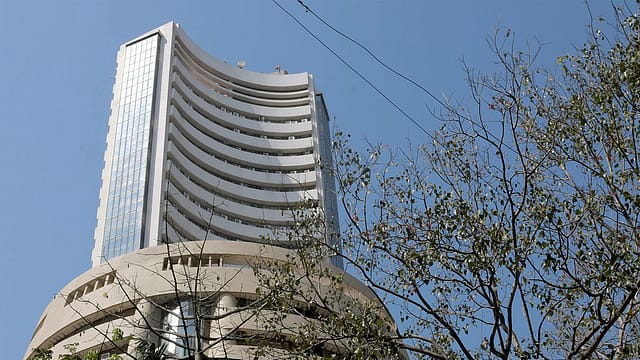
Dalal Street loves a blockbuster. But the more revealing story often unfolds outside the first-day-first-show queue. With Jio Platforms scheduled to debut on October 28, India’s primary market is already preparing its next attractions: an alternative investment manager, an environmental technology company, a polymer manufacturer, a jeweller and a steel processor. Five mainboard offers opening during October 26–30 seek roughly Rs 2,581 crore between them. The marquee name may command attention; the supporting cast reveals what is driving the season.
The appetite has been formidable. According to PRIME Database figures reported by Fortune India, 78 companies raised Rs 94,205 crore through mainboard IPOs during April–September 2026—35 per cent above the corresponding period’s previous record. Average listing gains rose to 19 per cent, from 7 per cent a year earlier. That combination of abundant supply and rewarding debuts helps explain why issuers keep approaching the market despite volatility in already-listed shares.

Look Who's Talking Regime Change
23 Oct 2026 - Vol 05 | Issue 43
Leading the immediate queue is EAAA India Alternatives, the Edelweiss-backed investment platform focused on real assets and private credit. Its Rs 1,200-crore offer runs from October 26–28, with listing tentatively scheduled for November 2. Crucially, it is entirely an offer for sale: the money goes to the selling promoter, not into the company’s business. This is shareholder monetisation, rather than fresh growth capital.
Others have more operational shopping lists. SFC Environmental Technologies opens its Rs 667.53-crore issue on October 27. Of that, Rs 150 crore is fresh equity, part of which will repay borrowings and support working capital. BLS Polymers opens the same day with a Rs 255-crore entirely fresh issue, including funding for expansion at its Goa factory and working-capital needs.
Jewellery retailer MK Sons Fine Jewels follows on October 28 with a Rs 275-crore offering. Bombay Coated and Special Steels opens its Rs 183.06-crore fresh issue on October 29, earmarking Rs 125 crore for debt repayment and Rs 15.7 crore for capital equipment. Meanwhile, Paras Healthcare is scheduled to join Jio on the exchanges on October 28, following its Rs 1,450-crore offer. These are subscription openings and trading debuts—not interchangeable milestones.
Why now? A receptive market gives companies a window to finance expansion, strengthen balance sheets or provide liquidity to existing owners. Timing also matters—market participants told Fortune India that a giant offer such as Jio can temporarily concentrate institutional money and attention, encouraging smaller issuers to avoid competing directly with it. A successful debut could subsequently lift sentiment, although that outcome remains uncertain.
The revealing number is the split within the next five offers: approximately Rs 808 crore in fresh equity against Rs 1,773 crore in shareholder sales. The distinction matters. “IPO fundraising” does not automatically mean new factories, additional jobs or cash entering corporate coffers. Much of the money can simply change the ownership of existing shares.
For investors, that makes the prospectus more useful than the party atmosphere. The questions are prosaic but essential—who receives the money, what improves after listing, and does the valuation leave room for disappointment? A crowded IPO calendar offers choice—not a guarantee that every new arrival deserves a place in the portfolio.