Capital, Code, and Clean Energy: Inside PM Modi–Citi Talks
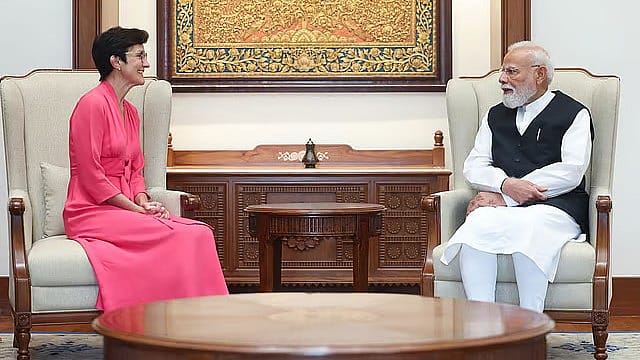
In Mumbai, the conversation was less about a meeting and more about momentum.
Prime Minister Narendra Modi sat down with Jane Fraser, Chair and CEO of Citi, at a moment when India’s economic narrative is no longer just domestic. It is global, expanding, and increasingly strategic.
Fraser, in India as part of a broader engagement with clients and investors, used the meeting to reaffirm Citi’s commitment to the country’s growth story. But beneath the formalities, the agenda was clear: capital, capability, and the next phase of scale.
The discussion moved quickly across themes that now define India’s economic ambitions. At the center was investment—how to deepen capital flows into India, and how to position Indian companies to step more confidently into global markets. This was not just about attracting money, but about enabling Indian businesses to travel further, faster.

Losing Memory
16 Oct 2026 - Vol 05 | Issue 42
The making of a medical and social emergency
Modi outlined his vision of accelerated growth tied to the long-term ambition of Viksit Bharat 2047, a roadmap that increasingly hinges on both domestic strength and global integration. The conversation reflected that dual push: bring the world into India, and take India to the world.
Artificial intelligence featured prominently. Not as a buzzword, but as infrastructure—something that will shape productivity, governance, and economic output. Alongside it came the regulatory question: how to enable innovation while maintaining oversight in a space that is evolving faster than policy can typically keep pace.
Energy, too, was central. The focus on alternative and green sources—particularly solar and green hydrogen—signals a shift that is no longer aspirational. It is operational. The question is not whether India will transition, but how quickly and at what scale.
For Citi, the alignment is strategic. With nearly 125 years in India, the bank is positioning itself not just as a participant, but as a conduit connecting global capital with Indian opportunity. Fraser was joined by senior leadership, including K Balasubramanian, underscoring the importance of the market within Citi’s global framework.
The timing adds another layer. Citi is hosting over 1,500 clients and investors at its India Conference in Mumbai, a platform designed to showcase investment opportunities and deepen engagement with global capital. The meeting with the Prime Minister, in that context, feels less like a standalone event and more like a signal of intent, of alignment, and of confidence.
Because that is what sits underneath this interaction.
Confidence from global financial institutions in India’s reform trajectory. Confidence in its economic transformation. And increasingly, confidence in its ability to anchor the next phase of global growth conversations.
While the meeting may have lasted an hour, the implications stretch much further.
(With inputs from ANI)