US Lowers Tariff on Indian Goods to 10%. Nearly Half of India's Exports Escape the New Duty
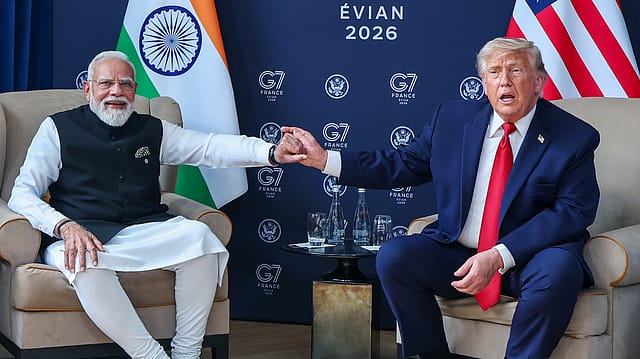
The United States has eased the blow for Indian exporters. In a move that could provide relief to several key sectors, the US has reduced the additional tariff on Indian imports under its Section 301 forced labour measures to 10%, down from the 12.5% proposed earlier. More importantly, nearly 45% of India's exports to the US will remain completely outside the scope of the new duty, according to the Ministry of Commerce and Industry.
The decision follows a months-long investigation by the Office of the United States Trade Representative (USTR) into the trade practices of 60 economies, including India, relating to imports allegedly linked to forced labour.
Why has the US imposed this tariff?
The additional duty is part of the US government's Section 301 action following its investigation into the acts, policies and practices of several countries related to the prohibition of imports produced with forced labour. The final measures were announced by the USTR on July 23.

The Health and Wellness Issue
25 Sep 2026 - Vol 05 | Issue 39
What has changed for India?
The final tariff has been fixed at 10%, lower than the 12.5% proposed in June. According to the Commerce Ministry, India's sustained engagement with the US during the investigation helped secure placement in a lower tariff category than many other economies covered by the probe. Government officials said India participated through detailed written submissions, in-person consultations and public hearings throughout the investigation.
Which exports are exempt?
Some of India's biggest export categories will not face the additional tariff at all. These include generic pharmaceuticals, smartphones and certain other specified products.
Goods already covered under separate Section 232 measures, such as steel, aluminium and auto parts, are also excluded from the new levy. As a result, the government estimates that around 45% of India's exports to the United States will remain outside the scope of the additional 10% duty.
What about the remaining exports?
The remaining 55% of Indian exports will attract the additional 10% tariff. However, the Commerce Ministry says India's overall tariff burden remains comparatively lower than that imposed on many other economies covered under the same investigation, giving Indian exporters a relative competitive advantage.
What is the status of textile exports?
The US has referred to a separate sector-specific mechanism for textiles, but it has not yet been operationalised. India says it continues to engage with the US on the issue as part of the ongoing negotiations for the proposed India-US Bilateral Trade Agreement.
What happens next?
The government says discussions with Washington will continue, with the focus now shifting to an early conclusion of the proposed bilateral trade pact. For Indian exporters, the immediate takeaway is clear: while a new tariff has come into force, it is lower than initially proposed, nearly half of India's exports remain exempt, and India has emerged with a more favourable outcome than many of its global competitors.
(With inputs from ANI)