Basmati in the Crossfire: When War Reaches the Rice Bowl
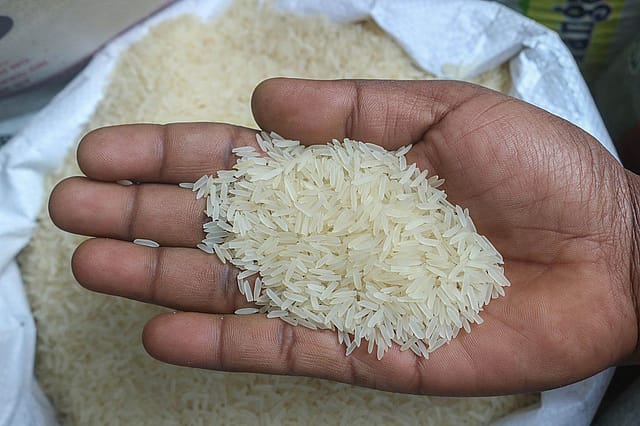
Wars rarely begin with commodities in mind. They begin with power, territory and ideology. Yet, somewhere along the way, the tremors of conflict find their way into corners of commerce—into shipping lanes, commodity markets and, sometimes, the rice bowl.
The latest tensions in West Asia have done precisely that. What began as a geopolitical flashpoint has started rippling through India’s basmati trade, leaving exporters, farmers and traders grappling with a crisis unfolding thousands of kilometres away.
Along the western coast of India, the disruption is visible in the stillness of cargo yards. Nearly 3,000 containers of basmati rice remain stranded at Kandla and Mundra ports, waiting for ships bound for the Gulf that have either been delayed or diverted. Across the supply chain, exporters estimate that close to four lakh tonnes of basmati rice are stuck at ports or in transit, caught in the uncertainty gripping one of the world’s most strategic trade corridors.

Look Who's Talking Regime Change
23 Oct 2026 - Vol 05 | Issue 43
The stakes are significant because the Gulf is not just another destination market for India’s rice exporters—it is their primary one.
Countries in West Asia account for around 70–72% of India’s basmati export volumes, which stood at roughly 6 million tonnes last fiscal, according to a recent credit note by CRISIL Ratings.
For these countries, basmati rice is a staple food that is largely met through imports, making India the natural supplier. But the trade is now confronting a rare convergence of geopolitical risk and logistical disruption.
At the centre of the problem lies geography.
Key maritime corridors linking the Gulf to global shipping routes have become increasingly uncertain as tensions escalate. Several vessels have slowed or altered their routes due to heightened security risks and rising insurance costs, creating delays across cargo movements.
Rice exporters are among the first casualties of this disruption.
The Gulf region—from Saudi Arabia and Iraq to Qatar and Oman—absorbs the bulk of India’s basmati shipments. Iran alone remains one of the largest buyers, with trade estimated at roughly ₹6,000 crore annually. For exporters, the region is not merely a market but a carefully cultivated ecosystem built over decades of trade relationships, diaspora networks and culinary loyalty to Indian basmati.
Now that ecosystem is under strain.
The immediate risk lies not just in delayed shipments but also in delayed payments. Exporters warn that prolonged instability in the region could slow payments from buyers, stretching working capital cycles and locking up cash in cargo stranded at ports.
Industry bodies have already approached the government seeking relief, including waivers on port demurrage and storage charges, arguing that the situation qualifies as force majeure (unforeseeable circumstances that prevent someone from fulfilling a contract).
Meanwhile, the tremors of the crisis are beginning to travel further down the value chain.
Domestic basmati prices have started softening in several mandis as export orders slow and inventories build up. For farmers in Punjab and Haryana—India’s primary basmati-growing regions—the disruption comes at a difficult moment, just as the marketing season was expected to gain momentum.
Markets have reacted too.
Shares of major rice exporters have swung sharply as investors attempt to price in geopolitical risk. Companies such as KRBL, whose flagship India Gate brand dominates premium basmati exports, derive a substantial portion of their overseas revenue from the Middle East. LT Foods, the maker of Daawat rice, also relies on Gulf demand for a significant share of its export business.
(Queries sent to KRBL and LT Foods remained unanswered till the time of publishing this story.)
Yet, for the basmati trade, the crisis also reveals something deeper: a structural vulnerability.
India’s basmati export industry has long depended heavily on West Asia. When nearly three-quarters of exports flow to one region, geopolitical instability there inevitably becomes a commercial risk at home.
For now, exporters remain cautiously optimistic. Many companies have relatively strong balance sheets that can absorb short-term shocks, analysts say.
But the real question lies in the duration of the conflict.
If tensions ease, the containers waiting at ports will eventually move, the shipments will reach their buyers, and the trade will resume its familiar rhythm.
If they do not, India’s basmati trade may discover that the distance between geopolitics and agriculture is far shorter than it once believed.
For now, the containers remain where they are—lined up in silent rows at India’s western ports, waiting for the sea lanes of West Asia to reopen.