#Untold | Vamsi Krishna, Vedantu, and the Night it Nearly Fell Apart
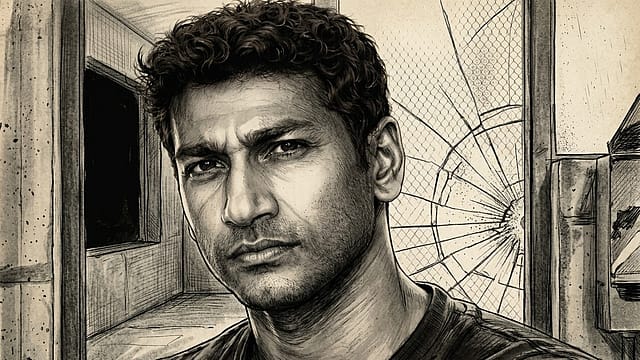
Vamsi Krishna locked the door and paused.
He pushed it shut and stood there for a second, staring at nothing.
Outside, it sounded like a normal day. Chairs scraped. A phone rang somewhere and kept ringing. Someone laughed—too loudly. An argument spilled out of a call. Keyboards tapped in bursts. Cups clinked near the pantry. It was just another day in the office.
Inside, nothing moved. One word kept circling: layoff. It didn’t belong to his world. It was not his vocabulary. It was not how he built.
Years earlier, in 2012, when Krishna and his cofounders—Pulkit Jain, Saurabh Saxena and Anand Prakash—sold Lakshya to MT Educare, he had made one thing non-negotiable: no one would be fired. Not a single employee. Layoffs went against everything the company stood for. Layoff didn’t fit into Krishna’s universe.
The Vanguard
21 Aug 2026 - Vol 05 | Issue 34
BJP Rearmed for 2029
So, the word never entered. Until now.
Almost six years later—in 2017—it came back with a vengeance.
Krishna dragged himself to the sink, gripped its edge, and bent forward. His hands trembled. How do I let go of 30% of my team?
The number didn’t feel real. 30%. It wasn’t a number—it was people. Many had joined when there was nothing to show. And then there were many who had believed before there was proof.
STARTUP CASH CRUNCH & FAILED $7-MILLION ROUND
Krishna held the sink tighter and tried to steady himself. For a few seconds, it worked.
Then it didn’t.
He slid down onto the cold bathroom floor, back against the wall. And then he broke. The tears came in waves—sharp, choking, uneven. He covered his face. Dropped his hands. Pressed his palms into his eyes as if he could push it back in.
Nothing worked.
Then the thoughts crashed in. How did it get here? What do I tell them? What have I done?
Layoff wasn’t just a decision anymore. It was a rupture of what he believed, of what he had told others, of what this journey was supposed to be.
The clock was already ticking.
By early October, only three weeks of cash remained. Vedantu—and Krishna—had spent three months on a funding promise that now refused to close.
The talks with an Australian VC fund had started in May, when just five to six months of runway was left. Enough time, if things moved. The fund showed intent, promise, and commitment. They leaned in hard: diligence, calls, meetings that spilled into dinners, dinners that turned into plans. Weeks blurred. The future began to take shape.
By July, it felt real. Krishna got a term sheet of $7 million. Inside the office, the mood lifted. The team knew. Quiet relief came first. Then energy. Then belief. The next phase stopped feeling distant. An office party was even planned for early October.
But August passed. The money didn’t hit the bank. Even September dragged and nothing changed except paperwork that crawled.
All the while, the runway kept shrinking. The faith didn’t. Until October 5—the day scheduled for a call with the VC fund. The call came in. Krishna wasn’t on it. He was in a hospital room—his second son had been born just a day earlier.
He remembered the call after and messaged the team.
How did it go?
A reply came back. Two words: Not good.
He stared at the screen. Typed back two question marks.
What does that mean? When is the money coming?
The answer staggered in.
“They are reconsidering.”
For a moment, it didn’t register. Maybe timelines had shifted. Maybe wiring dates were moving again. That had happened before.
Then it hit. The VC fund was stepping back.
“I panicked,” he recalls.
WHEN CONVICTION CRACKS: FAILED FUNDING & LEADERSHIP UNCERTAINTY
Krishna tried to make sense of it. Suddenly, months of work, endless conversations and a signed term sheet turned weightless. “This wasn’t how these things ended,” he argued with himself.
He moved fast. Tried to pull them back in. But the reasons to chicken out, when they came, made it worse. The fund reckoned they no longer had the appetite to bet on India.
That was it. Months earlier, they had leaned in with conviction, built models, asked questions, spent time and acted like believers. And now, suddenly, they weren’t.
Krishna couldn’t square it. There were no clear answers. Silence replaced certainty. And with it, everything built around that expectation collapsed.
Around the same time, one of the cofounders decided to leave, citing a lack of conviction. The word stayed: conviction. Now it felt heavier. Krishna was supposed to be the one who had it.
Back inside the bathroom, Krishna stayed on the floor, breathing unevenly, trying to make sense of something that had already moved past sense. “I sat on the floor and cried for half an hour,” he recounts. “It was the most traumatic thing.”
Outside, nothing had stopped.
People were still working, still laughing, still arguing over calls, still planning the week, still trusting that they would get their salaries on time. There was an office party planned. People kept showing up, kept believing that someone had a handle on things.
Inside, Krishna didn’t.
He sat there longer than he needed to. Eventually, he got up, dragged himself back to the sink, and turned the tap on. He let the water run longer than necessary, splashed his face once, then again, and looked up.
He held his own gaze in the mirror. There was no version of this that felt right. No version that looked like leadership. No version where this decision made sense. Just a series of choices closing in. And none of them clean.
And yet, the day wasn’t done with him.
There wasn’t enough cash to make it through the month. Whatever remained in the bank would not stretch far enough. This meant one thing: the layoffs wouldn’t stop at thirty percent. It could go deeper.
A few days later, the office party was about to start. Krishna had thought about calling it off. But cancelling it would have raised questions—and questions would have demanded answers they didn’t yet know how to give. So, the cofounders let the evening unfold exactly as planned.
FOUNDER CRISIS, LAKSHYA BACKSTORY & VEDANTU’S SURVIVAL FUNDING
From the outside, nothing felt off. Conversations stretched. Plates filled, emptied, and refilled. Someone pushed the music up a notch. Another group drifted toward the pantry, carrying the energy with them.
Krishna, meanwhile, looked lost. "That was the darkest time for Vedantu,” he recalls.
A few nights later, he and his cofounder, Pulkit, went for a stroll near a stall outside the office. The intent was simple: figure out what next.
They asked themselves a blunt question: abhi bhi ye karna hai kya? (Do we still want to do this? Do we still want to continue as entrepreneurs?)
Then they pushed it further. If everything collapsed tomorrow—if this ended—what would we do next? If we hit the lowest, what would we do?
Back in 2011, Krishna and his cofounding team had already seen their lowest moment. Weirdly, their ‘low’ looked like a ‘high’ from the outside.
By then, Lakshya—the edtech venture Krishna and his friends had started in 2006—had scaled steadily. From Barnala, it had grown to four centres across Punjab, 150 people, and ₹15 crore in revenue. It was profitable. Highly profitable.
And yet, beneath it, something didn’t sit right.
Imagine their position. They were making a lot of money. Their parents were, finally, somewhat reassured about their IITian kids who quit jobs and took up teaching as a career. And now the world saw a success story. And still, the cofounders weren’t satisfied. A barrage of questions kept returning: why are we doing this? What made us start? Was it money or impact? If we keep doing this the same way, how long before it truly scales? Decades? More?
What looked great from outside, was chaotic from inside. They couldn’t reconcile what to do next. They were stuck. "This was a mid-life crisis," recounts Krishna. “And it came early in our lives.” A year later, in 2012, they sold the venture. “That was the right thing to do,” says Krishna.
Five years later, in 2017, nothing was going right. “Whatever could go wrong did go wrong in 2017,” recalls Krishna.
With just three weeks of runway--and a disappearing Australian VC--Krishna went back to his investors, not with a revised deck or a cleaner version of the story, but with what had actually happened.
Accel responded. They decided to pump in $1 million. It was unconditional, and a bridge round that would extend the runway by a few months—six, maybe eight.
FROM REJECTION TO RECKONING: FUNDING STRUGGLE, EDTECH BOOM, CRASH & LAYOFF
Though the immediate collapse was averted, the underlying question hadn’t changed: Vedantu had to raise money.
Krishna stepped back into the market with a version of the company that was harder to explain than before. A round that had failed after months of diligence, a cofounder who had walked away, layoffs already underway and a business that had stopped growing at the pace it had promised.
The questions came quicker, the pauses lasted longer, and the space between one interaction and the next began to widen. Some meetings ended without a follow-up. Some never moved past the first call. In a few cases, the conversation didn’t begin at all. “At least 40 declined,” Krishna recalls. “After a point, people were not even ready to take a call.”
And then, one of those conversations didn’t end the same way. Omidyar leaned in. In early 2018, Vedantu raised $11 million in its Series B, led by Omidyar Network, with Accel returning. The capital came after a long gap—three and a half years. The last round was in 2015, when Accel and Tiger Global had put in $5 million.
Now, the deal was done. But it wasn’t clean. It was a down round. “It was a very good deal for them,” he says. No bitterness. Just fact.
Now, there was a shift. From 2019, Vedantu started riding strong momentum. Forget constraint, capital wasn’t even a question. In that year alone, the startup raised three rounds. This time, the momentum was real. And then, within the next 12 months, another $100 million came in.
Then came Covid.
At first, it helped. The world went online. From 2020 to late 2021, edtech exploded by 11–12x, demand surged and classrooms went digital overnight. Everything expanded—users, revenue, ambition.
And then, just as quickly, it flipped. The funding winter arrived in 2022 and edtech cracked. “Every week, three edtech startups were folding up,” recounts Krishna. The years that followed—2022 through 2024—were brutal. The online market shrank almost overnight. Nearly 48–50% gone.
Demand for online collapsed, students moved offline and screens lost their grip. And when demand shrinks, numbers follow. Toplines dropped. Everyone who had raised heavily felt it. Everyone had to react. Some delayed it. Some denied it.
Vedantu moved early. And that meant doing the hard things first.
Layoffs. Not one round. Three. Two in 2022. One more in early 2023.
In total, nearly 1,600 people let go. At its peak, the team was close to 8,000. This means the layoff was roughly 20%.
WHEN GROWTH LOST DISCIPLINE: OVERFUNDING, BROKEN UNIT ECONOMICS & COST IOF CHASING SCALE
“It was painful,” says Krishna. The leadership took a massive salary cut. “I wanted to be fair and square,” he adds. If the company was in a hole, the responsibility had to start from the top. “You can’t lay people off and not take a hit.”
The situation was bad. In FY22—Vedantu’s peak year—the company collected ₹230 crore. The next year, it dropped to ₹95 crore. From 230 to 95…that fall tells the story. It doesn’t just hit revenue. It hits morale, board and belief. Everything gets shaky.
And yet, strangely, 2022 still felt better than 2017.
Krishna explains why.
First, this time, it wasn’t just them. The entire ecosystem was going through it. Second, edtech wasn’t alone. This was a broader collapse. Third, Vedantu had cash. The recent $100-million raise gave them oxygen. Fourth, demand hadn’t vanished. It had shifted. Students were still there. Just somewhere else.
Very few edtech startup made it through. Vedantu did but not without scars. They had seen cycles before. They had context. The lessons from 2015 and 2016 were still fresh—and they helped.
Krishna looks back and laughs. “Funding was never the problem,” he reckons. “Everything else was,” he smiles.
The first issue: the market wasn’t ready. And yet, the money came in. More than it should have.
“Honestly, we got more money than we deserved,” he says. “Vedantu, at that stage, didn’t deserve $5 million,” he says referring to the early funding from Accel and Tiger.
And that excess does something dangerous. It distorts judgment.
Krishna explains. When the market isn’t ready, the playbook is simple. Build patiently, focus on product, find a small segment that works, grow slowly and wait. But when you have money, instinct takes over. You spend to grow. “That’s where it went wrong,” quips Krishna.
Vedantu spent aggressively to buy growth. From a radio blitzkrieg in Bengaluru to heavy media pushes, pricey brand ambassadors, and amped-up digital campaigns—money went out fast.
Users came, growth showed but unit economics broke. “In fact, unit economics was non-existent,” Krishna says. No wonder, burn rose, focus slipped and the company stretched.
Look at the numbers. Losses ballooned from ₹150.13 crore in FY20 to ₹696 crore in FY22. In the same period, revenue grew from ₹24.62 crore to ₹166 crore.
Growth was there but discipline was missing. But can you blame them?
Krishna doesn’t.
Vedantu wasn’t alone. The entire ecosystem was running the same play. Everyone was high on marketing steroids. “You get influenced by your ecosystem. Everyone had the same playbook,” he says, adding that 2015 and 2016 were years of capital glut. Money was everywhere. Everyone was funded. Everyone was chasing growth at all cost. “So, you slip into herd mentality. Everybody is doing it, so you are also doing,” he says. And over time, that kind of growth got normalised.
THE ONLY THING THAT HOLDS: FOUNDER CONVICTION, LONG-TERM THINKING
And then, there was another problem. The narrative supported it. ‘Build like this. Burn like this. Profit will come later’ was the catchphrase. Eventually, there were enough examples and enough noise. Result? People believed it.
But inside, there was conflict.
Lakshya had been profitable. It had strong cash flows. It was a solid business. Vedantu, in contrast, was bleeding. Same founders. Two paths. “At times, we used to wonder which way of life was correct,” Krishna says. He pauses. “Yes, we felt conflicted.”
And then came the justification. “Maybe this is the new world. Maybe we don’t understand how it works yet. Maybe this is the right way to build.”
Years later, he doesn’t dress it up. “Raising more money can be a curse,” he says. “It makes you do nonsensical things.”
And that’s when you find what still makes sense. When things start to fall apart, theory doesn’t help. Conviction does.
One night in 2017, when Krishna and Pulkit stepped out for a short walk, they asked a harder question. If everything collapses tomorrow—if this ends—what would we do next?
The answer came fast. Both said they would still teach.
“We will find a room, set up a camera and start again,” both said unanimously. That was it.
And when the answer is that clear, doubt doesn’t stay. It doesn’t get room.
That clarity carried them.
Conviction isn’t built when things are working. It shows up when they stop. Trends will change, hot sectors will cool and narratives will swing. Conviction doesn’t.
“If you’re not energised by what you’re building, the lows will break you,” says Krishna. And they will come. If you are still energised, you stay.
That became the filter.
The other filter was honesty. No second-guessing, no hiding and straight conversations with the board and the employees, especially when the answers weren’t ready.
And then comes luck. Krishna doesn’t dodge it. The right investors. The right team. People who stayed aligned when it would have been easier to step away.
Over time, his definition of success has evolved. It’s not valuation, funding or even revenue. Those are outcomes. The real question is simpler: What survives you? Can you build something that continues—innovates, evolves—long after you’re gone?
If that becomes the lens, decisions change. You don’t chase spikes. You don’t bet the house. You don’t play for moments. You play to stay. “If you stay long enough, the game tilts. Others rush, overreach, collapse,” he says. You don’t have to beat them. You just have to outlast them. That became the operating system.
In 2022 and 2023, when the noise was loud, Krishna told his team the same thing. Ignore the noise, listen to execution, keep your head down and build.
And underneath all of it—beneath the cycles, the strategy, the survival—sat something simpler: Why start at all?
For Krishna, the answer hasn’t changed. To build with people he cares about. To do work that energises him. That word keeps coming back.
Energised. If the work gives him that—if the people around him give him that—he stays. That’s the metric. Everything else follows.
And yet, even after all the cycles, one thing still weighs heavier than numbers: Letting go of 1,600 people. “That was the hardest call,” he says. “It affects me 100x more than failures.”
That’s why the ambition isn’t just to build fast. It is to build something that lasts. Beyond markets. Beyond cycles. Beyond him. That is Vedantu’s real test. Not how high it goes. How long it endures.