The Right Way to Break a KitKat. And the Even Better Way to Break the Internet
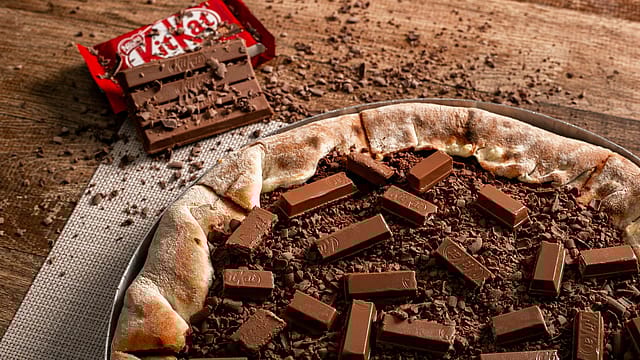
There is, apparently, a correct way to eat a KitKat.
Break. Snap. Enjoy. It’s neat. It’s orderly. It respects the design.
And then, almost immediately, the brand shrugs—or don’t. Eat it your way. Bite into it whole. Break it unevenly. Ignore the lines. Do what you want. Why? Though the ritual matters, the feeling matters more.
Now hold that thought.
Somewhere between Italy and Poland, a truck carrying 12 tonnes of KitKat disappeared. Just gone. One moment it’s in transit, the next it’s a headline.
This is where most brands stiffen.
A battery of lawyers would march in. Words would pile up—explanations, disclaimers, carefully engineered fog. Fingers would point. Quietly at first, then not so quietly. A few heads might roll. Or at least wobble. And eventually, out comes the statement—pressed, polished, and padded so heavily, it feels like it was written with gloves on.
KitKat did the opposite.
The Right Way to Handle a Break
It acknowledged the theft. It confirmed the facts. And then, almost gently, it reassured you—no safety concerns, no supply issues.
But more than what it said, it was how it said it. Calm. Light. Just a hint of a smile behind the words. A brand built on “Have a break” didn’t lose its voice when something broke.

Open Minds 2026
26 Jun 2026 - Vol 05 | Issue 26
The power of ideas and arguments in 50 portraits
And that’s the trick.
The ‘correct way’ to eat a KitKat isn’t really about technique. It’s about understanding the product well enough to play with it. It’s about bending the rules without losing the essence.
Nestlé did the same thing here. They followed the structure: Acknowledge, act and reassure.
But they didn’t let the structure swallow the soul. They didn’t over-explain, dramatise, or strip the brand out of the moment. They stayed themselves. And in doing so, something subtle happened.
A theft became a story. A statement became shareable. And a crisis—briefly—became a connection.
Different Crises. Same Instinct
While KitKat did this cleanly, it isn’t the first brand to understand the moment. Just one of the sharpest.
In 2021, when a character in And Just Like That died shortly after using a Peloton bike, the internet turned brutal. Memes flew. The narrative flipped overnight. Within 48 hours, Peloton responded—not with a denial, but with a wink. The same actor reappeared in an ad. Alive. Riding again. No long explanation. Just a quiet reclaiming of the moment. The joke didn’t disappear. It changed direction.
A couple of years later, a leadership scandal at Astronomer spilled into the public, messy and meme-ready. The expected move was silence. Instead, the brand leaned into humour, borrowing from Ryan Reynolds’ playbook—acknowledging the chaos without spelling it out. The ad didn’t resolve the issue. It reframed it. And attention followed.
Long before either, in 1982, Johnson & Johnson faced a crisis with no room for wit. Cyanide-laced bottles of Tylenol led to multiple deaths. The company didn’t hedge. It pulled 31 million bottles off shelves, spoke directly to the public, and rebuilt trust from the ground up—introducing tamper-proof packaging that would change the industry. No cleverness. Just clarity.
And in 2018, Starbucks shut more than 8,000 stores across the US for a day following a racial profiling incident. It was a visible pause and a reset. Most importantly, it was not subtle but unmistakable.
Different moments. Different tones. But the same underlying instinct—meet the moment, don’t run from it.
Not an Ad. Still Advertising
And this is exactly how marketing and advertising experts are reading it. “When I first saw it (the official KitKat statement), I thought—this is advertising," reckons Harish Bijoor, who runs an eponymous brand consulting firm. It almost feels like the start of a new genre: apology advertising that doesn’t apologise, but plays the moment.
Except, apparently, this isn’t an ad. "But come on—the red, the KitKat colours—you can see they’re milking the moment. And doing it smartly," he says. When something gets stolen, it signals value. And here, KitKat has flipped it. They may have lost a shipment, but they’ve stolen consumer affection. "It makes you smile. And that smile is serious brand currency,” says the advertising and marketing guru.
And that, in many ways, is the whole point.
KitKat chose its lane. It didn’t try to out-joke the moment. It didn’t overcompensate with action. It simply stayed in character. The same brand that tells you how to break a chocolate bar—and then invites you to ignore it—handled a real-world break the same way. Calm. Light. In control.
Whether you’re eating a KitKat or handling a crisis, the principle holds: Respect the form. But never lose the feel.
Break it clean or don’t, just make sure that when the moment comes, you still taste like yourself.