Omar Abbosh and the Most Misunderstood Conversation About AI
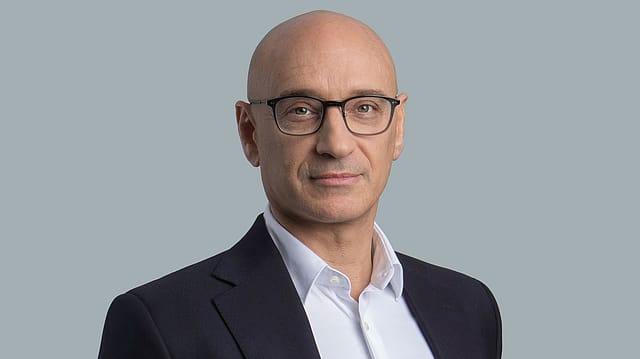
Every technological shift produces two things. Capability. And panic.
Omar Abbosh would add a third: perception.
“The heaviest thing I ever lifted was a keyboard,” he says, smiling, as he reaches back to his early years as an engineer. Growing up in England, the label came with baggage. “If you said you were an engineer, people assumed you fixed washing machines,” he laughs. “Someone once told me, ‘You must be very strong, carrying all those machines around.’”
The joke lands easily. The idea behind it does not.
Abbosh has spent much of his career watching how professions—and technologies—get misunderstood long before they are mastered. Engineers, he says, are often victims of lazy perception. But they are also guilty of one blind spot of their own.
“Engineers are trained to solve problems. That’s the core skill,” he explains. “But they often underestimate something far more powerful—the value of human networks.”
When engineers retreat into thinking and problem-solving alone, Abbosh argues, they miss how progress actually compounds. “When you contribute to others,” he says, “it’s incredible what comes back your way.”
That belief—contribution over isolation—now shapes how he thinks about artificial intelligence.
On his maiden visit to India, the Pearson chief executive is notably uninterested in talking about what AI can do. He is far more focused on what it demands from the people using it. The real challenge, Abbosh insists, is not learning new tools. It is unlearning old habits.

The Liberation of Bengal
05 Jun 2026 - Vol 04 | Issue 74
A silent revolution ends the reign of fear
“If you cling to your existing way of working,” he says, “you won’t be an effective user of AI.”
He reaches for a metaphor. Imagine AI as a vast rectangle—dense, layered, expansive. Most people, he says, barely scratch one tiny corner of it. Not because the technology is limited, but because their thinking is. “You have to unlearn,” he says. “You have to do things differently.”
That discipline applies to him as much as anyone else.
AI to Change Learning, Unlearning & Rethinking
When Abbosh became CEO of Pearson in early 2024, he knew enterprise software, consulting, and technology. What he didn’t know—by his own admission—was education. Two years later, he’s telling CEOs that their real job is no longer execution, but learning.
He doesn’t just say it. He lives it. Abbosh is actively relearning how he does research, how he pressure-tests strategy, how he asks uncomfortable questions—especially the ones that don’t travel well in public rooms. Working with AI, for him, isn’t about efficiency or speed. It’s about friction. About forcing himself out of familiar patterns and into new ways of thinking.
That, more than hype or fear, may be the real story of this moment.
Workforces across the world, Abbosh believes, will have to rethink how jobs are created, how skills are configured, and how work flows. AI will change all of that. But only one future, he argues, works.
“The only positive AI scenario,” he says, “is one that is strongly focused on human learning.”
Treat AI as technology alone, and the side effects will be ugly. Treat it as a chance to augment humans—to evolve how people learn, adapt, and grow—and the outcomes could be profoundly positive. “I really believe that,” he says.
Abbosh’s comfort with unlearning didn’t come late. It began early.
As a young engineer, he remembers being baffled by one question: why were accountants calling the shots?
At university, he was sponsored by an engineering company and spent his summers working in research centres doing advanced lithography and semiconductor fabrication. The work was fascinating. The leadership was not.
“I realised very quickly that the leaders weren’t inspired,” he says. “And they were being led by accountants.” He pauses. “I didn’t get it. The engineers were creating the value. Why were they being told what to do?”
That confusion pushed him toward consulting—and eventually an MBA—not out of ambition, but curiosity. “I realised decisions were being made around costs and revenues,” he says. “And I had no idea what that meant. So, I thought, I need to understand this.”
That instinct—to fill blind spots rather than defend them—has stayed with him. It also shapes why he came to India.
India a land of massive opportunity
Part of it was simple. The pandemic had frozen movement. Rebuilding proximity mattered. But the reasons ran deeper. Pearson, Abbosh says, has an extraordinary concentration of talent in India. And talent, he believes, must be seen, not managed remotely.
“Interpersonal human contact still matters,” he says. “People should see their teams.”
Then there are partnerships—with Indian companies he calls champions—where co-innovation, co-development, and co-selling are still early but promising. “We had some fantastic visits this week,” he says. “I’m delighted.”
And then there’s India itself. Young. Massive. Entrepreneurial. “It’s a critical market,” Abbosh says. “But it’s also a hub of innovation.”
His ambition is not incremental. He wants innovation that starts in India to travel across Pearson globally. He wants Indian leaders shaping the company’s future—not just executing it. And he wants the Pearson brand to be understood not as a legacy publisher, but as a company building AI-first learning and assessment experiences.
The resistance to new technology, Abbosh notes, is as old as technology itself.
ATMs were once seen as a threat to bank tellers. Bicycles were feared for breaking communities. Radio was supposed to kill print. Every wave arrived with doom attached. “Humans are wired for negative thoughts,” he says. “It’s evolutionary.”
AI is no different. It demands adaptation. But panic, he believes, is a poor substitute for thinking.
Which is why Abbosh bristles at absolutist theories—especially the Silicon Valley mantra of “move fast and break things.”
“You do have to move fast,” he says. “But ‘break things’ is too general.”
He tells a story from an earlier job, where a CEO wanted everyone to be entrepreneurial. “I reminded him,” Abbosh says dryly, “that some people were welding polyethylene gas pipes together. If they break things, houses explode.”
Some systems demand experimentation. Others demand precision. Leadership, Abbosh believes, is knowing the difference.
That sensibility extends to how he structures his own life. Until ten in the morning, he doesn’t take calls. He meditates, goes to the gym, reads. “That’s how I clear my head,” he says. Right now, he’s reading Taming Infinity, a history of mathematics.
When hiring, he looks first at values. “Is this person acting for themselves or for the team?” Skills matter. Motivation matters. Hunger matters. But values, he insists, decide everything.
In the end, Abbosh doesn’t present himself as a futurist or a disruptor. He presents something rarer: a leader comfortable saying what he is still learning. In an age obsessed with certainty, that may be the most radical posture of all.