Messi Asks ChatGPT for an Opening. The Internet Finds a Blunder
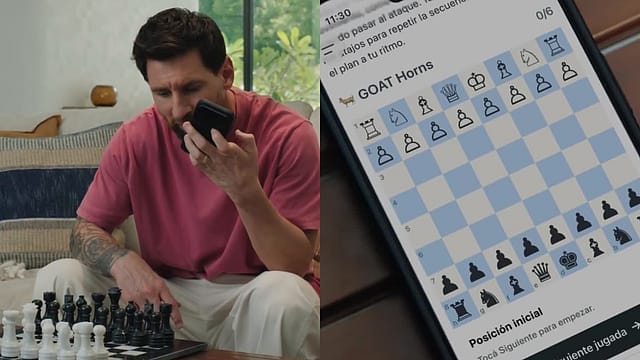
Lionel Messi wants to learn chess. ChatGPT knows his style. And the queen would like to know her address.
In a short commercial, Messi settles down with a chessboard and asks the chatbot for an opening, step by step. The setting is comfortable, the request conversational, the ambition modest. One of football’s greatest players is trying something new.
ChatGPT serves up “GOAT Horns”.
Naturally. Even the opening has consulted the celebrity brief.
Unfortunately, on the digital board shown in the Instagram version, the kings and queens have swapped their starting squares. The pieces are in the wrong positions before the lesson gets going.

Losing Memory
16 Oct 2026 - Vol 05 | Issue 42
The making of a medical and social emergency
The future of personalised learning has arrived. Someone should help it unpack.
THE GOAT HAS HOMEWORK
There is a good advertising idea beneath the misplaced monarchy.
Messi is allowed to be a beginner. He concentrates, follows instructions and moves pieces. The footballer’s greatness supplies a little reassurance: you can be exceptional at one thing and still need the basics explained somewhere else.
That is an attractive role for an AI assistant. Patient, accessible and available for the small question you might hesitate to ask a person.
The domestic setting makes the pitch feel easy. There is no laboratory to negotiate and no breathless presentation about transforming civilisation. Just a man on a sofa, a phone and a board.
Then comes the line doing the real branding work: “You know my style.”
The software has acquired the conversational status of someone who understands its user. The reply arrives with a name tailored to the GOAT.
A charming touch. The lesson has barely begun and the tutor has already remembered to flatter the pupil.
Marketing and branding experts reckon that personalisation can make a demonstration feel immediately relevant. "But when a brand offers instruction, viewers also judge whether the instruction deserves their confidence,” says Ashita Aggarwal, professor of marketing at SP Jain Institute of Management & Research.
Chess has an irritating habit of assisting that judgement. It comes with squares you can count.
THE ROYAL RELOCATION SERVICE
In standard chess, the queens begin on the d-file and the kings on the e-file. In the digital starting position visible in this version of the film, those arrangements have been reversed for both sides.
This is a conspicuous detail in an advertisement about learning the game.
An experienced player can find plenty to argue about in an opening: ambition, timing, risk, the virtues of an eccentric pawn move. The starting addresses of the king and queen are rather less open to creative interpretation.
Yet here they are, enjoying what appears to be a temporary exchange programme.
Chess.com flagged the position and questioned the opening advice in its coverage. Decrypt subsequently examined the swapped pieces. The audience had brought subject knowledge to a celebrity demonstration.
The uploaded film does not establish whether the interface was generated live, scripted or assembled for the advertisement. The finished commercial, however, is what viewers receive. Somewhere between the idea and their phone screens, an instructional demonstration acquired the wrong starting position.
Messi has spent a career finding space. The royal family has taken that a little literally.
GOAT HORNS, RAISED EYEBROWS
The name is excellent advertising shorthand. GOAT. Messi. Horns. Recognition achieved.
As a piece of celebrity customisation, it is economical and playful. As a reason to recommend a chess opening, it needs rather more explanation.
Chess.com describes the advertised sequence as 1.e4 a6 2.d4 c6 and questions its suitability. Its report also notes that “Goat Horns” is not an official opening name.
An amusing label can still help someone engage with a lesson. Teachers invent memorable names and analogies all the time. The trouble begins when the packaging supplies more reassurance than the teaching has earned.
A football fan may enjoy the wink. A beginner needs to understand the moves.
The commercial makes the personalised answer look effortless. That is precisely why the visible mistake has such comic force. All that apparent familiarity, and the board could use an introduction.
When the product is demonstrating expertise, a small visible error can become disproportionately important. "It gives the viewer a specific reason to question a much larger promise,” says Aggarwal.
In this case, the promise has helpfully provided an eight-by-eight inspection grid.
WE HAVE SEEN THIS CHESSBOARD BEFORE
Messi’s advertising relationship with chess has history.
In Louis Vuitton’s 2022 campaign, photographed by Annie Leibovitz, he faced Cristiano Ronaldo across a chessboard fashioned from a Damier attaché case. The line was “Victory is a State of Mind”.
Luxury advertising borrowed chess’s associations with calculation, strategy and intellectual command. Two footballing rivals contemplated their next move over a very expensive piece of luggage.
ChatGPT gives the setting a different purpose. Messi is learning, and the product is helping him along.
That is a potentially warmer use of celebrity. The superstar’s curiosity becomes the invitation. It also makes accuracy more central to the performance. A fashion photograph can sell the atmosphere of a game. A lesson invites viewers to examine how it is played.
The luggage had a relatively straightforward assignment.
THE AUDIENCE KNOWS A FEW THINGS TOO
This is where the joke becomes a useful advertising story.
AI assistants are being introduced through tasks people recognise: explaining a problem, organising information, helping someone learn. The demonstration asks viewers to imagine bringing the product into their own routines.
For an Indian parent considering an AI study companion, or a student asking for an explanation one step at a time, the appeal is easy to understand. A patient response can make an unfamiliar subject feel manageable.
That puts considerable weight on the demonstration. The interface, the instructions and the result all become part of the claim.
There is real charm in watching a celebrated expert accept the role of novice. The film makes curiosity look comfortable. It has a personable star, an uncomplicated setup and a product with an intelligible role.
It also has a queen standing where the king should be. Perhaps the next prompt should be shorter. Set up the board.