Go Colors Wants to Get out of its own Leggings
The leggings have stretch. The reputation is proving harder to move.
Go Colors sells trousers, palazzos, joggers and more. But the product that helped establish its identity appears reluctant to surrender the nameplate.
In a recent interview, chief marketing officer Vatsal Koolwal reportedly said that eight in ten still believe Go Colors only sells leggings. No research methodology accompanies that estimate. The company's financial disclosures offer a striking companion fact. Its April 2026 investor presentation says approximately 70% of FY26 revenue came from non-leggings products. Churidars and leggings together accounted for 58% of the mix in FY19; by FY26, that share was 30%.
His perception estimate and the company's sales mix measure different things. Together, they frame an unusually interesting marketing assignment. It has changed a substantial part of its business. Now it wants more people to update their mental wardrobe.
THE LABEL THAT WON'T COME OFF
A narrow association is useful when a shopper has a narrow need. Someone wants leggings. Go Colors comes to mind. That is years of work doing its job.
Zeroing In on ECI
09 Oct 2026 - Vol 05 | Issue 41
Constitutional legitimacy versus political opportunism
The difficulty begins when the same shopper wants trousers and doesn't think of the brand at all. An association that helps win one purchase can quietly exclude a company from the next.
That is the strategic risk behind Koolwal's observation. It does not establish how many sales Go Colors is losing. It identifies a possible limit on the occasions for which shoppers consider it.
Marketing and branding experts reckon that a strong product association gives a brand a shortcut into the consumer's mind. "The challenge comes when that shortcut becomes the only route in,” says Ashita Aggarwal, professor of marketing at SP Jain Institute of Management & Research. “Expansion works when consumers can see how the original expertise improves the new product,” she adds.
For Go Colors, fit and comfort offer that connection. A customer who trusts its leggings might give its trousers a chance. The brand has to make that next step visible, believable and worth taking. Adding products to a catalogue is the easy part of changing what a brand means.
SHRADDHA HAS A WARDROBE ASSIGNMENT
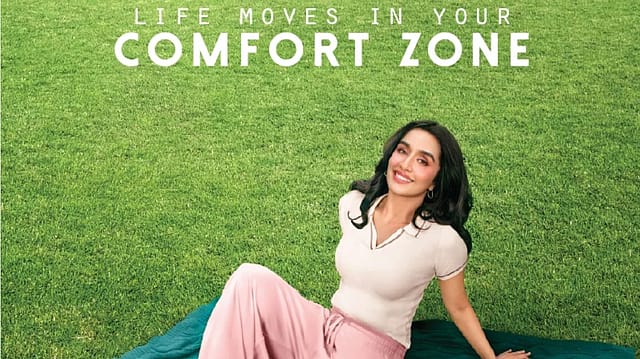
Go Colors announced its Shraddha Kapoor campaign in July, giving the repositioning a recognisable face.
Its proposition, “Life Moves in Your Comfort Zone,” takes a pleasing swipe at the motivational industry. Generations of pep talks have insisted that confidence requires leaving your comfort zone. Go Colors suggests you might function better in clothes that let you feel like yourself. The brand's campaign post explicitly challenges the familiar injunction.
There is a neat commercial logic to that thought. Comfort can connect several kinds of clothing, giving a diverse range a common promise.
It also creates an advertising problem. Almost any apparel brand can claim to make comfortable clothes. The claim needs evidence in the garments: how they fit, move and feel after hours of wear.
Shraddha can make the range more noticeable. The campaign still needs viewers to remember which products they can buy. If the actor earns all the attention while the old leggings association survives, Go Colors will have bought fame without much additional room in the wardrobe.
THE SPECIALIST ENTERS A BIGGER FIGHT
The competitive stakes extend beyond a dispute over terminology.
Retailers selling a whole outfit have more ways to catch the next clothing purchase. Go Colors approaches that contest with a specific credential: expertise in women's bottomwear. That creates a credible case for moving from leggings into other bottoms. Women's topwear and menswear demand a longer explanation.
Koolwal says the company is testing those categories through around 12 larger outlets and proceeding cautiously because of the risk of diluting its specialist identity.
The distinction matters. A shopper can understand why a bottomwear specialist would make better trousers. The same shopper may need another reason to buy its shirt.
Broader apparel competitors could defend their position with complete looks, assortment and value, forcing Go Colors to show why its particular expertise deserves the purchase.
The opportunity is to earn more of a customer's spending through related expertise. The danger is to become another shop selling a bit of everything.
LULULEMON LEFT THE YOGA MAT
Lululemon offers a useful global parallel. Its first retail space opened in a Vancouver yoga studio in 1998. Its range now spans yoga, running, training and everyday movement; men's products contributed 24% of net revenue in fiscal 2025.
That demonstrates how far a business can travel from its original setting while retaining a recognisable product idea.
Technical clothing, fabric and movement provide a connection between yoga apparel and running shorts. A new customer or activity can broaden the business without making the original expertise irrelevant.
It is no guarantee of uninterrupted success. Lululemon's same filing records a 3% decline in comparable sales in the Americas in 2025. A wider range does not remove the need to keep products desirable.
For Go Colors, the useful lesson lies in the connection between categories. Comfort will have to mean something more specific than a pleasant feeling in an advertisement.
LEVI'S KEPT THE JEANS
Levi's supplies a second route. The company describes its ambition as building a denim lifestyle business, with tops and outerwear expanding the wardrobe around its established foundation. Its 2025 annual report says the tops business grew by double digits.
The appeal of that approach is easy to grasp: the jeans remain a reason to enter the shop; another garment becomes a reason to spend more.
Go Colors need not persuade customers to forget leggings. It needs them to carry their confidence in the brand into another purchase.
The test of a broader positioning, underlines Aggarwal, is whether it creates an additional buying occasion. “A customer should still know why she came to you in the first place, and have a clear reason to come back for something else,” she adds.
THE FITTING-ROOM TEST
The strongest objection to the perception argument comes from Go Colors' own revenue mix. If non-leggings products already generate roughly 70% of sales, many buyers clearly understand that the brand offers more.
The task may therefore concern reaching new customers and increasing the occasions for which they consider it. The disclosures do not prove that the old association is preventing growth.
Nor would a rise in awareness settle the question. The useful measures would include consideration for trousers and other categories, purchases across the range, repeat buying and store productivity.
A specialist identity should earn its keep while the business expands. Otherwise, a brand can end up paying to weaken the most useful thing people remember about it.
Go Colors has already put other products into customers' shopping bags. Shraddha's harder assignment is to put them into the brand's name.