Founder’s Cut: From MDH to Bombay Shaving, the Boss is Now the Ad
The client has approved the script. Now somebody has to powder his nose.
Advertising has always required a business owner to put money behind an idea. Increasingly, it also requires him to stand on the mark, look into the camera and attempt the line again with slightly less CEO in his voice.
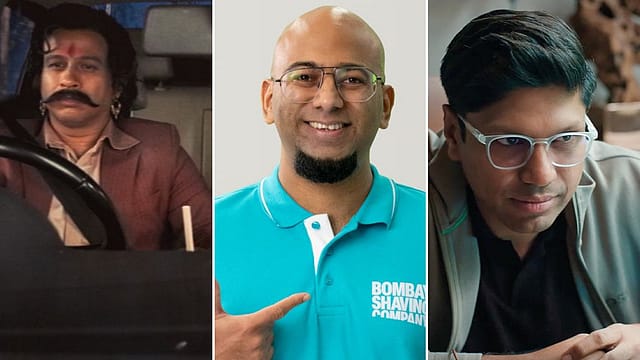
At Bombay Shaving Company, the commitment has become unusually personal. Co-founder Shantanu Deshpande shaved off his familiar beard to promote Switch4. The campaign’s principal film stars Gajraj Rao; the founder’s transformation provides another attraction around the launch. The actor supplies the performance. The businessman supplies his own before-and-after.
Zeroing In on ECI
09 Oct 2026 - Vol 05 | Issue 41
Constitutional legitimacy versus political opportunism
At Cars24, Vikram Chopra has acquired a kingdom. In a campaign created by Talented and Bang Bang, the co-founder plays King Vikram opposite Betaal, using the familiar storytelling device to address anxieties about buying a used car. The man running the company also has to inhabit its fiction.
Put the two beside each other and a different story emerges from the razor launch.
The founder has become part of the creative inventory.
His name, face, habits and willingness to look faintly ridiculous are things the marketing department can use. A beard can become launch material. A first name can become a mythological casting opportunity. The person who normally asks whether the campaign will work is now among the reasons it might.
The Man Behind the Masala
Somewhere in Indian advertising’s family album, a turbaned gentleman with a magnificent moustache is entitled to look unsurprised.
Dharampal Gulati was doing the proprietor-as-public-face business long before anybody could call it founder content.
There is a lovely origin story attached to his screen career. According to an account published after his death in December 2020, Gulati said he stepped into a commercial when the actor meant to play a bride’s father did not turn up. Filling the vacancy also saved money. An owner’s practical intervention became an enduring advertising identity.
The business began with his father, Chunnilal, in 1919. Dharampal rebuilt it in India after Partition—and eventually gave the masala a face the country would remember. The turban, the moustache, the grandfatherly presence: MDH had a human signature long before startups discovered the selling power of their founders.
There was very little distance between the man and the masala. The same reassuring figure returned on the packet and the television screen, until the proprietor began to feel like somebody the family knew. He could lend the business his personality in a few seconds; the viewer did not need his life story.
That is the oldest bargain in this form of advertising: somebody appears to stand personally behind the goods.
The Boss Has a Co-Star
The new generation has retained the bargain and added comic timing.
Peyush Bansal’s Lenskart commercials with Karan Johar turn pricing into an argument between recognisable personalities. The series, launched in January 2023, challenged the association between stylish eyewear and high prices; a subsequent film demonstrated its augmented-reality feature. Here, the founder can explain the offer while the celebrity gives him someone entertaining to explain it to.
Move from choosing spectacles to choosing a spouse, and the proprietor’s presence takes on another meaning. Shaadi.com’s 2024 “Red Flags Se Savdhaan” campaign uses Anupam Mittal to make a comic case against commitment-averse dating culture. A matchmaking founder discussing relationships possesses an obvious category connection. His business depends on people taking the search for a partner seriously. That gives the joke a commercial purpose and its speaker a reason to be there.
Aman Gupta’s appearance in a boAt speaker commercial alongside Bobby Deol and Raghav Juyal demonstrates a different function: the founder as a recognisable entertainment personality who can enter an already starry scene. Mamaearth’s Ghazal and Varun Alagh have also reportedly appeared in their own advertising. From spectacles and speakers to skincare and spouses, the people behind the businesses are stepping into the sales pitch.
Notice how often a professional performer remains in the picture. Gajraj Rao has not been made redundant by Deshpande’s shave. Johar has not disappeared because Bansal can speak for Lenskart. The founder adds ownership, familiarity or category authority; the entertainer adds craft and chemistry.
Calling all this a way to save an ambassador’s fee misses the more interesting transaction. The customer is being offered two kinds of recognition in the same frame.
Around the World in Founder Faces
The temptation travels well. Across the world, the person behind the counter has repeatedly become the character in the commercial. The most durable examples suggest why some founders keep getting cast.
Wendy’s says Dave Thomas first appeared in its commercials in 1989 and went on to feature in more than 800. Repetition made the founder part of the restaurant’s everyday identity. An expanding restaurant chain could still greet customers with the same familiar proprietor.
Dollar Shave Club’s Michael Dubin arrived with a different face: the founder as deadpan comic. His 2012 launch film sold a simple proposition through a tightly constructed performance. In a subsequent first-person account, Dubin described years of improvisation training and a shoot costing roughly $4,500. The apparent casualness had preparation behind it.
James Dyson offers another useful parallel. His role as inventor and pitchman connected the person explaining a vacuum cleaner to the engineering story being sold. The founder’s relevance came from the product problem he could discuss.
And then there is Colonel Sanders, whose advertising life has continued through other performers. Darrell Hammond was playing him in KFC campaigns in 2015. Once a founder’s features become sufficiently recognisable, the company can cast the role again. The business has acquired a character with a life beyond the original proprietor.
Thomas made a chain feel personal. Dubin made a sales pitch worth sharing. Dyson gave the engineering a voice. Sanders became a character the company could keep casting. Each supplied something the business could use long after the novelty of seeing the boss on television had worn off.
Who Auditions the Owner?
The same question now follows India’s founders onto the set: what will keep them interesting after the first appearance? A founder can be famous without being useful to a particular script. He can understand the business thoroughly and explain it terribly. He can attract comments that celebrate his personality while leaving the product almost untouched.
Replace him with an actor, and what does the commercial lose? The answer reveals whether the founder has earned the part.
“The founder brings a relationship with the product that an actor has to manufacture,” says Ashita Aggarwal, professor of marketing at SP Jain Institute of Management & Research. MDH made that relationship feel like a personal guarantee. Today’s founders can add humour, demonstration and familiarity built through other media. But their presence must give the customer something useful. "Owning the company is a reason to care deeply about the advertisement; it is not, by itself, a reason to star in it,” she adds.
Deshpande’s beard offers a useful answer. Its familiarity is what makes its disappearance interesting.
An unknown model shaving would be an ordinary razor demonstration. The founder changing his familiar appearance gives people an additional reason to watch. With Chopra, the founder’s name and authority give the Vikram-Betaal device an extra connection to the company. With Gulati, the accumulation of personal familiarity was itself a large part of the advertising asset.
But ownership is also a complication. The founder who approves the budget may be unusually difficult to reject at the casting stage.
Can the creative team tell him the scene is dull? Can the director ask for a different performer? Can research return an unflattering result without somebody deciding that the sample misunderstood the vision?
The man paying for the close-up may also be the hardest person to ask to leave it.
When the Promise Has a Face
The customer has a more practical casting test. A founder’s appearance makes the promise feel personal: here is the person who can actually do something about the business. That can be persuasive at the moment of purchase. It also gives disappointment a face.
For a razor, that means the quality of the shave. For a used car, it means what happens after a problem is discovered. A personable owner cannot become a charming substitute for customer service.
“Putting the founder’s face against a promise makes accountability feel personal,” Aggarwal says. That advantage can reverse quickly when the experience disappoints. Customers remember who asked them to believe. The business must be able to deliver the founder’s promise when he is nowhere near the customer.
There is a longer-term problem too. If the personality becomes more memorable than the business, the company may find it difficult to speak without him. Every personal controversy then has a route into the brand; every campaign risks becoming another instalment of the founder’s public life.
KFC has found one answer to that dependence: the Colonel became a character other performers could inhabit. The face survived a change of actor. For businesses built around a living founder’s personality, the question is harder. How much of the affection belongs to the company, and how much follows the person?
For now, the Indian cast is expanding. Some arrive with a category explanation, some with television fame, some with a joke. Deshpande has arrived with a newly visible chin.
The part has expanded considerably since Gulati stepped in for an absent actor. The proprietor can be a reassuring elder, a product demonstrator, a comic sparring partner or a king carrying the company’s anxieties into a familiar folk tale.
Gulati made the owner’s presence feel like an assurance. The current generation is asking that assurance to entertain as well.
The founder has put his face on the line. The product still has to keep its word.