Beauty Emergency & the Rise of Quick Commerce: Inside Nykaa’s 30-Minute Makeup Rescue Campaign
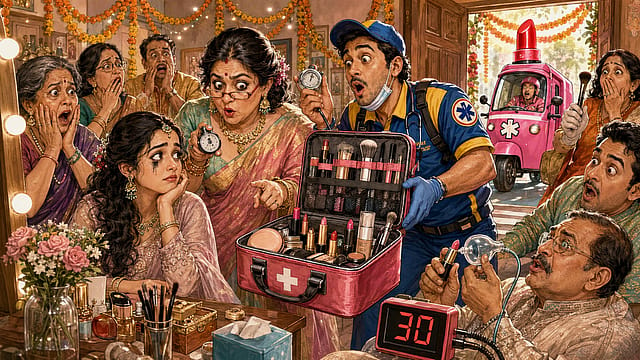
Sharvari has been crying.
Her makeup has surrendered. A family celebration continues around her, but the face expected to return to it requires urgent repairs. Her mother, played by Sheeba Chaddha, surveys the damage and does what Indian mothers have perfected over generations. She begins with makeup. She moves towards life choices. The daughter has two emergencies now. One is cosmetic. The other has raised her.
Nykaa Now enters the situation with a promise: beauty products delivered in as little as 30 minutes. The campaign converts the order into a race. Will the replacement makeup arrive before the smudge spreads, the celebration resumes and the maternal commentary expands into marriage, career and every decision taken since adolescence?
The Modi Years
02 Oct 2026 - Vol 05 | Issue 40
A Nation Rebuilt
The delivery wins. The daughter survives. The mother retains several observations for the sequel. The mascara ran. Nykaa ran faster.
Please Remain Calm. Your Lipstick is Approaching
Advertising loves emergencies. They arrive with flashing lights, frantic music and a clock moving towards disaster. Someone must act immediately. The viewer must lean forward. The brand must save the day.
Traditionally, the endangered object was a life, a home, a car or a family’s finances. Quick commerce has expanded the jurisdiction. The milk is over. The charger is missing. The party has begun. The gift was forgotten. The eyeliner has revolted.
Every inconvenience now auditions for catastrophe.
Nykaa’s film is playful enough to recognise its own exaggeration. Nobody genuinely believes smudged makeup requires an ambulance. “Beauty emergency” is the comic category under which a last-minute need becomes a reason to demonstrate delivery speed.
The commercial logic, however, is entirely serious.
Quick commerce began by shrinking the time between wanting and receiving. Its next task is to shrink the consumer’s willingness to wait.
Once a product can arrive in 30 minutes, every delay starts feeling unreasonable. Convenience becomes expectation. Expectation becomes entitlement. Entitlement becomes a push notification announcing that relief is seven minutes away. The consumer does not merely receive products faster. The consumer learns to experience need faster.
The Emergency-Industrial Complex
Urgency is the central product of quick commerce.
The platforms appear to sell groceries, fashion, cosmetics, electronics and gifts. Their most powerful offering is the destruction of the interval between desire and fulfilment.
That interval once performed useful work. It allowed consumers to compare products, reconsider purchases, visit a shop or discover that the object urgently required at 9.17 pm was entirely unnecessary by breakfast.
Quick commerce places a delivery rider inside that interval. India’s rapid-delivery market has grown far beyond forgotten onions. Quick commerce accounted for more than two-thirds of the country’s e-grocery orders in 2024 and had reached an estimated market size of $6 billion to $7 billion, according to a Bain & Company. The report projected annual growth above 40 per cent until 2030 as platforms entered more categories and cities.
Growth needs new emergencies. A household can forget only so much milk.
Beauty offers a richer universe of immediate anxieties. A foundation shade can run out before a wedding. Humidity can attack the hair before a meeting. A perfume can be forgotten before a date. An emotional scene can rearrange the face before the family photograph.
The category contains products, rituals and social pressure. Quick commerce supplies the stopwatch. Nykaa Now has expanded from three cities a year earlier to 13 and plans to reach more than 25 cities by the end of FY2027, according to the company’s latest investor disclosures. Its network offers products from more than 1,000 brands within roughly 30 to 60 minutes.
That is not an experimental convenience attached to the side of the business. It is a bet that beauty can become immediate commerce.
From Discovery to Distress Purchase
Nykaa originally helped move beauty shopping online through discovery.
Consumers could browse shades, watch tutorials, read reviews and encounter brands unavailable in their local stores. Beauty required consideration because colour, skin type, ingredients and personal preference mattered.
Nykaa Now adds another consumer mood: Panic.
The customer in the campaign is not exploring. She is repairing. She does not have the emotional leisure to compare 14 eyeliners and read 800 reviews. She needs a suitable product before the social occasion advances without her.
Speed changes the psychology of the transaction. Discovery asks: “What might suit me? Urgency asks: “What can reach me?”
The platform benefits from both. It can help create desire over several days and satisfy it within several minutes.
Marketing and branding experts reckon that the cleverness of the campaign lies in making delivery speed emotionally relevant. “Thirty minutes is an operational claim. A beauty mishap turns it into a human situation,” says Ashita Aggarwal, professor of marketing at SP Jain Institute of Management & Research. The consumer no longer evaluates logistics. She imagines the moment in which the service could rescue her.
The crisis has acquired a cart.
Everyone Wants to Deliver the Outfit Before the Invitation Cools
Nykaa is not alone in attempting to accelerate lifestyle consumption.
Myntra’s M-Now delivers fashion, beauty and lifestyle products beginning in 30 minutes. The service expanded into Chennai in May, taking its footprint across several metros and non-metros, including Bengaluru, Mumbai, Delhi-NCR, Kolkata, Hyderabad, Pune, Patna, Jaipur, Lucknow and Ahmedabad. Its Chennai catalogue launched with more than 10,000 styles from over 600 brands, according to Moneycontrol.
This alters the traditional meaning of “last-minute dressing”. Previously, the consumer stood before a full wardrobe and declared there was nothing to wear. Now the wardrobe can hear the insult and watch a replacement outfit arrive before dinner.
Beauty and fashion are particularly attractive to quick-commerce platforms because they turn social occasions into purchase triggers. Grocery replenishment may be routine. A forgotten gift, broken heel, missing lipstick or unexpected invitation carries emotion and a deadline.
The purchase also photographs well. Nobody posts a triumphant video when detergent reaches the house. A party outfit delivered in 30 minutes has content potential. The platform delivers the product. The consumer delivers the advertising.
Mother Knows Best. Nykaa Knows Fastest
The casting of Sheeba Chaddha gives the Nykaa film its cultural engine.
The mother does not merely observe a beauty mishap. She treats it as fresh evidence in a much larger case about her daughter. This is familiar territory. Indian family conversations possess remarkable mobility. A crooked eyeliner can travel to sleep habits, employment, relationships and marriage within three sentences.
The commercial converts that mother-daughter tension into a second countdown. Nykaa must arrive before the advice becomes a TED Talk. The humour protects the film from becoming a sterile delivery demonstration. The brand could have shown an order placed, a rider travelling and a parcel arriving. Instead, it gives the waiting time an antagonist.
Traffic is not the threat. Mummy is warming up. There is also a perceptive generational contrast beneath the comedy. The mother carries accumulated beauty rules and opinions. The daughter carries an app that allows her to bypass both. She does not debate the judgement. She orders a solution. Quick commerce becomes a tiny instrument of independence, even if the rebellion arrives in a cosmetics packet.
When Beauty Becomes an Emergency
The phrase “beauty emergency” deserves interrogation precisely because the campaign uses it so casually.
Women already navigate a culture that frequently treats physical presentation as professional equipment, social obligation and evidence of self-respect. Makeup may offer pleasure, creativity and confidence. It can also become another standard against which women are inspected.
Calling smudged makeup an emergency risks strengthening the idea that a woman’s altered face requires immediate correction before she returns to public view.
A man can emerge from an emotional moment looking emotional. A woman may be handed concealer. The campaign does not create that pressure. It borrows a situation many consumers will recognise and exaggerates it for comedy. Sharvari remains in control, and her mother’s running commentary is part of the joke.
Yet advertising does more than mirror culture. It helps grade the seriousness of cultural problems.
If every blemish, smudge and missing product becomes an urgent defect, beauty commerce gains while consumer ease loses.
“Convenience should solve pressure rather than manufacture it,” reckons Aggarwal. A beauty product delivered quickly can genuinely help before an important occasion. The danger begins when communication suggests that looking imperfect for 30 minutes is itself intolerable.
The product may arrive quickly. The insecurity can remain indefinitely.
The Rider Behind the Rescue
Every quick-delivery promise contains another countdown that advertising rarely shows.
A warehouse must hold the right product nearby. Software must predict local demand. Workers must pick and pack the order. A rider must negotiate traffic, weather, building security and apartment directions supplied by customers who consider “near the large tree” a complete postal address.
Government earlier urged quick commerce companies to move away from prominent 10-minute guarantees amid concerns about worker safety. Companies maintained that their systems did not require riders to break traffic rules, while labour groups argued that extreme speed promises created pressure regardless of how the platforms described their operations.
Nykaa’s proposition starts at 30 minutes rather than 10, and the campaign does not depict reckless delivery.
The larger question remains: When advertising repeatedly upgrades inconvenience into emergency, who absorbs the urgency? Usually, somebody on a two-wheeler.
The Flip Side
There is no virtue in making consumers wait unnecessarily.
A person preparing for a wedding, interview, performance or trip may genuinely value rapid access to a forgotten product. Beauty and personal-care purchases can be functional, time-sensitive and deeply personal.
The campaign also knows that it is telling a joke. The “emergency” is theatrical, the mother-daughter chemistry is warm and the resolution does not pretend to cure an illness or rescue a life.
Nykaa has found a memorable way to communicate a difficult operational proposition. Thirty-minute delivery is a number. A daughter racing against her mother’s commentary is a story.
The service also gives Nykaa a competitive response to horizontal quick-commerce platforms. If consumers begin buying cosmetics on whichever grocery app can deliver first, a beauty specialist risks losing the transaction. Nykaa Now allows the company to protect its category authority while matching the speed customers increasingly expect.
That is commercially necessary. It is also how every category eventually joins the emergency room.
Your Crisis Has Been Dispatched
Nykaa’s film captures the moment at which quick commerce changes from infrastructure into culture.
Delivery speed once answered urgency. Advertising now uses delivery speed to define urgency. The beauty mishap gives Nykaa a comic rescue mission. The mother supplies pressure. The daughter supplies agency. The app supplies the escape route.
The campaign works because consumers recognise the situation and enjoy its exaggeration. Its larger significance lies in what happens after the laughter.
A market trained to receive groceries, gifts, fashion and cosmetics within minutes will gradually lose the ability to distinguish immediate need from ordinary desire. The platforms will keep expanding the emergency-industrial complex because patience produces no delivery fee, no impulse purchase and no customer-frequency metric.
The ambulance has reached the vanity table. The mascara ran. Nykaa ran faster. And somewhere nearby, a delivery rider is searching for a building whose only direction reads:
“Come urgently. Makeup emergency.”