Baap Ka, Dada Ka, Brands Ka: Has Wasseypur Become Digital India’s Sholay for Pop Culture?
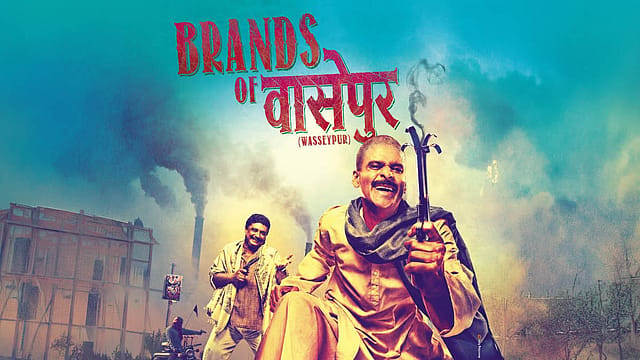
Ramadhir Singh has returned.
The internet briefly wondered whether Gangs of Wasseypur 3 had arrived. Tigmanshu Dhulia appeared again as the politician-gangster who survived generations of revenge. Anurag Kashyap joined the teasing. Hope, rumour and fourteen years of cultural memory completed the publicity machinery.
Then the product entered. Ramadhir was back for WazirX Futures.
In the 79-second film, “Bauji” warns his foolish son against blindly following online trading tips. The tipster may earn while the trader loses, he explains. Research the market. Understand the risk. Trust skill over confidence.
Then comes the sentence India has been using to puncture ambition since 2012.
“Beta, tumse na ho payega.”

Zeroing In on ECI
09 Oct 2026 - Vol 05 | Issue 41
Constitutional legitimacy versus political opportunism
The casting is funny, sharp and culturally exact. It is also wonderfully dangerous. A crypto exchange rebuilding trust after a $230-million hack has hired a fictional criminal to teach customers financial judgement.
The men of Wasseypur could not trust one another. Advertising trusts them completely.
A Film Born Ready for the Internet
Most films become cults after audiences slowly rescue them from initial indifference. Gangs of Wasseypur behaved like a cult almost immediately.
Anurag Kashyap’s sprawling two-part saga arrived in 2012 without the conventional comforts of a Hindi blockbuster. Its world was coal, caste, family, politics, lust, guns and inherited revenge. Its ensemble contained formidable actors, but few of the stars on whom mainstream opening weekends were then built.
The film’s language supplied the publicity.
Its threats were quotable. Its insults were deployable. Its philosophy could fit inside a meme. “Tumse na ho payega” escaped Ramadhir’s mouth and became the national response to doomed effort. “Sabka badla lega re tera Faizal” could accompany every grievance from cricket to office politics. Its characters spoke with such specificity that audiences could borrow their voices without needing to explain the scene.
The official marketing understood the opportunity early. The film created a “Wasseypur World” on social media, gave characters their own Twitter handles, let fans generate Wasseypur citizenship cards, ran a poster contest and invited them to discover which Wasseypuri character they were. A Social Samosa review from August 2012 recorded more than 259,000 Facebook fans and over 83,000 people talking about the page before “viral” became compulsory vocabulary in every campaign note.
Wasseypur was never confined to the cinema screen. It arrived as a place audiences could enter, quote and impersonate. That is why brands keep finding the door unlocked.
Bewakoof Wore the Dialogue First
The earliest commercial lesson came while the film was still culturally hot.
In July 2012, Viacom18 needed merchandise quickly. According to Bewakoof co-founder Prabhkiran Singh, suppliers reportedly asked for two or three months. His young online T-shirt company promised three days. Singh says he watched the film five times, noted its strongest lines and worked with designers to create apparel that felt native to Wasseypur rather than carrying a pasted-on film logo.
The collection became a bestseller, cast members amplified it and orders spiked. Singh later connected the partnership to wider consumer trust in the fledgling e-commerce brand. His account also says Bewakoof’s cash-on-delivery share reportedly fell from 90 per cent to 50 per cent over the following 18 months. That movement cannot be attributed to one film collaboration alone, but his recollection captures the value Wasseypur offered an unknown brand: cultural credibility without a conventional celebrity bill.
Bewakoof did not borrow the film years later to manufacture nostalgia. It participated in the film’s original afterlife. More importantly, it recognised that the true merchandise was not Sardar Khan’s face.
It was his attitude.
Wasseypur’s lines performed the job fashion slogans are supposed to perform. They let the wearer announce wit, defiance, failure, menace or insider status. A young consumer wearing “Tumse na ho payega” was carrying a joke and testing whether the person opposite understood it. The T-shirt became a membership card.
From Blood Feuds to Mustard Oil
By 2021, the film’s cultural capital had matured enough to enter the kitchen.
BL Agro brought Manoj Bajpayee, Nawazuddin Siddiqui and Pankaj Tripathi together for Bail Kolhu mustard oil. Its first campaign connected the actors’ journeys from obscurity to acclaim with the 50-year-old brand’s story of grit and persistence. A second film placed the men around food memories, childhood tiffins and the aromas of familiar snacks. Limited-edition packs carried their faces and a QR code offering consumers a chance to meet them.
The transformation was extraordinary.
A film remembered for gun smoke, slaughter and vengeance had become a route to pakoras, nostalgia and mother’s cooking.
Bail Kolhu did not explicitly return the actors to their murderous characters. It used the “Gangs of Wasseypur trio” as a recognised unit and transferred their screen-forged chemistry, heartland roots and real-life struggle stories to a regional food brand. The distinction matters. Pankaj Tripathi appearing in an advertisement does not automatically make it Wasseypur advertising. Here, the reunion itself was the idea, and the campaign described the three as the film’s power-packed trio.
The gang had become a brand asset independent of the plot.
This reveals one reason Wasseypur has appreciated with age. Its cast grew more valuable after the film. Nawazuddin became a leading man. Pankaj Tripathi became one of India’s most trusted screen presences. Manoj Bajpayee entered a new era of popular acclaim. Richa Chadha, Huma Qureshi, Jaideep Ahlawat and Vineet Kumar Singh built substantial careers.
Most ageing films lose star power. Wasseypur’s compound interest kept arriving through its actors.
Why Ramadhir Can Sell Risk
WazirX uses a purer form of the property. It brings back the character, visual world, father-son dynamic and verdict.
Ramadhir works because he possesses a quality financial advertising desperately needs: he appears impossible to fool. He is patient while others are impulsive, sceptical while others are intoxicated and alive while rivals keep dying. A lecture on leveraged trading can become a disclaimer. From Ramadhir, it becomes judgement.
WazirX says tip-driven traders must build their own understanding before taking a position. That is responsible advice. The campaign also gives a serious warning the entertainment value required to travel. The brand’s film reportedly attracted more than 1.6 million views during its launch build-up.
The complication lies in the messenger and the institution employing him.
Ramadhir is a murderer, political manipulator and architect of other people’s ruin. His authority comes from surviving the criminal economy he helps create. WazirX, meanwhile, suffered a cyberattack on July 18, 2024, in which approximately $230 million was drained from a multi-signature wallet. It later resumed operations after restructuring and asset distributions, but popular culture cannot settle questions of institutional trust.
“Wasseypur gives brands instant recognition, a ready-made tone of voice and the pleasure of cultural insiderhood,” says Ashita Aggarwal, professor of marketing at SP Jain Institute of Management & Research. The danger is that the audience may enjoy the character without transferring any of that memory or trust to the brand.
Ramadhir can make the warning memorable. Only WazirX’s security, transparency and conduct can make the platform credible.
Sholay Gave Advertising Characters. Wasseypur Gave It a Language
India has seen this seduction before.
Sholay remains the baap of cinematic brand borrowing. In 1976, one year after the film’s release, Britannia placed Amjad Khan back in the rocky landscape as Gabbar Singh for Glucose-D biscuits. Kaalia presents him with biscuits. Gabbar rejects the weak ones by shooting them out of the air; the surviving Glucose-D earns his approval. “Gabbar ki asli pasand” became retail shorthand for the product.
The decision was audacious. Britannia used a child-terrorising dacoit to sell a children’s biscuit. Former Britannia executive Sunil Alagh later recalled the internal fear that Gabbar clashed with the trusted corporate image. The counterargument was brutally commercial: children remembered every word the villain spoke.
Brands have kept returning to Ramgarh. Orbit White animated its characters for a tooth-whitening parody. 8PM Premium Black rewrote the Gabbar-Thakur confrontation around friendship. In 2025, Free Fire MAX introduced Sholay-themed characters, skins and in-game objects for the film’s 50th anniversary.
Yet Sholay and Wasseypur travel differently.
Sholay is mass scripture. Its archetypes cross generations: the loyal friends, the talkative Basanti, the wounded Thakur, the tyrant Gabbar. A brand can lift one scene and trust much of India to supply the rest.
Wasseypur belongs more intimately to the internet age. It travels through reaction images, profanity, rhythm and the satisfaction of recognising the line before somebody finishes it. Its references are narrower than Sholay’s but sharper among audiences who possess them. Sholay gave advertising characters. Wasseypur gave it a language.
Mirzapur Put the Bullet in the Freezer
The streaming era has produced a nearby heir.
Mirzapur shares Wasseypur’s guns, heartland masculinity, dynastic violence and endlessly portable dialogue. Hocco’s collaboration with Mirzapur: The Movie shows how entertainment commerce has evolved. The ice-cream company did not merely reunite actors or quote a line. It manufactured a chocolate-coated ice cream in the shape of a bullet.
The fictional world entered the product itself.
A fan could see it online, understand the joke and order a five-stick pack through quick commerce. The collaboration turned a weapon into dessert and a film promotion into something photographable, shareable and edible.
Mirzapur enjoys advantages Wasseypur never had: a streaming platform’s data, a living franchise, official merchandising machinery and a release calendar that can coordinate brand drops. It may become the great commercial crime IP of the platform generation. What it has not yet proved is afterlife.
Wasseypur has survived fourteen years without sequels, seasons or constant franchise maintenance. Its fans keep the property active between commercial visits. That is more valuable than reach bought for a launch weekend. It is memory that renews itself.
When Brands Went Back to the Future
Globally, Back to the Future offers the most illuminating contrast.
Its second instalment imagined 2015 from the vantage point of 1989. When the calendar finally reached October 21, 2015—the date Marty McFly travelled to—brands found themselves owning fictional products that fans had spent decades wanting.
Pepsi produced 6,500 bottles of Pepsi Perfect, the futuristic drink Marty orders in the film, priced at $20.15. Toyota reunited Michael J. Fox and Christopher Lloyd to connect the movie’s garbage-to-fuel fantasy with the hydrogen-powered Mirai. Nike spent years turning the imaginary self-lacing Mag into functioning footwear. Its 2011 limited release raised nearly $10 million for Parkinson’s research, while an 89-pair edition with adaptive lacing followed in 2016.
That franchise gave brands a different commercial resource. It did not chiefly lend them dialogue or criminal attitude. It gave them objects the future had promised. Pepsi could manufacture a prop, Toyota could claim an idea had arrived, and Nike could convert fiction into technology.
Back to the Future let brands make the imaginary real. Wasseypur lets them make the corporate voice feel real.
The Shortcut Can Become Lazy
That borrowed authenticity is precisely where brands should become nervous.
Wasseypur allows a polished corporation to sound rough-edged, local, fearless and culturally fluent within seconds. It can make an edible-oil company feel gritty and a crypto platform feel streetwise. But the property’s fame can swallow the advertiser.
Did viewers remember Bewakoof or only the line on the shirt? Bail Kolhu or the joy of seeing three admired actors together? WazirX or the possibility of Gangs of Wasseypur 3?
“Cult memory is powerful because audiences feel they discovered and owned it before marketers arrived,” says Aggarwal. Every commercial use spends a little of that intimacy. A brand must add a fresh joke, product truth or strategic meaning. Repetition turns cultural capital into stock footage.
This is the difference between retrieval and creation. A familiar line retrieves attention already stored in the audience. Great advertising must then attach something new to the brand. Without that second step, the campaign is a tribute act with a media budget.
There is also the sanitisation problem. Advertising removes the blood and retains the swagger. Gangsters become lovable uncles. Threats become punchlines. Bullets become ice cream. The moral ugliness that gave the fictional worlds their power is cleaned until the menace becomes merchandise.
The result can be amusing. It should not be mistaken for innocence.
Wasseypur’s Brand Report Card
The right report card begins after the applause.
A campaign using the film should measure unaided brand recall after the character is removed, incremental searches and sales, new customers acquired, repeat behaviour and whether viewers can connect the borrowed memory to a product reason. Comments demanding a sequel prove affection for Wasseypur. They do not prove effectiveness for WazirX.
Fit matters more than fame. Bewakoof converted dialogue into self-expression. Bail Kolhu found a believable connection between its markets, the actors’ journeys and food memory. WazirX uses Ramadhir’s scepticism to attack reckless certainty. Each contains an idea beyond recognition.
The next brand may see those successes and hire the gang merely because the gang is available. That is when “Tumse na ho payega” should be delivered to the marketing department.
Wasseypur remains seductive because it supplies what committees routinely sand out of advertising: a dangerous voice, a precise world and language with dirt beneath its fingernails. Fourteen years later, corporations are still entering that world hoping to leave with a little of its menace, humour and authenticity.
Ramadhir understood power. Faizal understood revenge. Advertising understands recall. The gang has already made the sale.
The question is whether anybody remembers who paid for the bullets.