Wisdom on Trial: Pavan K Varma revives a long-forgotten tradition of rigorous debate in his latest book
PAVAN K VARMA’S new work of fiction brings to the fore the importance of debate —not the shrill ones that pass for debate on television and social media these days, but exchanges where wisdom is placed above everything else, including one’s position, age and gender.
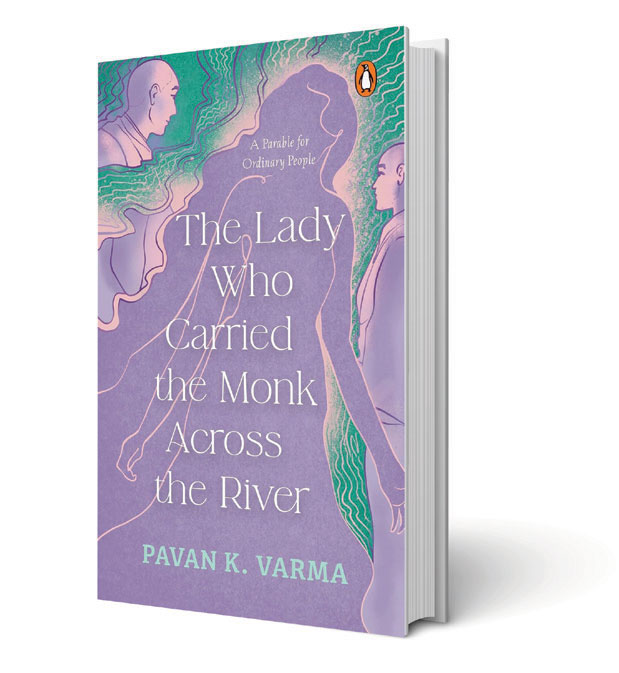
The Lady Who Carried the Monk Across the River is a title that evokes several images from our epics, including the story of Satyavati who ferried sage Parashara across the Yamuna and gave birth to Vyasa, who penned the Mahabharata. In this book, the key protagonists are a traditional guru of yore, Guru Brihaspati, and his two disciples, Kevala and Gyan.
In this slender work, the focus is on a debate between the learned Brihaspati and the young and insightful Kevala, with Gyan as the judge. Varma, who takes artistic licence to bring in objects, names and references from the modern world, reminds us of the debate between Adi Sankara and Mandana Mishra in the eighth century.

Losing Memory
16 Oct 2026 - Vol 05 | Issue 42
The making of a medical and social emergency
This debate lasts four days, and each day of this intellectual duel is filled with suspense, well-thought-out arguments against perceived wisdom, and questions about what constitutes authority. Although this is a work of fiction, as the debate progresses one gets to encounter profound arguments about why someone does not become an elder and a master merely because of grey hair. True, we are familiar with all this in our scriptures, in which nothing was as rigid as it later became at the hands of the incorrigible high priests of morality and religion. To give an example, in the Katha Upanishad, Nachiketa challenges his own father. The bottom line is this: neither age nor scholarship can monopolise wisdom.
In Varma’s work, we see the debate between the master and the disciple over whether it was wrong on the part of the latter to have carried an attractive young woman across a river in his arms after taking the eternal vow of celibacy.
In the process, we learn many other things. Gyan, who announced the news of Kevala helping the young woman cross the river to his guru, is no celibate and patronises a sex worker. For his part, Brihaspati is often haunted by his teenage experiences of watching women at the bathing ghat. He is guilt-ridden for having enjoyed the glimpse of a young woman’s naked bosom, which eventually prompted him to choose monkhood when he was young.
Each reader is bound to find resonance with at least some of the arguments in this book. Are so-called eternal values merely temporary customs, or are notions of bliss contrived? Why do rituals remain while values fade? We come across many such deep questions here, including whether respect for tradition should outweigh higher values and the pursuit of what one believes is right. Again, if sensual pleasures are to be despised, why is Lord Kama deified in our philosophy? More and more questions crop up in this highly readable book.
The following exchange between the master and the disciple captures the beauty of the debate that unfolds:
“Learn to distinguish, Kevala, between momentary joy and eternal bliss.”
“True, Master. But cannot momentary joy be a window to eternal bliss? … The difference between the momentary and the eternal does not diminish what is common to both.”
Sample this one, too, where Kevala speaks to his master, breaking hierarchies:
“I don’t think it is the business of monks to sit in judgement over another’s actions, as if they are the arbiters of the morality of the universe.”
The suspense in this book lies in what happens to Kevala after he leaves the ashram and embraces the possibilities offered by the modern world, as well as love. You will have to read it to find out.