When the First Bubble Burst
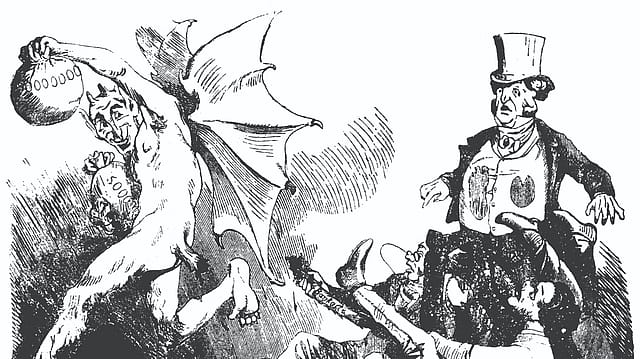
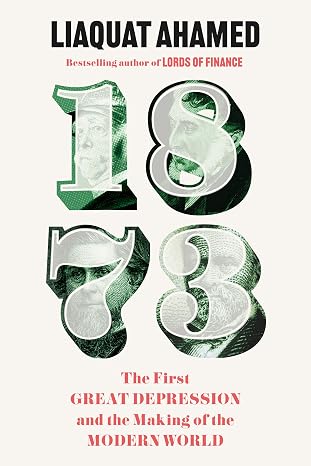
When the Vienna stock exchange crashed on May 9, 1873, it took no one by surprise but the “velocity of the fall” was a shock. Liaquat Ahamed’s 1873: The First Great Depression and the Making of the Modern World revisits a catastrophe history has oddly mislaid. The Vienna Bourse crash of May 1873—“Black Friday”, the first of many blacks assigned to stock market disasters—is not, in popular memory, an event comparable with 1929 or even 2008. Yet it was the first genuinely global financial crisis, the moment the world’s bond markets, railways and currencies became one interlinked system capable of failing together, and its deflationary aftermath dragged on for two decades.
The book’s great pleasure is its geography. London emerges as the sceptical elder statesman—mature, liquid, wary of the more feverish schemes elsewhere, and consequently bruised rather than broken. Paris, still nursing the wounds of 1870 and the war indemnity to Berlin, had less appetite for speculation but little insulation either. It’s Vienna and Berlin—flush with new capital, new banks, and a middle class lacking financial experience—where Ahamed’s narrative catches fire: everyone, from minor aristocrats to shopkeepers, seemed to be speculating, and nearly everyone lost. Across the Atlantic, New York was hit later, once the failure of Jay Cooke’s bank exposed how thoroughly the railway bond boom had rotted, but the US, with its overbuilt railroads and its charlatans, ended up the worst casualty. Ahamed has a novelist’s eye for these grotesques—fraudsters like Jay Gould, bogus schemes, contempt for due diligence, the naïveté of Ulysses S Grant. His account of Ottoman and Egyptian finance, sunk in a terminal indolence and borrowed money, supplies the book’s darkest comedy.
Zeroing In on ECI
09 Oct 2026 - Vol 05 | Issue 41
Constitutional legitimacy versus political opportunism
Against all this, the Rothschilds stand out as the men who simply knew money better than the rest. They declined the American railway mania, stayed clear of Turkey and Egypt, refused to buy into the bubble, and emerged from 1873 not merely intact but strengthened—a discipline the House of Baring shared only partially, and paid for accordingly.
The consequences are where the story turns properly sombre: a generation of deflation, a series of uncoordinated and often wrongheaded policy responses, and America’s calamitously timed lurch onto the gold standard. Grant’s veto of the 1874 ‘Inflation Bill’, overruling Congress’ own hard-won compromise on greenbacks, is rendered as a hinge moment, tightening money precisely when the economy needed the opposite. And running through it all is an uglier thread: the Rothschilds and ‘Jewish finance’ more broadly became the age’s ready scapegoat, an antisemitism Ahamed is careful to trace forward to its far more virulent 20th-century mutation. The irony left hanging is that Washington still had to turn to the Rothschilds, cap in hand, to replenish its gold reserves by the century’s end.
It is superbly stitched together. Ahamed’s gift, as in the Pulitzer-winning Lords of Finance (2009), is for finding the connective tissue between events that look unrelated. If there is a quarrel to be had, it is with the marketing: 1873 is sold as a single cataclysm when Ahamed’s own research shows something closer to a slow-motion accumulation of unforced errors. This is, fittingly, a prequel to Lords of Finance, an overture to the next century’s grand catastrophe.
One aside deserves note. While Britain enjoyed the gold standard, the jewel in its crown, India, was left on silver. The Home Charges India paid into Her Majesty’s Treasury, more expensive after 1873, quietly impoverished Indian taxpayers and stoked a resentment nobody in Whitehall cared to notice. Read today, amid Trump’s tariff wars and fresh pressure on Canada to fall in line, Ahamed’s real argument is unmistakable: none of this is new.