Science and Sensibility: Jagadish Chandra Bose as poet and philosopher
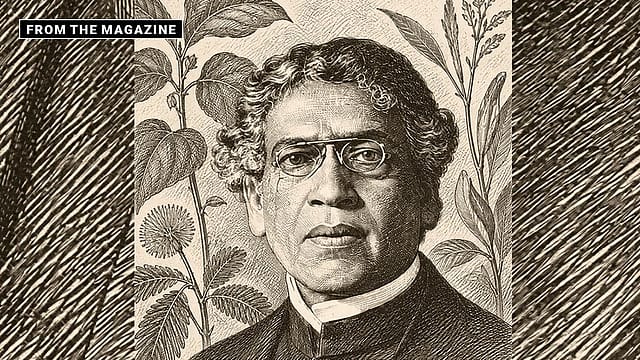
In 1926, physicist and biologist Jagadish Chandra Bose—known for his pioneering work in wireless communication and plant physiology—published one of his important works on botany. The Nervous Mechanism of Plants proposed the theory that plants respond to stimuli with a mechanism that is physiologically similar to that of animals.
A solidly scientific work, but interestingly, one dedicated to a poet: his friend Rabindranath Tagore. The dedication might be interpreted as loyalty, but it reflects, too, the fact that for JC Bose (as well as for Tagore) there was a certain fluidity to both literature as well as science. Both men accepted that science and literature could not be put into silos; that, by allowing them to interact with each other, each was enriched.

Zeroing In on ECI
09 Oct 2026 - Vol 05 | Issue 41
Constitutional legitimacy versus political opportunism
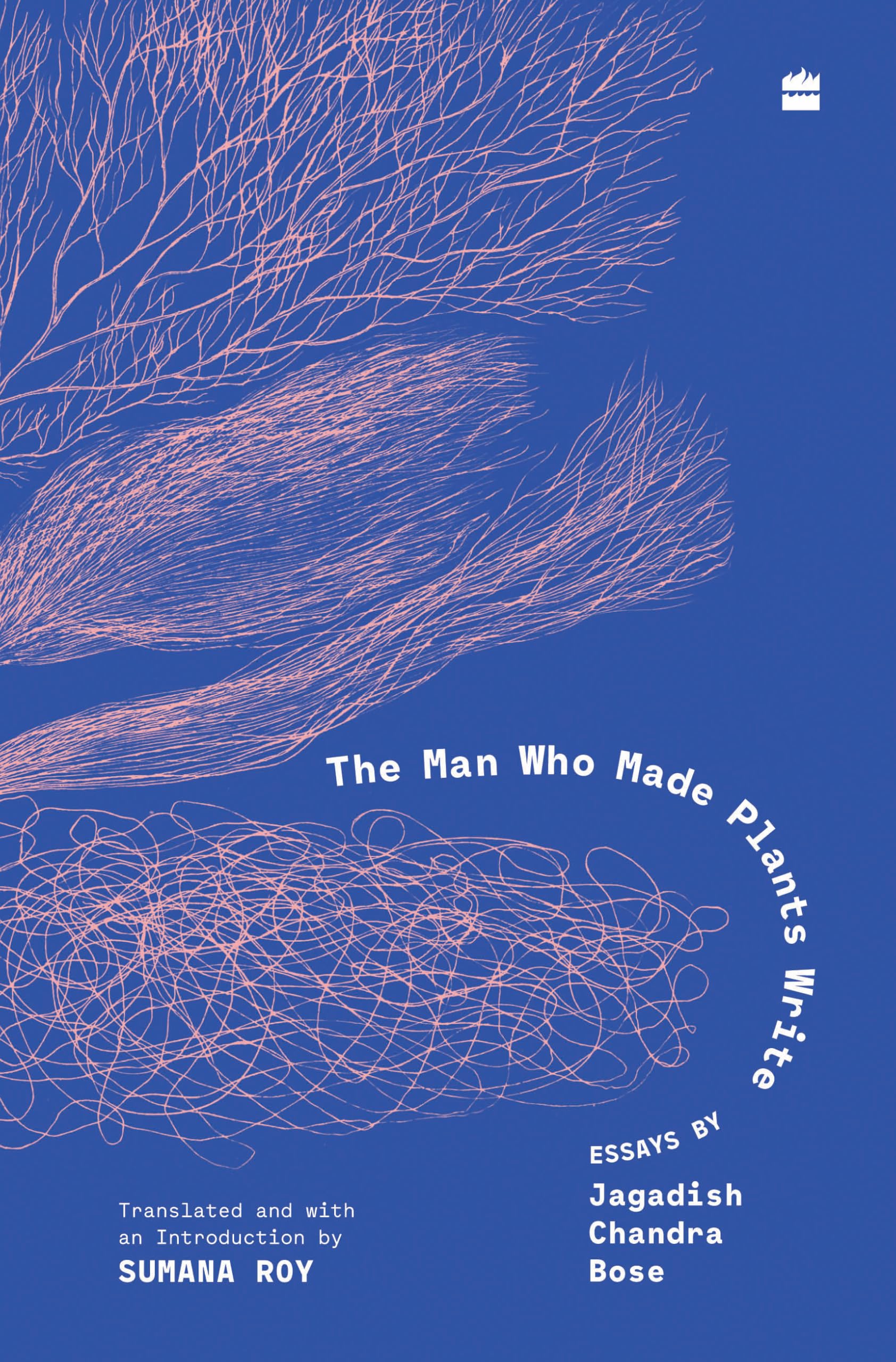
This was reflected, too, in much of the writing that comprised Bose’s 1921 collection of essays, Abyakta. Translated from Bengali by Sumana Roy as The Man Who Made Plants Write, this is a book of 10 essays, some written for children, others for adults, and some transcriptions of speeches given by Bose in the course of his career.
The subjects Bose tackles through these essays are varied; given, especially, that he was a scientist and might therefore—if Bose had been predictable, which he was not—have been expected to talk only about science. There is science, of course, both about Bose’s experiments with plants as well as with radio waves. But Bose ranges far beyond science: he talks of religion, of philosophy and literature, of art. He is passionate about the need for Indians to root their learning in their own land and their own language, to make their knowledge Indian.
In more than one place in these essays, Bose talks of the Western idea that the sciences and the humanities are worlds apart—an idea he refutes, most noticeably through his own writings where he blends science with literature in a way that is impactful as well as impressive. In ‘The Resonance and Conceivable World of the Sky’ or ‘The Plant’s Story, The Story of Plants’, written for children, he turns a science lesson into a story that would capture their imagination. In essays and speeches for adults, such as ‘The Invisible Light’ and ‘The Speechless Life’, he explains his experiments and his findings in ways that the layperson can easily understand; a way, too, that is often sensitive and introspective. In other words, quite literary: “This is our voiceless friend, whose play of life continues near our doors. They have revealed their spirit and meaning in wordless letters in the plant script; their life’s restlessness and their regrets about death have been published in front of our eyes”.
While what Bose says is insightful, how he says it offers as much of an insight into the personality of the writer. This is a man to whom the plant is the subject of an experiment, but who regrets the pain he inflicts on it in the course of that experiment. A man whose thirst for knowledge leads him down many and varied paths; a titan in his field, yet with an unassuming ability to share what he has learnt.
Due credit for the readability of The Man Who Made Plants Write must go to Sumana Roy, its translator, whose careful choice of words successfully conveys the complex character of Bose: his ability to break down the subject matter for the layperson, his ability to be equally a scientist and litterateur, his empathy and his intellect. Her meticulousness, and her empathy for Bose as well as his ‘lab rats’—his plants—makes this a translation that is far more than a mere interpretation.
In an introspective Translator’s Introduction to the book, Roy talks of Bose, his “restlessness and passion, his affection for the neglected”. Traits which shine bright throughout this slim but powerful work.