Saving Liberal Democracy
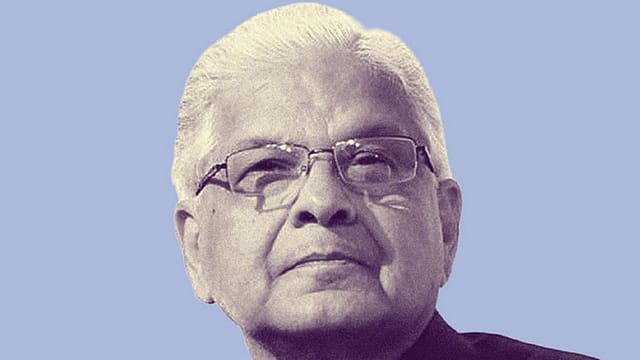
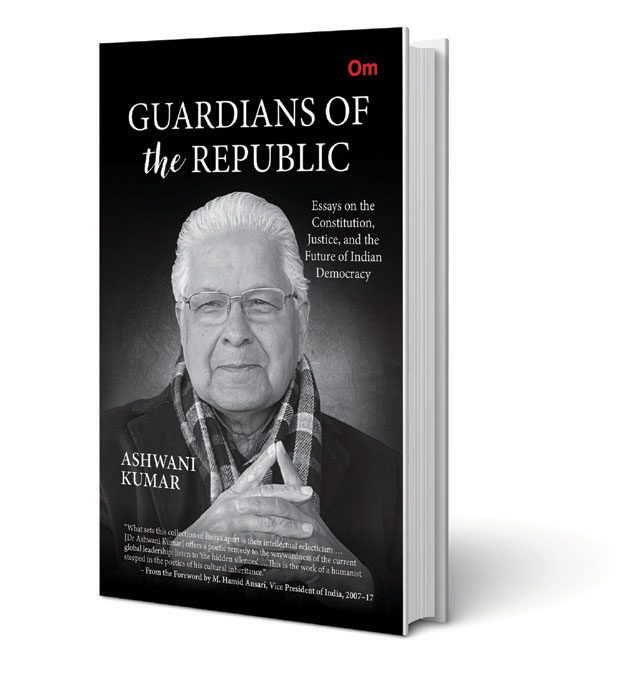
FORMER UNION Law Minister and Supreme Court advocate Ashwani Kumar couldn’t have written this book at a worse time—not for the book but its subject: liberal democracy;
why it matters, the imperative to save it, and the role that institutions and individuals must play in order to do so. The diagnosis that liberal democracy is in retreat across the world is not presumptive. From concentration of power and the resultant shrinkage of political space coupled with judicial failure to the erasure of public historical consciousness and the mechanisation or mortification of critical thinking at the altar of technology, democracy is indeed in crisis. And any crisis of democracy is underwritten by a deeper socio-cultural malaise, aggravated by flawed leadership, whether from weakness or strength.
Guardians of the Republic advances the case Kumar had been making in Hope in a Challenged Democracy (2017) and Democracy in Retreat (2023), beginning with an argument for balanced constitutionalism—and the need for our judges to ensure constitutional jurisprudence remains true to the principle of justice and democratic values anchored in the rule of law—that wades into the debate on the limits of judicial review in a parliamentary democracy triggered again by the apex court’s judgment on the role of governors and presidential prerogative. The implication, in any case, is that things have gone so far because politics has changed.

India's Action Hero
27 Mar 2026 - Vol 04 | Issue 64
Riding the Dhurandhar Wave
In exploring how the judiciary interfaces with the executive, Kumar praises what he sees as the courts’ “progressive record in the evolution of the jurisprudence of rights”, such as the orders on “Bulldozer Justice” or the exoneration of Professor Saibaba and grant of bail to accused individuals incarcerated for too long. However, he laments the continued failure of the court to facilitate a foolproof law prohibiting custodial torture, the focus of a longstanding crusade of his. But it is the media, the “manifest capitulation of the fourth estate to government diktats” that irks the author more than most, from the constraints on dissenting voices to the pervasive media trials that impinge on justice. The bottomline, for both law enforcement and the press, should be the legal principle of “innocent till proven guilty”.
The arguments advanced or reiterated in the book hinge on the idea of the state standing upon the character of its citizens. Or, as American jurist Joseph Story said, “[R]epublics are created by the virtue, public spirit, and intelligence of citizens. They fall when the wise are banished from public councils.”
Such a fall might also be unavoidable because of the threat from another quarter: if we fail to draw red lines around the ethical boundaries of AI. If, in Elon Musk’s words, we summon the devil “without a kill switch”. While the tone of such critique invariably tends to verge on the alarmist, Kumar emphasises specifically how technological revolution can undermine the ethical underpinnings of democracy.
The impulses and ideals that drove the author to write this book are unimpeachable. The circumstances of global democratic governance align it with the very tenor of our time. Where the book will run into trouble is not on the big question but the domestic detail. Kumar’s taking at face value the Western media and think-tanker narrative that Indian democracy is flawed or hybrid, or his citation of India’s low rankings on the Economist’s Global Democracy Index and the World Press Freedom Index which were never exercises in fairness to begin with. Nobody can contest his urging the nation to sing the “song of resurgence” but is it indeed “indifferent to the ‘sleep of reason’”, riding what is merely a “manufactured imagination”?