Israel: What Went Wrong?
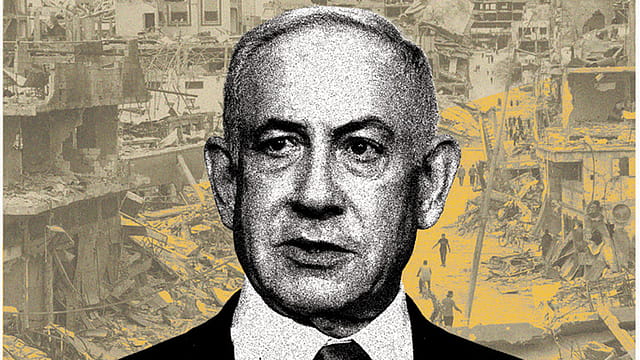
THE FOUNDATION OF Israel in 1948 was redemption for humanity which had largely stood by and allowed six million European Jews to be murdered. It was deliverance for surviving Jews. The world welcomed the birth of the state with a guilty conscience. But almost 80 years later, has Israel turned that morality on its head and become the embodiment of the very inhumanity it was created to prevent from recurring? In an oped in the New York Times in November 2023, Israeli-American historian Omer Bartov, a Holocaust scholar and leading authority on genocide, warned that Israeli military action in Gaza might be heading towards genocide. In July 2025, he wrote: “I’m a genocide scholar. I know it when I see it.” By then, Bartov had shed all doubt.
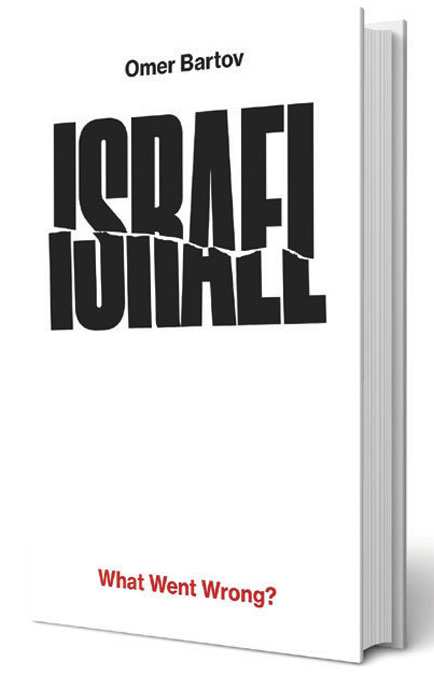
In Israel: What Went Wrong?, Bartov, the author of seminal books on the Wehrmacht as well as Anatomy of a Genocide, explores how Zionism, which had developed as an activist-philosophyofJewishemancipation, transformed itself from a dream to a nightmare. It’s not an angry but a sad book, dedicated to Bartov’s father Hanoch whom he calls the “last Zionist” who, “in the last decade of his long life… clearly detected the direction in which his beloved country was headed”. Benjamin Netanyahu was the “great destroyer of Zionism” as Bartov Sr understood it. So, what went wrong? There are some old and some novel arguments here.
Losing Memory
16 Oct 2026 - Vol 05 | Issue 42
The making of a medical and social emergency
Zionism in practice turned into settler-colonialism and Israel became an outpost of Western colonial oppression. This is a standard argument on the left. Another is how the foundation of Israel was fundamentally flawed—one group’s deliverance became another’s catastrophe, or the Palestinian Nakba. This too is old. But Bartov is sharper when he looks at the Holocaust-as-shield contention: the Holocaust, unparalleled in its barbarity, created a heightened sense of permanent vulnerability in Israel which, in the era of Netanyahu, saw the country put far-right extremists in government. “[N]othing empowers violence more than a righteous sense of victimhood,” warns Bartov. It’s the logic of forever wars. A second penetrating argument is how Israel’s lack of a written constitution has created a permanent tension between the state’s democratic ideals and its Jewish identity. While Israel has long been hailed as the “only democracy” in the Middle East, democracy has meant little to Israel’s Arab citizens, let alone Palestinians, especially in a country increasingly defined by ethno-nationalism. Unlike earlier commentary, Bartov sees this as a structural flaw in the design of the state.
Bartov builds his case by looking first at the definitions of ethnic cleansing and genocide. While the former is not formally defined in international humanitarian law, the Yugoslav civil war did provide a working definition. But genocide, the “crime of crimes” in the words of Raphael Lemkin, the Polish-Jewish lawyer who coined the term in 1944, is well-defined in the UN Genocide Convention of 1948 and, Bartov argues, to prove the incident of genocide we need to prove intent and action. Intent he finds in the words of Israeli leaders—from Netanyahu citing Deuteronomy to then Defence Minister Yoav Gallant’s dehumanising reference to Gazans as “human animals” to President Isaac Herzog’s holding the “entire nation” of Palestinians responsible for Hamas’ October 7, 2023 massacre, etc. And yet, this argument is the biggest weakness of the book as it fails to meet the legal threshold for genocide on its own terms. Scholars who had rebutted Bartov’s November 2023 oped had argued that the words of Israeli leaders may have been a failure of language after Hamas’ crime against humanity, not proof of genocidal intent.
Bartov’s scholarly authority is unimpeachable even if all his arguments are not. He is a former soldier and a patriot. He is saddened by Israelis who, in their grief and anger, have become indifferent to the suffering in Gaza. He reminds Israelis that Jews, above all, have a responsibility to ensure no one suffers what they have.