Death of a Dream: The rise and fall of Café Coffee Day is a cautionary tale for Indian startups
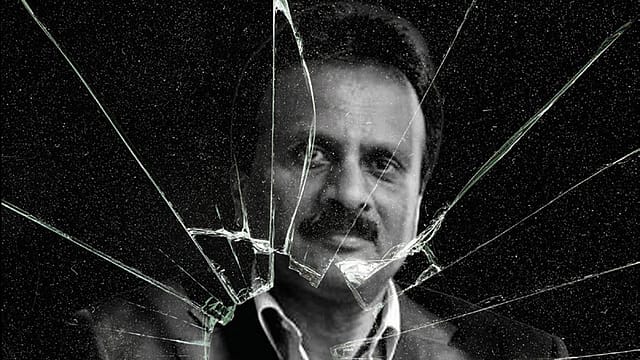

THE NEWS OF Bengaluru-based businessman and Café Coffee Day (CCD) founder VG Siddhartha’s disappearance in July 2019 still haunts the general public, especially news junkies like myself and anyone and everyone who was lucky to have enjoyed the CCD experience, which in its heyday was a statement of sorts. The initial story that made the rounds after Siddhartha’s disappearance was that he had asked his driver to head towards Mangaluru, another southern Indian city, got down from the vehicle near a bridge, saying that he was going for a walk—and then perhaps jumped into the river. Later, as mystery brewed, it was revealed that his body was found floating in the Netravati river, sending shockwaves among India’s business community and beyond. This was a man from a middle-class family, who dreamt big and in a short period created an Indian version of Starbucks— including a presence abroad. It was no small feat in a nation of tea drinkers.
In a new book, titled Coffee King, which is being made into an OTT series, authors Rukmini Rao and Prosenjit Datta trace the rise and fall of Siddhartha, and, in the process, offer warnings to entrepreneurs about seemingly small business errors (by Indian standards) that produce catastrophic results. In 2015, Siddhartha, who had by then a pool of executives to assist him, began preparing to list Coffee Day Enterprises Limited (CDEL), the holding company, in an exercise named Project Emerald. The authors offer a lucid analysis of the problem with the Initial Public Offering (IPO), a lesson for startups on how not to do business. These parts of the book deserve a close reading, even re-reading.
The Modi Years
02 Oct 2026 - Vol 05 | Issue 40
A Nation Rebuilt
They write that in his interviews prior to the IPO, Siddhartha was always asked why was he going for an IPO for the holding company instead of the coffee business under Coffee Day Global Limited (CDGL), which was the biggest and the most visible business? “He struggled to give a convincing answer,” says the book, adding an analysis: “Siddhartha’s problem was that while his coffee operations were the most visible part of his business…His other businesses also needed capital, which they found difficult to raise as standalone entities. However, using the holding company structure made the IPO less attractive.” In contrast, Tata Group’s holding company, Tata Sons, which is unlisted, controls all the listed companies of the group.
The book dwells on former RBI Governor Raghuram Rajan’s famous crusade against bad loans, hurting weak borrowers like Siddhartha, following which he had trouble from tax authorities. The Infrastructure Leasing & Financial Services (IL&FS) crisis of 2018 made things much tougher for CDEL to secure loans and service their debt. The company’s finances were strained—and soon came Siddhartha’s death.
The authors, both financial journalists with ear to the ground, demystify how an entrepreneur with a starting capital of `30,000 transformed his business into a café chain with over 1,700 outlets. It was a burnished showpiece of Indian enterprise in that segment. And yet, ruthless ambition and reckless handling led to its undoing.
Coffee King strikes a sober note, refusing to portray the CCD tragedy as one man’s flaw. “It is difficult to believe that those working closely with him, be it the auditors, the company’s CFO or the board’s auditing committee, failed to suspect anything. After all, his reliance on a few trusted directors was clear from even a cursory look at the board of his various companies.”
Rao and Datta describe the story of Siddhartha—in which a highly visible brand became a fragile house of cards—as one of the most compelling and cautionary tales in Indian business history. Which is why it ought to be part of our B-School syllabus.