Colson Whitehead turns a work of crime fiction into a sharp portrait of 1980s New York

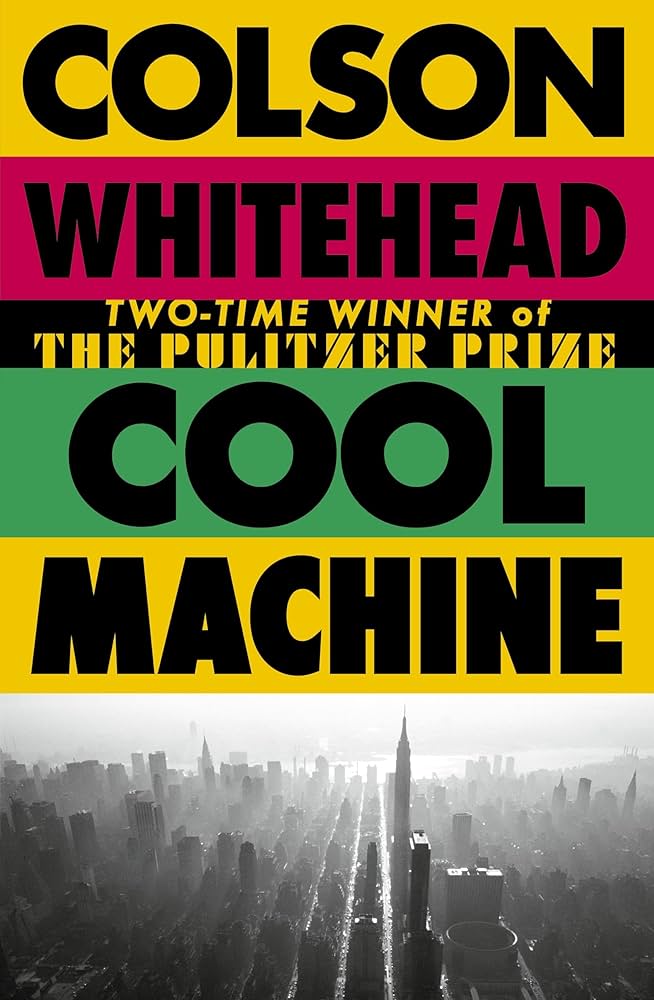
Two-time Pulitzer winner and author, Colson Whitehead, has a talent for making history feel immediate. In Cool Machine, the final book of his Harlem trilogy, Whitehead focuses on 1980s New York, a city that changes faster than its residents can keep up with. The result is an entertaining crime novel and, more importantly, a sharp portrait of a city being remade.
In his writings, Whitehead consistently orbits around race, history and American life, from his debut with The Intuitionist; among his later works, Sag Harbor, focusing on black adolescence in 1980s America, and Zone One, exploring zombie fiction, showed his range. His standing was cemented by The Underground Railroad and The Nickel Boys, which won consecutive Pulitzers for Fiction, making him the first novelist to achieve that feat. Now, with his latest work, Cool Machine, Colson has returned to something familiar to him: New York, the city where he grew up and still lives.
Losing Memory
16 Oct 2026 - Vol 05 | Issue 42
The making of a medical and social emergency
At the trilogy’s centre is Ray Carney, a Harlem furniture dealer who has spent years trying to keep his respectable life separate from his criminal side. His furniture shop is doing well—he has been chosen as the Northeast Regional Dealer of the month; his family is settled; and he would like to believe that his days of fencing—dealing in stolen goods—are behind him. But Carney has never been particularly good at staying out of trouble.
When his wife wants to open a travel agency, he decides on one last score. But everyone knows that there is no such thing. The first of the book’s three sections, set in 1981, see Carney planning a robbery at the iconic Waldorf Astoria. The plot is typical of heist narrative—criminals with their own agendas and complex plans—and Whitehead handles it with relish.
The second section moves to 1983 and the focus shifts to Pepper, Carney’s old accomplice—a different kind of criminal. While Carney worries about keeping up appearances, Pepper is comfortable with the rougher side of the business. After he joins an art gallery as a bodyguard, a missing African mask takes him into New York’s art world, where dealers, criminals and hustlers are circling the same prize.
By 1986, the final section of the novel, Carney is meant to be retired. But such criminals can rarely escape the dark side. Robert, his cousin Freddie’s son, is caught in a murder involving a corrupt lawyer. Carney decides to help, returning the world he has always tried to escape.
The three stories give Cool Machine its rhythm.
Whitehead moves from a furniture showroom to a criminal hideout and to Manhattan’s increasingly gentrified streets without losing his grip on the story. There is plenty of violence along with dry humour. Whitehead understands that crime fiction works best when criminals are allowed to be human beings rather than simply villains. The real star, however, is New York—a city in transition.
The New York of Cool Machine resembles the city that would emerge in the following decades, with money flowing into real estate and Wall Street’s growing influence. Harlem, the historical neighbourhood, is changing too. The people who have lived there for years must negotiate with a city being built for someone else. But Whitehead does not turn this into a lecture. The changes are visible in the background of Carney’s life. Buildings rise. Businesses change hands. New money appears. Old neighbourhoods acquire new possibilities along with new pressures.
The title captures the idea neatly: New York itself has become a machine, and everyone is trying to work out where they fit inside it.
Whitehead’s prose remains cool and economical. He does not over-explain his jokes or underline his observations. The writing has the confidence of someone who knows that the details will do the work. A piece of furniture, a stolen object or a new building can tell us something about the people surrounding it.
Cool Machine is light on its feet. It is a crime novel first, but history is ever present. Most importantly, it brings the Harlem trilogy to a fitting close. Carney keeps trying to build a respectable life in a city that keeps changing its rules. By the end, the question is no longer whether he can escape crime. It is whether anyone can really escape the city that makes them. Whitehead’s answer is characteristically entertaining: probably not.