Book review: Dialogues with the dead in Vigil
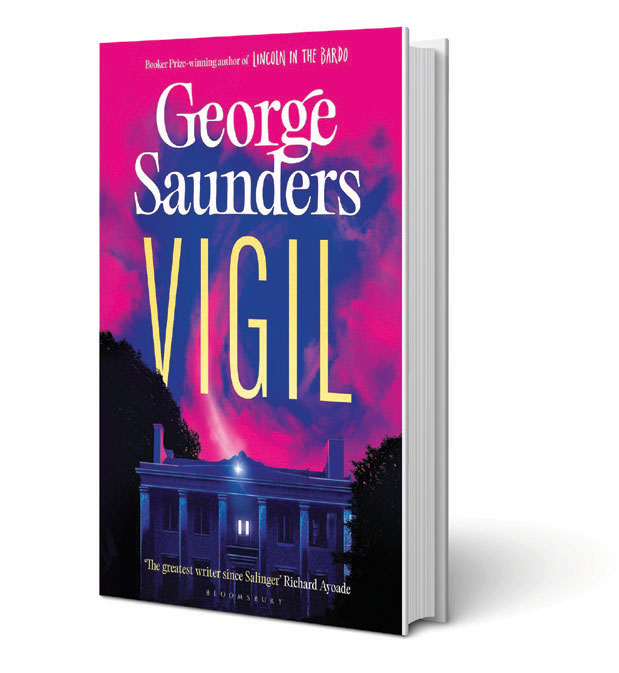
A LITTLE MORE THAN 60 pages into George Saunders’ slim new novel, Vigil, the narrator Jill ‘Doll’ Blaine wrestles with an unfamiliar feeling. “Never before had I felt such aversion to a charge,” she thinks. “And, in truth, had begun to hate him.” It is a sharp turn from the opening pages when she lands at a grand home in Texas with its fountain and gold-plated statue, stairway and halls lined with paintings and other signs of a lavish life. Jill is an “elevated” spirit tasked with comforting people on their deathbeds.
Unfortunately, unlike her last 342 successful undertakings, Jill’s latest charge is not obliging. The formidable oil tycoon KJ Boone may be an 87-year-old “tiny, crimped fellow in an immense mahogany bed”, but his spirit bristles with self-righteousness. He is unshakeable in his refusal to give up—neither on life nor his success story. This poses a monumental challenge for his escort, for Boone is not a paragon of virtue. He is the titan of a nefarious empire, built by pushing fossil fuels at the cost of ruined lives and lands. He denies every accusation as he denied climate change and the impact of his ambitions. When confronted, he responds with rage and cruelty. As the ghosts begin to gather, Boone faces everyone— father, associates, strangers—with a singular, terrifying ability to cut them to size. In his presence, the dead feel more human.
Saunders’ ability to bring the dead alive on page has been established ever since Lincoln in the Bardo, his Booker Prize-winning 2017 debut novel. This is a novelist, and master of the short story, at ease in the unsettling, his curiosity and empathy transmitting into his characters. Like Lincoln in the Bardo, ghosts abound in Vigil, arriving at Boone’s deathbed and fleshing out his moral fibre. The Mels, a duo nicknamed G and R, thank him for funding their diabolical enterprises but their words taste of sarcasm. Mr Bhuti, from Rajasthan, reveals how far Boone’s devastations have reached. And then there is the Frenchman, intent on making Boone repent for his misdeeds. “To comfort one who remains wilfully ignorant of what he has done is to provide him no comfort at all” he tells Jill.
The Abandoned Kejriwal
01 May 2026 - Vol 04 | Issue 69
Brain drain from AAP leaves Arvind Kejriwal politically isolated
Jill is all things Boone is not, carrying something of the sweet optimism she had in life—a 22-year-old Indiana waitress who died in a car explosion originally intended for her husband. Remembering the past is dangerous, but as Boone frays her positive thinking and a wedding next door sparks desire and loneliness, Jill yearns to discover what remains of her life.
As Vigil progresses, compassion and fair dealing grow more complex. Boone is culpable, yet Jill sees how his early life determined his choices. Ghosts implore the dying to repent, but it makes little difference to the living. Despite the widespread belief in an afterlife reckoning,
people find ways to justify their actions, while the rest move on— apparent in Boone’s actions and in Jill’s unfolding story. Saunders probes the limits of consolation and moral repair and Jill contemplates these conundrums and questions, slipping in an out of people’s lives and her own. But the answers don’t arrive easily, often frustrating the narrative.
Comparisons with Lincoln in the Bardo are unavoidable, considering the setting of both novels; Vigil does not have the same emotional current nor quite its magic and mastery. But Saunders makes in Jill a case for empathy—if not to absolve, then to consider some choices as inevitable, shaped by the life one is handed. And, that one we must keep trying even in the face of futility. Towards the end, Jill observes that there is essentially nothing the dead can do. “And yet, what else was there for them to do, but whatever they felt they still might?”