Wholesome Healing: From Ayurveda to naturopathy to yoga, Holistic treatment is a data-driven luxury
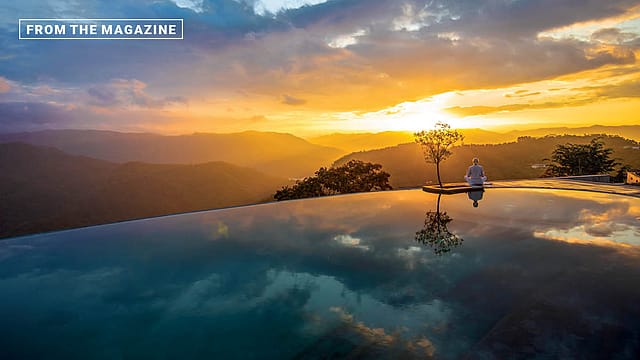
At Bengaluru’s edges, the liminal landscape of apartment towers and warehouses rising amidst red earth and green fields is home to many of the city’s retreats: Jindal Naturecure on Tumkur Road, Kshemavana near Nelamangala, the Art of Living centre off Kanakapura Road and SOUKYA beyond Whitefield. “Bengaluru is not just the IT capital, it’s the capital of natural health, with many Ayurveda, naturopathy, yoga and integrative medicine institutions,” points out Dr Issac Mathai, founder and medical director of SOUKYA, a holistic wellness centre and NABH-accredited Ayush hospital that has long attracted wealthy foreigners, expatriates and royalty. On 30 acres in Samethanahalli, more than 3,000 trees enclose medicinal gardens, an organic farm, private cottages and a 2.2-km walking track. Sleep, controlled meals, exercise, attention and temporary freedom from work and screens are among the retreat’s least glamorous and possibly most effective interventions. Mathai says Indians accounted for barely 5 per cent of his guests when he founded the centre over two decades ago. Today they make up about 40 per cent.
A more striking change is the arrival of the young and the apparently well. Mathai now sees guests aged 18-25 checking in without a diagnosed illness, asking instead for respite from social media, sleeplessness and continuous self-surveillance. “I just want to take a break from everything. Social media is killing me,” one 18-year-old told him. They tend to stay for a week or ten days, receive fewer treatments than older guests and fill their time with yoga, walking and the unfamiliar discipline of regular meals and sleep. The retreat, once imagined as a repair shop for the old and the rich, is becoming a refuge for a generation that began monitoring its health early. “Globally and in India, there is a huge demand for what we do. Hospitals provide disease care but alongside that, the need of the hour is promoting wellbeing—how to improve our body, rejuvenate it and reverse disease,” Mathai says.

Losing Memory
16 Oct 2026 - Vol 05 | Issue 42
The making of a medical and social emergency
Near its existing Bengaluru campus, SOUKYA has acquired six acres for a 100-bed integrative hospital. Planned in two phases, the hospital will bring allopathy together with Ayurveda, homoeopathy, naturopathy, Siddha, Unani and yoga, with the first 50 beds expected to form the core of the project. Unlike the existing retreat, it is intended to accept insurance and make residential integrative care available beyond the affluent patients who can afford SOUKYA’s present model. Since April 2024, the insurance regulator has required insurers to cover AYUSH treatment on par with allopathy, but only for inpatient stays of at least 24 hours at government or NABH-accredited hospitals. Mathai also sees scope for centres in Delhi, Mumbai, Hyderabad, Chennai and Kerala, developed through management or operating partnerships. Abroad, the company is investing `220 crore in a 150-acre residential medical centre in Portugal, its first international property. Planned with 40 villas and suites, medicinal and vegetable gardens and the same combination of Ayurveda, homoeopathy, yoga and naturopathy, it is scheduled to open in late 2027. The two projects reveal the elasticity of the wellness market.
The Global Wellness Institute valued the worldwide wellness economy at $6.8 trillion in 2024 and wellness-tourism expenditure at $894 billion, up 13.8 per cent in a year. India ranked as the seventh-largest national wellness market at $180 billion and grew by 11.3 per cent annually between 2019 and 2024, the second-fastest rate among the 25 top markets. These estimates span 11 sectors, from beauty and nutrition to fitness and real estate. A growing share of this demand is coming from increasingly younger people.
At Kshemavana near Nelamangala, the average guest is now about 35, says its chief wellness officerNarendra K Shetty. What was once “like a geriatric club” increasingly receives IT workers and other sedentary professionals in their thirties. The average stay is nine days, and the retreat discourages visits shorter than a week. “Please don’t waste your money,” Shetty says he tells those seeking a two- or three-day programme. A decade ago, retreats were more passively consumed—you arrived, received massages and ate natural meals, and returned home. “What we offer now is essentially a residential classroom in which food, movement, sleep and stress are worked upon. A guest receiving an oil massage is taught why it was prescribed and how a modest version of the ritual might continue at home. Someone with an autoimmune disorder may attend sessions on inflammation, sleep and the gut, then learn to prepare fermented foods or practise the relevant exercises. The role of the retreat is to reinstate a belief in you that you can heal yourself,” Shetty says. The stay is intended as a rehearsal for a better life rather than a rescue operation.
The younger generation wants traditional therapy but only if it comes with evidence, Shetty says. Kshemavana’s naturopathic framework is accompanied by heart rate variability readings, blood markers and microbiome analysis. An internally developed “blueprint” is used to grade inflammation, insulin resistance, visceral fat and nutritional deficiencies and to set targets for the guest.

At Sri Sri Wellbeing, whose flagship Bengaluru centre has six senior Ayurvedic consultants, two Ayurvedic eye specialists, three osteopaths and more than 70 therapists, over 4,500 guests check in annually, typically for seven to 15 days. According to CEO Tej Katpitia, the organisation has 17 centres and also offers non-residential consults and therapies costing `1,000 to `4,000. Its change of name from Sri Sri Panchakarma to Sri Sri Wellbeing makes room for lifestyle, breathwork, emotional health and complementary treatments along with traditional panchakarma. The retreat is only one point in a system that can also be accessed through urban centres or through a digital consultation, Katpitia says. Sri Sri Wellbeing’s Utsah platform offers continuous glucose monitoring and a smart ring that records sleep, heart-rate variability, temperature and blood oxygen, but it can also be used to book a nadi pariksha consult. One of Sri Sri Wellbeing’s most popular modules is for eye care. Called Netra Tejas, it handles about 6,000 consultations and 75,000 therapy sessions annually at the Bengaluru centre, offering Ayurvedic care for complaints ranging from dry eye and computer-vision syndrome to refractive errors, diabetic retinopathy, glaucoma and early cataracts. “Sleep and gut-related issues are the most common among patients today, along with eyesight,” says Katpitia. “Indians, and not just in the big cities, are consistently focused on their health now and interest in traditional Ayurveda is at an all-time high.”
CGH Earth, a South Indian hospitality company, has arrived at the same realisation by a different route. In the early 2000s, when it added a small Ayurvedic centre to Coconut Lagoon in Kumarakom, one of its most popular resorts, foreign tourists who sampled a treatment began returning for longer programmes, suggesting that Ayurveda could become the reason for the journey. When Kalari Kovilakom opened in a former palace at Kollengode in Palakkad in 2004 with a minimum stay of two weeks, travel agents advised CGH Earth to offer two and three-day packages, add a few massages and, as CEO Sidarth Dominic recalls, “throw in some champagne dinners”. The company refused. It referred to guests as patients. Vegetarian food, early morning yoga, restricted telephone use and a ban on sightseeing became part of the treatment. Thanks to the success of the project, Kalari Rasayana followed near Kollam, and both now operate as NABH-accredited Ayurvedic hospitals recommending stays of at least 14 days.
CGH Earth has divided the market by depth and intent. While the Kalari centres offer only serious Ayurvedic treatments, SwaSwara in Gokarna has remained a wellness resort where yoga and Ayurveda could accompany a holiday. Prakriti Shakti in Idukki is a naturopathy hospital and a second centre in the Uttarakhand Himalayas is scheduled to open later this year. The market has nevertheless changed. Before Covid, Dominic says, international visitors formed 70 to 75 per cent of CGH Earth’s wellness clientele. Indians now account for approximately half, and 42 per cent of patients are repeat customers. Burnout has become a common point of entry, followed by sleeplessness, poor diet, hypertension and diabetes. For most visitors, the retreat is periodic maintenance rather than a last resort. A standard room at the Ayurvedic hospitals costs about `65,000 to `70,000 a night, Dominic says—over the minimum fortnight the bill crosses `9 lakh. He puts operating margins at 40 to 45 per cent, supported by a staff-to-room ratio that can exceed five to one.
Newer entrants to the burgeoning wellness market are coming in armed with big investments and bigger machines. Tulah Clinical Wellness Sanctuary opened near Kozhikode in 2026 after an investment reported at more than $100 million. Across 30 acres and 65 rooms, it places Ayurvedic consultations, panchakarma, sound therapy, yoga and Chinese medicine beside MRI and CT scanners, DEXA scans, genome and microbiome analysis, movement sensors and brain-stimulation technology. There is also an operating theatre and intensive-care rooms.
The Wellness Co has entered the same market from the other direction. Its urban clinics, now in eight cities, introduced clients to extensive diagnostics and biohacking through cryotherapy, infrared sauna, IV drips and other treatments. Now the company’s new Karma Lakelands retreat near Gurugram offers retreats starting at three nights—costing about `1.5 lakh. As the stay extends to five, seven or 14 nights, the programme becomes increasingly extensive. Guests arrive with goals involving sleep, weight, diabetes, athletic recovery, mental performance or longevity. Their schedules may combine yoga, mud applications and shirodhara with cryotherapy, infrared sauna, red-light therapy, pulsed electromagnetic fields and intravenous infusions. An Ayurvedic physician arranges these interventions alongside doctors, nutritionists and fitness specialists. Rishabh Jain, cofounder and CEO of The Wellness Co, says that while a short stay can give you a reset, durable improvement demands commitment to a better lifestyle. “There has to be an equal level of commitment between the practitioner and the person receiving that care.”
As Mathai likes to point out, holistic medicine cannot be measured by how many systems, specialists or machines appear on an itinerary. Its purpose is to understand how poor sleep, stress, food, work, pain and illness act upon one another, and to decide which interventions are necessary. In an industry now selling MRI scans, genome maps and intravenous infusions, the most valuable thing on offer may still be a good night’s rest.