How Colman Domingo Became Joe Jackson: 40-Hour Weeks, Prosthetics and 'Soul Work' Behind Michael
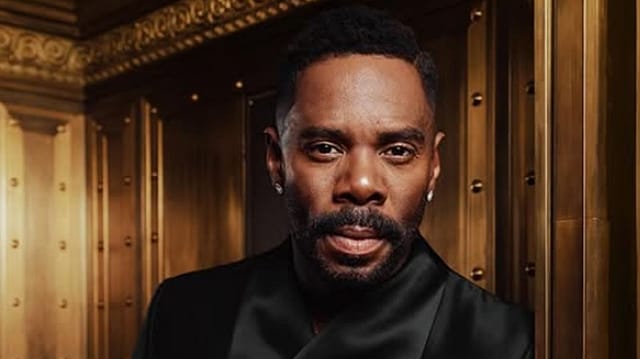
Playing Joe Jackson meant disappearing into him.
For Oscar-nominated actor Colman Domingo, that transformation began long before cameras rolled on Michael. Every day on set started with two-and-a-half hours in the makeup chair, where prosthetics and coloured contact lenses gradually turned him into the patriarch of the Jackson family.
But the physical makeover, he says, was only the beginning.
Appearing on The Tonight Show Starring Jimmy Fallon, Domingo revealed that portraying one of the most debated figures in music history demanded months of preparation beyond makeup.
"That's two-and-a-half hours of prosthetics," Domingo said after Jimmy Fallon reacted to a photograph of him in character. "I had a great time with that role, and really, it meant everything."
Rise of the Pivotal Power
18 Sep 2026 - Vol 05 | Issue 38
The BRICS declaration is a strategic victory for Modi
His real work happened off camera.
Domingo said he immersed himself in books, interviews, archival footage and every piece of material he could find about Joe Jackson and the era in which he lived.
For Domingo, the goal was never imitation.
"You want to do soul work," he explained. "You don't want mimicry... You want to find the soul of a person and advocate for that."
That approach became especially important in Michael, a film that revisits the life of Michael Jackson through the people who shaped him—including his father, whose legacy remains deeply divisive.
Domingo later acknowledged that making the film was anything but easy.
"This was not an easy shoot," he told The Hollywood Reporter, adding that the screenplay evolved during production to give Joe Jackson a much larger presence in the story.
Even so, he believes the film offers audiences a different way of looking at the King of Pop.
"Michael has become an examination of how Michael became Michael," Domingo said.
The film has already become one of the biggest biopics ever made, and for Domingo, its emotional core lay not in recreating a familiar face, but in understanding the complicated man behind it.
(With inputs from ANI)