Robert E Hall, Michael Woodford Win 2026 Economics Nobel for Work on Stabilisation Policy
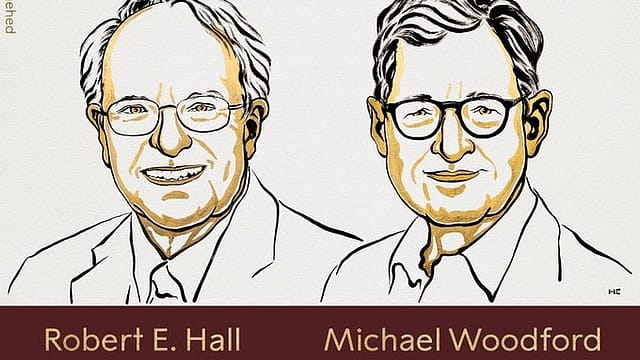
The Royal Swedish Academy of Sciences on Monday awarded the 2026 Economics Nobel to Stanford University’s Robert E Hall and Columbia University’s Michael Woodford for their work on the “microeconomic foundations of macroeconomic stabilisation”.
Their research helped develop models that connect the decisions of individual households and businesses to economy-wide outcomes, giving policymakers a stronger foundation for responding to recessions, inflation and sudden shocks.
The Sveriges Riksbank Prize in Economic Sciences carries an award of 12 million Swedish kronor, to be shared equally between the laureates.
“The laureates’ work has provided us with a stable theoretical foundation for the models that are now used by central banks and governments around the world,” said John Hassler, chair of the prize committee.

Zeroing In on ECI
09 Oct 2026 - Vol 05 | Issue 41
Constitutional legitimacy versus political opportunism
These models help policymakers respond to disruptions such as energy crises and sudden changes in household consumption, he added.
HOW INDIVIDUAL DECISIONS SHAPE THE ECONOMY
Hall and Woodford helped revitalise stabilisation policy by examining how households and businesses make decisions about spending, saving and prices—and how those choices collectively shape economic activity.
A central feature of their work is that people and businesses look ahead. Their decisions reflect expectations about future interest rates, incomes, prices and government policy.
By communicating their plans, central banks and governments can influence those expectations and, through them, current economic behaviour.
According to the academy, the laureates’ models help policymakers use fiscal and monetary measures at the appropriate time to moderate economic fluctuations.
Stabilisation policies seek to soften economic downturns and restrain overheating. During a recession, lower interest rates and increased government spending or larger budget deficits can support demand. When economic activity becomes excessive and inflation rises, policymakers may need to apply restraint.
The economic crises of the 1970s exposed weaknesses in traditional Keynesian models. Efforts to address unemployment struggled to prevent a prolonged combination of weak growth, high unemployment and rising prices.
Hall and Woodford’s work strengthened the theoretical basis for policy by grounding macroeconomic models in the behaviour of the households and businesses that make up the economy.
With inputs from ANI