Zuckerberg Warns China Could Overtake US in AI Race, Urges Faster Buildout
The AI race may not be won by whoever builds the smartest model. It could be won by whoever can build the most infrastructure, the fastest.
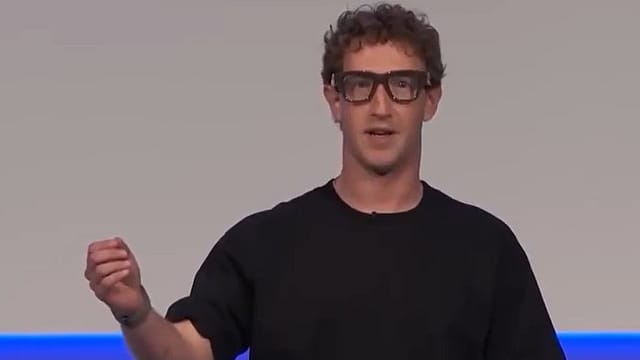
Meta CEO Mark Zuckerberg has warned that the US risks losing its AI edge to China unless it dramatically accelerates the construction of energy capacity and data centres. In a note, Zuckerberg said the countries that lead the development and deployment of advanced AI could help determine the next global balance of power, with consequences for democratic values, economic prosperity and national security.
His biggest concern? Speed. Zuckerberg said the US currently has an advantage in silicon design but is falling behind China when it comes to building the physical infrastructure needed to power AI. “Countries like China are bringing online 1GW+ of nuclear capacity every other week, so we will need to accelerate building both energy and data centers to remain competitive.”
Zeroing In on ECI
09 Oct 2026 - Vol 05 | Issue 41
Constitutional legitimacy versus political opportunism
Zuckerberg described AI as perhaps “the most competitive industry in history”, arguing that breakthroughs are copied and absorbed within months. That makes even a small lead strategically valuable. “Any policy that slows American model releases -- even by a month -- could add significant risk to American leadership while letting foreign models race ahead.” He therefore urged Washington to speed up AI infrastructure development while avoiding regulations that could slow American companies.
Zuckerberg also backed continued US export controls on advanced silicon, arguing that they have helped slow foreign AI labs during a critical period. But he wants America to move faster on the other side of the equation: energy and computing capacity. The argument is simple. Powerful AI models need enormous amounts of electricity and computing infrastructure. If the US cannot build those quickly enough, its technological lead could become increasingly difficult to defend.
His argument goes beyond the US-China contest. Zuckerberg wants advanced AI to become widely distributed rather than concentrated in a handful of companies or governments. He said Meta's goal is to develop personal superintelligence that could ultimately reach billions of people, with AI agents helping individuals learn, build businesses, develop products and contribute to scientific discovery. He also argued that AI does not necessarily have to mean fewer jobs. If the technology is used to increase people's capabilities and support invention, he believes it could create new opportunities rather than simply automate existing work.
Zuckerberg acknowledged that the same technology could amplify serious threats, including cybersecurity attacks, bioterrorism, surveillance and job displacement. He also proposed closer cooperation between frontier AI companies and the US government on national security, including potentially providing officials with intermediate model-training checkpoints and technical expertise.
Meta, meanwhile, plans a governance system in which its independent board can approve safety criteria for advanced model releases and assess whether individual models meet those standards. The underlying message from Zuckerberg is blunt: America cannot afford to win the AI race on algorithms alone. It needs the energy, data centres, chips and speed to turn that technological advantage into lasting power.
(With inputs from ANI)