Zelenskyy Sees Progress. What’s Blocking a Ukraine Peace Deal?
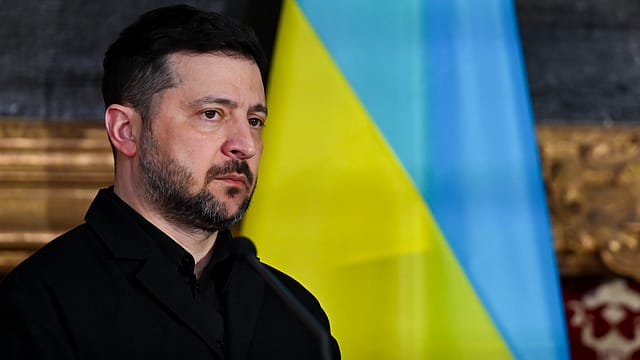
Ukrainian President Volodymyr Zelenskyy called the first day of US-mediated talks with Russia “constructive and quite substantive”. Negotiators discussed prisoner releases, security guarantees and steps to reduce fighting in Abu Dhabi on November 10. A second day was scheduled for November 11. A ceasefire announcement and published settlement terms were still awaited in the latest verified readouts.
Behind the positive language is a disagreement over the first step. Ukraine wants the fighting stopped, followed by protection against another invasion. Russia wants the outlines of a wider European security arrangement settled before agreeing to a ceasefire.
Why does Zelenskyy sound more hopeful?
He says the messages coming from President Donald Trump’s envoys have changed. Speaking in Copenhagen after meetings with Nordic leaders on November 10, he said, “I see changes. I am very happy about what I hear.”

The Wealth Issue 2026
06 Nov 2026 - Vol 05 | Issue 45
Portraits of Dreamers and Doers under 35
He was responding to contacts with US negotiators Steve Witkoff and Jared Kushner. His optimism concerns the diplomatic effort. Whether Russia will accept a ceasefire, withdraw forces or change its demands remains unresolved.
Who is actually at the negotiating table?
Officials from Ukraine, Russia and the US are conducting the talks. Zelenskyy, Russian President Vladimir Putin and Trump are following the negotiations through their teams.
Ukraine’s delegation is led by Rustem Umerov, its foreign intelligence chief. Putin aide Vladimir Medinsky heads Russia’s team. Witkoff, Trump’s special envoy, and Kushner, the president’s son-in-law, represent Washington. The UAE is hosting the meeting.
Before meeting Russia, the Ukrainian team held a separate session with the Americans and representatives of Britain, France, Germany, Italy, the European Commission and NATO.
Has anything concrete been agreed?
A prisoner exchange appears to be the most immediate possibility, although public accounts differ on its status.
Ukrainska Pravda, citing a source close to Ukraine’s delegation, reported that a large-scale exchange had been agreed for the near future. Zelenskyy’s public account described prisoner releases as a priority. Numbers, names and a transfer date still awaited public confirmation from both sides.
For families, an actual exchange would be a tangible result even while negotiations over territory and military protection continue.
What is the argument over a ceasefire?
It is about which decisions must come first.
Kyiv’s preferred sequence starts with stopping the war, then securing guarantees for Ukraine, followed by possible wider talks about European security. Zelenskyy emphasised that order in Copenhagen.
Russian Foreign Minister Sergei Lavrov proposed starting with the broad security framework and then addressing the war. Moscow argues that an immediate pause could give Ukraine time to regroup. Kyiv wants an end to attacks while the longer settlement is negotiated.
The dispute affects how long civilians and soldiers could wait for any halt in fighting.
What does “European security architecture” actually mean?
It means the arrangements countries make about defending themselves and dealing with one another’s armed forces.
The questions can include which alliances a country joins, where forces are stationed, how military incidents are managed and what happens if a government breaks an agreement. In these talks, Ukraine’s freedom to choose its security partners is central.
The joint statement issued after the European, Ukrainian and American meeting called for respect for sovereignty, territorial integrity and independent decision-making. It also said NATO would remain central to collective defence in the Euro-Atlantic region. The detailed terms Russia and the US might propose are still to be published.
Which territory is the biggest obstacle?
The immediate dispute concerns land Russia occupies and additional Ukrainian territory Moscow demands.
Donbas refers to the eastern Ukrainian regions of Donetsk and Luhansk. Russia has demanded that Kyiv surrender the whole area, including territory Ukrainian forces still hold. Russia also claims Ukraine’s Zaporizhzhia and Kherson regions. Zelenskyy rejects surrendering land Ukraine continues to defend.
A ceasefire could stop shooting along an agreed line while leaving a dispute over sovereignty for further negotiation. Any settlement would need to specify both where forces stand and how the territory’s status is treated.
What protection does Ukraine want after the war?
Kyiv wants commitments that make another Russian attack harder to launch and more costly to sustain.
That could involve maintaining a strong Ukrainian military, dependable weapons supplies, air defence and external military support. European planning also includes a multinational force led by Britain and France. Britain’s defence ministry says deployment would follow an end to hostilities and depend on the necessary political and military conditions. Planning and readiness exercises are continuing.
The practical questions are who would provide the protection, what resources they would commit and how quickly they would respond to a renewed attack.
Could Ukraine get NATO-style protection?
An arrangement modelled on NATO’s collective-defence principle has been discussed. Its exact obligations would have to be negotiated.
NATO is a military alliance whose Article 5 treats an armed attack on one member as an attack on all. Each ally undertakes to assist through action it considers necessary, which can include armed force. The treaty allows countries to decide the form of assistance under their own constitutional processes.
For Ukraine, the wording would determine which countries promise to respond, what triggers their obligation and what help they must provide.
Why is Kyiv so insistent on enforceable promises?
Ukraine has already received international security commitments.
Under the 1994 Budapest Memorandum, Russia, the US and Britain reaffirmed commitments to respect Ukraine’s independence, sovereignty and existing borders as Ukraine joined the nuclear non-proliferation treaty as a non-nuclear-weapon state. Russia subsequently seized Crimea in 2014 and launched its full-scale invasion in February 2022.
There is also the February 2015 Minsk agreement. It set out a ceasefire, withdrawal of heavy weapons, international monitoring, prisoner exchanges and political measures for eastern Ukraine. The UN Security Council endorsed it.
Those precedents explain the importance of implementation. A new agreement would need clear duties, monitoring and a response when its terms are broken.
Why are European governments pushing for a bigger role?
Any promise involving European troops, money, sanctions or NATO arrangements requires decisions by the governments concerned.
Europeans took part in preparatory coordination in Abu Dhabi. Russia has opposed their participation in the core three-way meeting, while the US says it wants eventually to broaden the format.
In June, Britain, France and Germany said changes concerning the European Union and NATO would require the consent of EU member states and NATO allies respectively. Their November joint coordination with Washington and Kyiv reaffirmed support for Ukraine’s sovereignty and credible protection.
What is Trump trying to achieve?
Washington is pursuing a settlement that ends the war and addresses wider security disputes. This is the first three-way round since February, after earlier negotiations stalled.
Trump has talked about a broad agreement. His envoys say contacts with the parties have helped identify differences they hope to bridge. US Secretary of State Marco Rubio called the first day productive, while cautioning that substantial work remained.
The immediate test is whether Washington can turn that engagement into terms Kyiv and Moscow both accept. A proposal must also identify who will provide the military and financial commitments needed to make it work.
Are the talks reducing attacks?
The negotiations began amid continuing strikes.
Ukraine’s government said Russia attacked 10 regions overnight before the November 10 talks and hit five major electricity substations, which move power between regions. Russia’s attacks left outages across several parts of Ukraine as winter approaches. Ukraine has also continued long-range attacks against Russian infrastructure.
Russian officials have also accused Ukraine of killing civilians in Luhansk and staff from the Zaporizhzhia nuclear plant. Those specific accounts await independent verification.
The immediate humanitarian value of an agreement would depend on whether people actually experience fewer attacks and more reliable access to electricity, heating and essential services.
Where does India fit into these negotiations?
India is talking to both governments about measures that could reduce the conflict’s effects.
Modi spoke to Zelenskyy on November 9. India’s official readout reaffirmed its readiness to contribute to a peaceful resolution. The following day, the external affairs ministry said India was discussing Black Sea shipping safety, grain and energy exports, and possible non-attack arrangements with Moscow and Kyiv.
That gives India a specific diplomatic role to explore. A food corridor would require terms under which ships could carry grain safely through a defined route. Agreement on routes, inspections, protection and responses to violations would determine whether such an arrangement could function.
How would anyone check that a ceasefire was holding?
The agreement would first need to define what stops, where and when.
It could cover the entire front or particular activities, such as attacks on energy infrastructure or shipping. The parties would have to identify the forces and weapons covered, agree on access for monitors and set a process for examining alleged violations.
Minsk’s provisions show how specific that can become. They required withdrawal of heavy weapons over defined distances and monitoring by the Organization for Security and Co-operation in Europe, using equipment including satellites, drones and radar.
For Abu Dhabi, the monitoring arrangements and consequences of violations still need to emerge from the negotiations.
What would count as progress on November 11?
A confirmed prisoner exchange, an agreed reduction in attacks or a shared document setting out the next negotiating steps would each provide something concrete to assess.
The second day was scheduled for Wednesday morning in Abu Dhabi. Further contacts with US and European representatives were also planned.
A prisoner deal would be judged by the people returned. A ceasefire proposal would need a start time, a defined scope and a way to verify compliance. A security guarantee would need named countries and clear commitments. Those details will show how far the upbeat first-day assessments carry into an agreement.