Marco Rubio Warns Iran’s Oil Revenues Could Dry Up as US Sanctions Bite
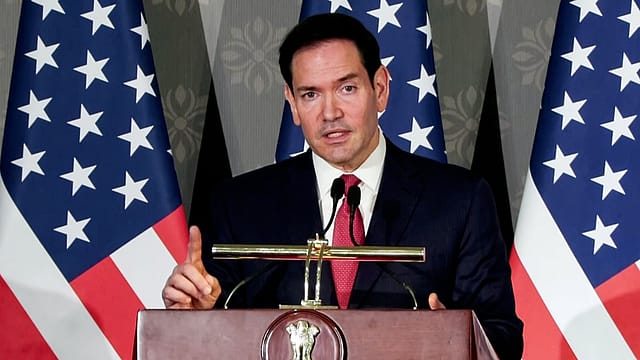
US Secretary of State Marco Rubio warned on Tuesday that Iran’s economic pain would deepen over the next three months as US sanctions tightened and the country ran out of oil shipments that had slipped past the blockade during a brief ceasefire.
Speaking on the sidelines of the G7 foreign ministers’ meeting in Paris, Rubio said only a small quantity of Iranian oil that had cleared the blockade remained at sea. “Once that dries up, almost all of their oil revenue will dry up,” he said.
Rubio said the US Treasury Department, led by Scott Bessent, was working with intelligence agencies to shut down avenues Tehran was using to circumvent sanctions. He described the pressure on Iran as “extraordinary” and blamed the country’s leadership for the hardship facing its people.
“It’s going to be worse for Iran in a month and in two months and in three months than it is now,” Rubio said.

The Wealth Issue 2026
06 Nov 2026 - Vol 05 | Issue 45
Portraits of Dreamers and Doers under 35
Washington keeps the door open to a deal
Rubio said the United States remained willing to reach an agreement, though he questioned whether Tehran was serious about negotiations and described its conditions as “absurd”.
“I think Iran would love a deal,” he said. “If there’s a real deal to be done, we’re open.”
He also rejected Iran’s demand for reparations, arguing that Tehran should bear responsibility for what he described as years of destabilising the region.
Separately, Iranian Foreign Minister Abbas Araghchi denied reports of a possible meeting between Vance and Mohsen Rezaei, the head of Iran’s Supreme National Security Council. Araghchi called the reports “completely unfounded” and said no such meeting was planned, Al Jazeera reported.
Iran warns against military escalation
Iranian Parliament Speaker Mohammad Bagher Ghalibaf warned the United States and other adversaries against miscalculating Tehran’s response to any military action. In a message on his official Telegram channel following the unveiling of a new Islamic Revolutionary Guard Corps (IRGC) missile facility, he said Iran would respond swiftly if attacked.
Ghalibaf described the facility, which belongs to the IRGC Aerospace Force, as part of Iran’s effort to build a lasting deterrent and defend its territorial integrity. He said it reflected years of work by Iranian scientists, engineers and military commanders, and argued that the country’s defence capabilities had continued to advance despite sanctions and war.
He also paid tribute to late IRGC commanders Hassan Tehrani-Moghaddam and Amir Ali Hajizadeh, and praised General Seyyed Majid Mousavi for taking on greater responsibility under difficult circumstances.
With inputs from ANI