Who is Reza Pahlavi? All You Should Know About The Exiled Crown Prince of Iran
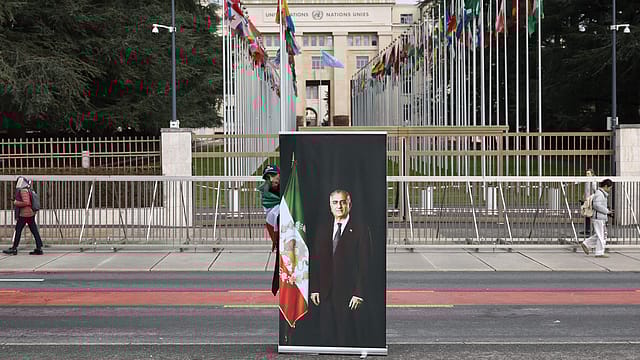
Reza Pahlavi is the name Iran's Islamic Republic fears most right now.
The 65-year-old exiled Crown Prince has gone from soft-spoken advocate of nonviolent resistance to urging Iranians to seize city centres. But who exactly is he, and what does he want?
Here’s a deeper insight.
Who Is Reza Pahlavi?
Reza Pahlavi is the eldest son of Mohammad Reza Pahlavi, the last Shah of Iran, and Empress Farah Pahlavi. Born in Tehran on October 31, 1960, he was officially named Crown Prince at seven years old. Today he lives in the United States as the most prominent face of the Iranian opposition in exile.
Which Family Does He Come From?
He belongs to the Pahlavi dynasty, founded by his grandfather Reza Shah Pahlavi in 1925. His father, Mohammad Reza Shah, ruled Iran until the 1979 Islamic Revolution, which ended the monarchy and brought Ayatollah Khomeini to power.
The dynasty was known for rapid modernisation, oil wealth, and a close alliance with Washington - but also for political repression.
How Did He End Up in Exile?
At 17, he left Iran for fighter pilot training at Reese Air Force Base in Texas. While abroad, the 1979 revolution made his return impossible. His father died in exile in Egypt in 1980, after which Reza Pahlavi declared himself the rightful successor to the throne. He reportedly later earned a degree in political science from the University of Southern California.

I.N.D.I.A. Falling
12 Jun 2026 - Vol 04 | Issue 75
The Unravelling of an Alliance
What Is His Familial Status?
He has been married to Yasmine Etemad-Amini since 1986. The couple have three daughters: Noor, Iman, and Farah.
Does He Want to Restore the Monarchy?
No - at least officially. Based on his official website, he advocates for a referendum allowing Iranians to decide their own system of government. He has consistently positioned himself as a transitional leader, not a future king.
What Has He Been Calling For Politically?
For over four decades, Crown Prince Reza Pahlavi has called for a secular, democratic, and parliamentary government to replace the Islamic Republic. Reportedly during the major Iranian protests of 2025 and 2026, his rhetoric sharpened sharply.
According to Al Jazeera, he urged workers in oil, gas, and transport to launch nationwide strikes to cut off the state's financial lifelines, and called on security forces to defect.
What Are His Ties to the US and Israel?
He has actively cultivated ties with American officials over the years and has met with Israeli counterparts, including a reportedly notable visit to Yad Vashem in Jerusalem in 2023. He has voiced support for US and Israeli strikes against Iranian regime infrastructure during events reportedly in June 2025 and February 2026. He has also gone ahead to refer to the strikes as a “humanitarian intervention”.
How Has Iran Responded to Him?
Tehran has consistently labelled him a foreign-backed agitator. Iranian state media described protests linked to his recent calls as armed terrorist attacks, accusing him of providing cover for what they called terrorist nuclei.
What Has He Said About The Ongoing ‘Lion and Sun’ Revolution?
Reza Pahlavi often refers to the Lion and Sun as a historic symbol of Iranian national identity and unity. In his public statements, he characterizes the movement associated with it as a quest for a secular democracy. He advocates for a transition to a system where national sovereignty and human rights are restored, emphasizing the symbol's role in unifying diverse groups.
Is He Universally Supported Within the Opposition?
No. Iran expert Alireza Nader has written that Pahlavi's circle has been accused of attacking prominent dissidents, including Nobel Peace Prize winner Narges Mohammadi - raising questions about whether he has become, in Nader's words, the opposition against the opposition.
After 47 years in exile, Reza Pahlavi and the Pahlavi dynasty are once again at the centre of Iran's political storm. Whether this moment is his last gamble or a genuine turning point remains to be seen.
(With inputs from yMedia)