Iran Refuses to Export Enriched Uranium, Defies Trump’s Core Demand in Nuclear Talks
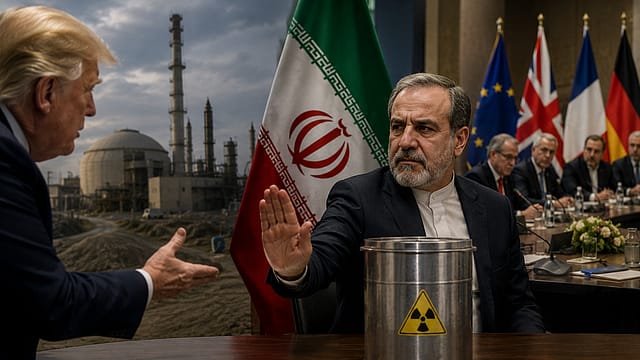
Amid highly volatile and fragile diplomatic engagements between Tehran and Washington, Iran's Supreme Leader Ayatollah Mojtaba Khamenei has ordered that the stockpile of enriched uranium 'should not leave the country," rejecting the US President Donald Trump's key demand in ongoing peace talks, Reuters reported, quoting two Iranian sources.
President Trump had previously provided assurances to Israel that Iran's inventory of highly enriched uranium, the essential component required for the assembly of a nuclear weapon, would be completely extracted from the Islamic Republic, according to Israeli officials who spoke to Reuters.
Concurrently, Israeli Prime Minister Benjamin Netanyahu has maintained a rigid stance, asserting that he will not contemplate an end to hostilities until the enriched uranium is entirely removed from Iranian custody, Tehran completely terminates its financial and material sponsorship of regional proxy militias, and the country's ballistic missile infrastructure is entirely dismantled.
However, this position has run into a wall of resistance in Tehran. Describing the internal consensus within Iran's highest decision-making bodies, one of two Iranian sources who spoke on the condition of anonymity due to the highly sensitive nature of the geopolitical situation, stated, "The Supreme Leader's directive, and the consensus within the establishment, is that the stockpile of enriched uranium should not leave the country."

Open Minds 2026
26 Jun 2026 - Vol 05 | Issue 26
The power of ideas and arguments in 50 portraits
The same insiders revealed that Iran's top administrative and military echelons are convinced that relinquishing control of the material and sending it overseas would drastically undermine domestic security, leaving the country far more vulnerable to future military incursions by Washington and Tel Aviv.
What makes US-Iran negotiations over enriched uranium deadlocked amid Strait of Hormuz pressure?
Under Iran's constitutional framework, the Supreme Leader maintains ultimate authority over all critical state policies, Reuters reported.
The current diplomatic gridlock unfolds against the backdrop of a precarious cessation of hostilities since April 8.
This fragile truce followed a wave of US-Israeli military strikes directed at Iran on February 28.
In the immediate aftermath of those attacks, Tehran launched retaliatory strikes against Gulf nations hosting American military detachments, while intense cross-border combat simultaneously erupted between Israeli forces and Iran-backed Hezbollah units in Lebanon.
Despite the current pause in active fighting, negotiators have failed to achieve a significant diplomatic breakthrough.
The bargaining table remains heavily complicated by a stringent US naval blockade choking Iranian shipping hubs, balanced against Tehran's strategic leverage over the Strait of Hormuz, an indispensable choke point for the global energy supply.
These high-stakes talks are currently being facilitated through Pakistani mediation.
(With inputs from ANI)